

Hope turns to dust in Niger
Poor African nation struggling to cope with climate change
Advertisement
Read this article for free:
or
Already have an account? Log in here »
To continue reading, please subscribe:

Digital Subscription
One year of digital access for only $205*
- Enjoy unlimited reading on winnipegfreepress.com
- Read the E-Edition, our digital replica newspaper
- Access News Break, our award-winning app
- Play interactive puzzles
*First annual payment billed as $205.00 + GST for one year. This annual subscription will automatically renew at $233.00 + GST every 52 weeks (10% off the regular annual price of $259.35). Offer available to new and qualified returning subscribers only. Cancel any time.
To continue reading, please subscribe:
Add Free Press access to your Brandon Sun subscription for only an additional
$1 for the first 4 weeks*
- Enjoy unlimited reading on winnipegfreepress.com
- Read the E-Edition, our digital replica newspaper
- Access News Break, our award-winning app
- Play interactive puzzles
*Your next Brandon Sun subscription payment will increase by $1.00 and you will be charged $17.95 plus GST for four weeks. After four weeks, your payment will increase to $24.95 plus GST every four weeks.
Read unlimited articles for free today:
or
Already have an account? Log in here »
Hey there, time traveller!
This article was published 07/05/2012 (5182 days ago), so information in it may no longer be current.
NIAMEY, Niger — The clay soil is reddish-orange, the cloudless sky is grey with dust and the temperature is a furnace-like 41 C.
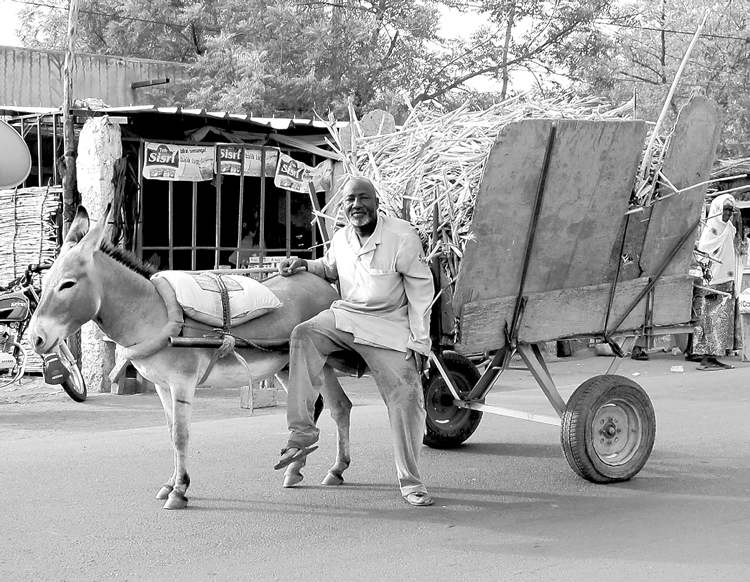
Wagon-pulling donkeys share the streets with shiny Land Rovers; goats pick over piles of plastic garbage, and yellow-headed lizards called margouillats scamper swiftly over stucco walls.
At night, the electricity flickers on and off as the heavy air hangs completely still and the temperature plunges to a less-suffocating 32 C.
Welcome to Niamey, the capital of Niger, one of the world’s largest, most impoverished and most obscure nations, the latter at least to westerners.
Straddling the Sahara Desert, the semi-arid Sahel region and a tiny fringe of tropical West Africa, Niger — pronounced “nee-jehr,” as this is a former French colony — occupies a corner of the planet that up until recently hasn’t demanded much attention from anyone outside of international-development circles.
For starters, there’s no oil in this landlocked nation and little in the way of other strategic resources, with the exception of uranium deposits north of the city of Agadez. Aside from nuclear fuel, cowpeas and onions are among the main exports.
Even the most adventurous tourists rarely make it here, seeing as few happen to be passing through from neighbouring Libya, Algeria, Mali, Burkina Faso, Benin, Nigeria and Chad. In case you don’t have a CIA fact sheet handy, four of those seven neighbours are undergoing some form of civil war or insurgency.
Niger itself is relatively peaceful, even though large tracts of the country remain unsafe to travel. Tuareg bandits patrol the few roads that cross the sparsely populated Sahara region. Most of the 15.3 million Nigeriens — the vast majority of them moderate Muslims of a diverse ethnic mix — live along the southern strip of the country. About 750,000 live in Niamey, while most of the rest attempt to eke out an existence as subsistence farmers during the brief rainy season that appears to be getting even briefer.
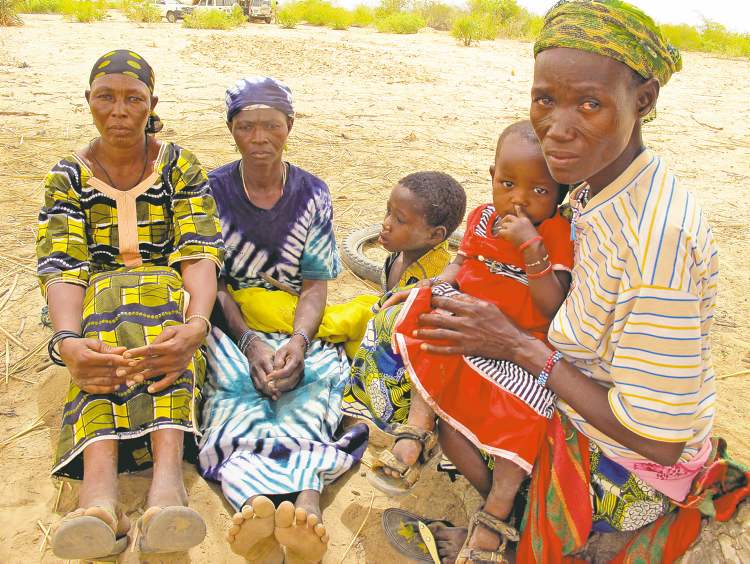
With an average annual income of less than $250, Nigeriens are among the world’s poorest people. They are also among the least educated, the least healthy and prone to the highest birth rates on the planet, according to the United Nations, which routinely ranks Niger second-last on its annual human-development index.
Adding to the ignominy, as many as three million Nigeriens do not have enough to eat this year. An international food-distribution effort has been mobilized as a response to a disastrous 2011 rainy season, which didn’t bring much in the way of actual rain.
Most of Niger’s millet and sorghum crops failed last year, forcing farming families to pursue counterproductive practices such as selling some of their goats, sheep, chickens or guinea fowl, which function as living bank accounts, or cutting down and selling trees that provide shade for crops and prevent soil erosion.
Vast sections of Niger’s tree cover already have thinned or disappeared, partly due to unsustainable forestry practices but mostly because the average temperature in an already hot region rose 1 C over the past 40 years.

Thanks to its mid-continental location, Niger’s climate is naturally prone to variability. But severe precipitation events — droughts and brief heavy rains that flow uselessly over parched, non-absorbent soil — have increased in frequency.
Environmental scientists speak in no uncertain terms when they describe Niger as one of the most climate-change-affected nations on Earth. Yet Niger’s poverty, high population-growth rate and lack of resources make it among the least able nations to adapt to this change.
To pessimistic academics, Niger and its Sahel neighbours offer the planet a glimpse of a nightmarish future. To optimistic aid agencies, what happens in Niger this year can serve as a lesson about the value of swift and decisive humanitarian response.
Within this context, the Free Press will report from Niger in the coming days and weeks. The goal is to reduce the obscurity of this most obscure of nations — and a canary in a geopolitical coal mine.
bartley.kives@freepress.mb.ca
View Larger Map