

No fashion plate, but a template
Norrie a model of gently persuasive political passions

Advertisement
Read this article for free:
or
Already have an account? Log in here »
To continue reading, please subscribe:

Digital Subscription
One year of digital access for only $205*
- Enjoy unlimited reading on winnipegfreepress.com
- Read the E-Edition, our digital replica newspaper
- Access News Break, our award-winning app
- Play interactive puzzles
*First annual payment billed as $205.00 + GST for one year. This annual subscription will automatically renew at $233.00 + GST every 52 weeks (10% off the regular annual price of $259.35). Offer available to new and qualified returning subscribers only. Cancel any time.
To continue reading, please subscribe:
Add Free Press access to your Brandon Sun subscription for only an additional
$1 for the first 4 weeks*
- Enjoy unlimited reading on winnipegfreepress.com
- Read the E-Edition, our digital replica newspaper
- Access News Break, our award-winning app
- Play interactive puzzles
*Your next Brandon Sun subscription payment will increase by $1.00 and you will be charged $17.95 plus GST for four weeks. After four weeks, your payment will increase to $24.95 plus GST every four weeks.
Read unlimited articles for free today:
or
Already have an account? Log in here »
Hey there, time traveller!
This article was published 07/07/2012 (5120 days ago), so information in it may no longer be current.
When Bill Norrie announced he was running for re-election in 1989 — the election that would turn out to be his last — I was asked to interview the incumbent mayor for a story about his bid.
Norrie had reached that point in his career when the job was his for as long as he wanted it. None of the more promising candidates within or without council would dare challenge him. Norrie wasn’t exciting, but Winnipeggers loved the man and showed no interest in replacing him.
I was young, and hadn’t written much about Norrie or his style of political leadership, so I was able to ask all the standard political questions with a somewhat fresh tone. What did he think was his greatest accomplishment? Why did he think no one of substance was willing to challenge him in the election? Would he run for re-election if he was successful in this election? I even asked whether anyone had suggested he update his personal and political style.
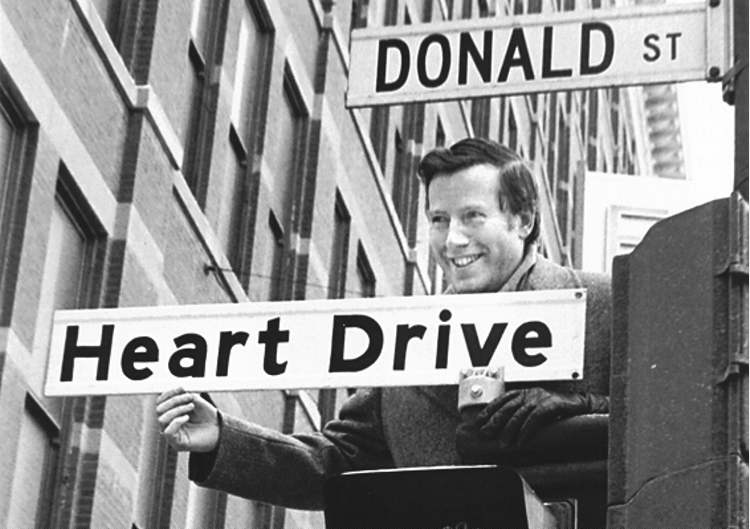
Although he was indomitable as a politician, there were quite a few people in Winnipeg political circles at that time who thought he was a bit dated. His haircut was right out of the 1960s. The loud, broad-lapelled sport jackets and suits looked as if they had been stolen from a museum of failed 1970s fashion. When I asked Norrie if anyone had suggested he update his personal style, he and I both knew what I was asking.
He looked at me with what I have come to understand was a faux confusion. “What do you mean?”
“You know,” I said, “has anyone suggested you update your style, perhaps even your clothes?”
He grinned at me. “No,” he said calmly. “Never my clothes.”
There is a lot of Norrie in that anecdote. He was as successful a municipal politician as this town has ever seen. What made him so successful, and what do we know about his legacy? Like all great politicians, it’s a mixed bag.
Norrie was first elected to the inaugural Unicity council in 1971. He was first elected mayor in 1979 and served 13 years. As mayor, he never once ran in an election in which he did not get more than half the votes; in three elections, he pulled three out of every four votes.
Detractors will point out that during his time as mayor, Winnipeg’s status declined greatly. The downtown eroded significantly, development stagnated, population actually shrank, the city was straining under enormous debt, and property taxes were exceedingly high.
Under his watch, the shooting of J.J. Harper occurred and the Aboriginal Justice Inquiry was born to deal with institutional racism in the Winnipeg Police Service and justice system.
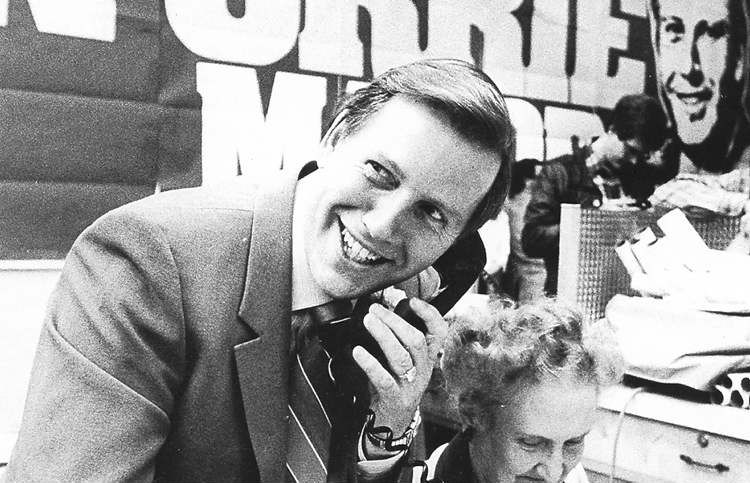
Norrie did not create those problems; in fact, Winnipeg’s economic and social decline began years before he became mayor. But those were the hallmarks of his mayoral term.
On the positive side, Norrie was one of the principal partners in a series of government initiatives aimed at breathing life into the city’s core. He was a major player in the formation of the Core Area Initiative, a tripartite program to restore the city’s downtown that ultimately helped create the North Portage Development Corp. and the Forks Renewal Corp. This gave us the Portage Place mall and the surrounding high-density residential development north of Portage Avenue, and The Forks Market and national park.
Although it’s easy to criticize these projects for not living up to the lofty goal of reinventing downtown, their bricks-and-mortar legacy is not insignificant. In the case of The Forks, Norrie’s dream of a year-round, high-demand attraction has very much come to fruition. Although the Portage Place mall has suffered, the high-density housing that came as part of that development has been a rousing success.
How did he become so powerful? His was an elegant, quiet style of politics. He was a master negotiator, firm but not hyperbolic.
Norrie consolidated power by brokering support at city hall and sustaining a remarkably intimate relationship with voters. He did this by reaching out to communities of all races, creeds, and colours.
He was a constant presence at ethnic festivals and religious events year-round. He was warmly embraced by all the immigrant communities by meeting with them, listening to their concerns and acting on many of them.
Norrie likely benefited from being a kinder, gentler politician in an era of kinder, gentler politics. There were battles, but they occurred without much of the bitter, vindictive grandstanding that seems to infect most debates at city hall these days. In that regard, Norrie was the perfect political leader for his time, an elegant man who helped craft elegant solutions.
With so much hostility toward politicians these days, it’s probably hard to remember a time when a political leader was genuinely embraced by an electorate. Despite his understated presence and awkward style, Norrie was that man.
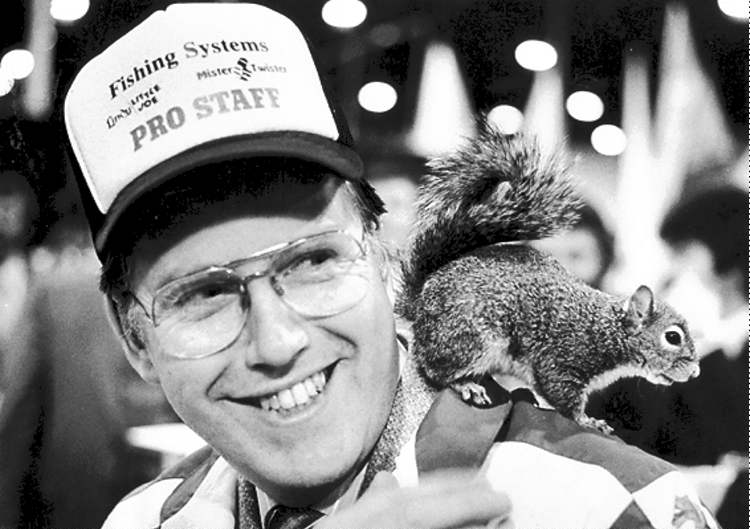

A bit boring? Yes.
A bit challenged when it came to sartorial splendour? Most definitely.
But he remained that which all politicians should aspire to be: a true public servant.
dan.lett@freepress.mb.ca
A look back at former Winnipeg mayor Bill Norrie's career.
Dan Lett is a columnist for the Free Press, providing opinion and commentary on politics in Winnipeg and beyond. Born and raised in Toronto, Dan joined the Free Press in 1986. Read more about Dan.
Dan’s columns are built on facts and reactions, but offer his personal views through arguments and analysis. The Free Press’ editing team reviews Dan’s columns before they are posted online or published in print — part of the our tradition, since 1872, of producing reliable independent journalism. Read more about Free Press’s history and mandate, and learn how our newsroom operates.
Our newsroom depends on a growing audience of readers to power our journalism. If you are not a paid reader, please consider becoming a subscriber.
Our newsroom depends on its audience of readers to power our journalism. Thank you for your support.
Dan Lett is a columnist for the Free Press, providing opinion and commentary on politics in Winnipeg and beyond. Born and raised in Toronto, Dan joined the Free Press in 1986. Read more about Dan.
Dan’s columns are built on facts and reactions, but offer his personal views through arguments and analysis. The Free Press’ editing team reviews Dan’s columns before they are posted online or published in print — part of the our tradition, since 1872, of producing reliable independent journalism. Read more about Free Press’s history and mandate, and learn how our newsroom operates.
Our newsroom depends on a growing audience of readers to power our journalism. If you are not a paid reader, please consider becoming a subscriber.
Our newsroom depends on its audience of readers to power our journalism. Thank you for your support.
Advertisement Advertise With Us
Advertisement Advertise With Us