

‘Total war’ began in 1915
Advertisement
Read this article for free:
or
Already have an account? Log in here »
To continue reading, please subscribe:
Monthly Digital Subscription
$1 per week for 24 weeks*
- Enjoy unlimited reading on winnipegfreepress.com
- Read the E-Edition, our digital replica newspaper
- Access News Break, our award-winning app
- Play interactive puzzles
*Billed as $4.00 plus GST every four weeks. After 24 weeks, price increases to the regular rate of $19.95 plus GST every four weeks. Offer available to new and qualified returning subscribers only. Cancel any time.
Monthly Digital Subscription
$4.99/week*
- Enjoy unlimited reading on winnipegfreepress.com
- Read the E-Edition, our digital replica newspaper
- Access News Break, our award-winning app
- Play interactive puzzles
*Billed as $19.95 plus GST every four weeks. Cancel any time.
To continue reading, please subscribe:
Add Free Press access to your Brandon Sun subscription for only an additional
$1 for the first 4 weeks*
- Enjoy unlimited reading on winnipegfreepress.com
- Read the E-Edition, our digital replica newspaper
- Access News Break, our award-winning app
- Play interactive puzzles
*Your next Brandon Sun subscription payment will increase by $1.00 and you will be charged $17.95 plus GST for four weeks. After four weeks, your payment will increase to $24.95 plus GST every four weeks.
Read unlimited articles for free today:
or
Already have an account? Log in here »
Hey there, time traveller!
This article was published 14/07/2012 (5047 days ago), so information in it may no longer be current.
In 1992, a statue was erected in London of Arthur Harris, the head of the Royal Air Force’s Bomber Command during the Second World War. Within a day of the unveiling, it had been covered in blood-red paint and another heated debate ensued in which the RAF’s massive area bombing of German cities was loudly condemned.
Largely forgotten were the 120,000 bomber crew members from Britain and the Commonwealth and the sacrifice 55,573 of them made dying on missions over occupied Europe and Germany. Of those who were killed, about 10,000 were Canadian.
Finally a month ago, 67 years late, the Queen unveiled a distinctive memorial bronze statue of a seven-man crew. Attending the ceremony in London were the elderly RAF and RCAF veterans, the majority of whom were in their early 20s when they undertook this dangerous assignment.
Many are still justifiably angry at the callous manner in which their war-time actions have been judged.
“I’ve been accused of being a murderer, of killing innocent women and children,” remarked Edward Carter-Edwards, 89, of Ontario, who was shot down over France, captured and imprisoned at the Buchenwald concentration camp.
Second-guessing military actions long after the fact is a tricky and frequently contentious exercise. Using official documents, oral testimonies and other sources, historians try to recreate and evaluate what transpired, but they do so from an intellectually detached perspective.
Naturally, those who lived through the events being described and analysed have a more personal and emotional point of view that is no less relevant.
Sometimes, as in the case of the history of Bomber Command, the difference of opinion can be explosive because the central issue hinges on the touchy matter of morality during war. Was it possible to go too far, even when combatting a ruthless foe like Nazi Germany?
Total war truly began on the night of Sept. 9, 1915, when a German Zeppelin dropped a bomb on the Dolphin Tavern in central London. The attack during the First World War was aimed at a nearby factory but three men, civilians enjoying a pint of ale, were nevertheless killed.
Other air bombing attacks continued with similar tragic results.
Accused of being “baby-killers” and “murderers of women,” Capt. Peter Strasser, the head of the German navy’s airship division, explained it as follows: “What we do is repugnant to us too, but necessary. Nowadays, there is no such animal as a non-combatant: modern warfare is total warfare.”
By the time the Second World War started 24 years later, air-power technology had so dramatically advanced that dropping bombs on enemy targets, including armament factories where civilians worked, became the norm. During the blitz on London in 1940 and 1941, consecutive German air attacks devastated the city and resulted in the death of more than 40,000 civilians in and around London.
With the intention of crushing German morale and decimating its military industrial strength, Air Marshal Harris — fully supported by Prime Minister Winston Churchill and on down — devised an intensive area-bombing campaign of German cities.
On July 24, 1943, the city of Hamburg was laid waste as the multitude of incendiary bombs dropped created a raging firestorm that engulfed everything in its path. Over a few days, 50,000 Germans perished.
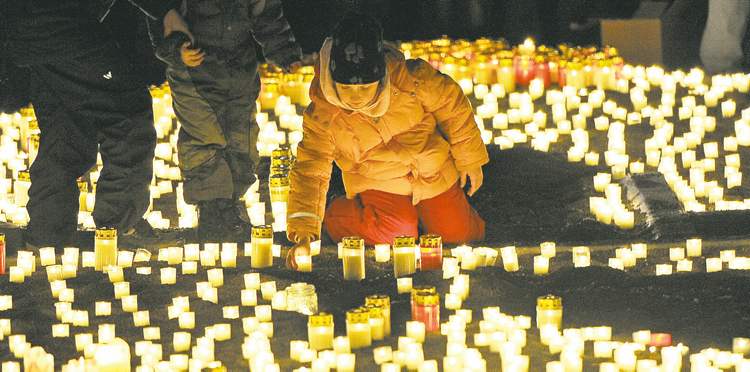
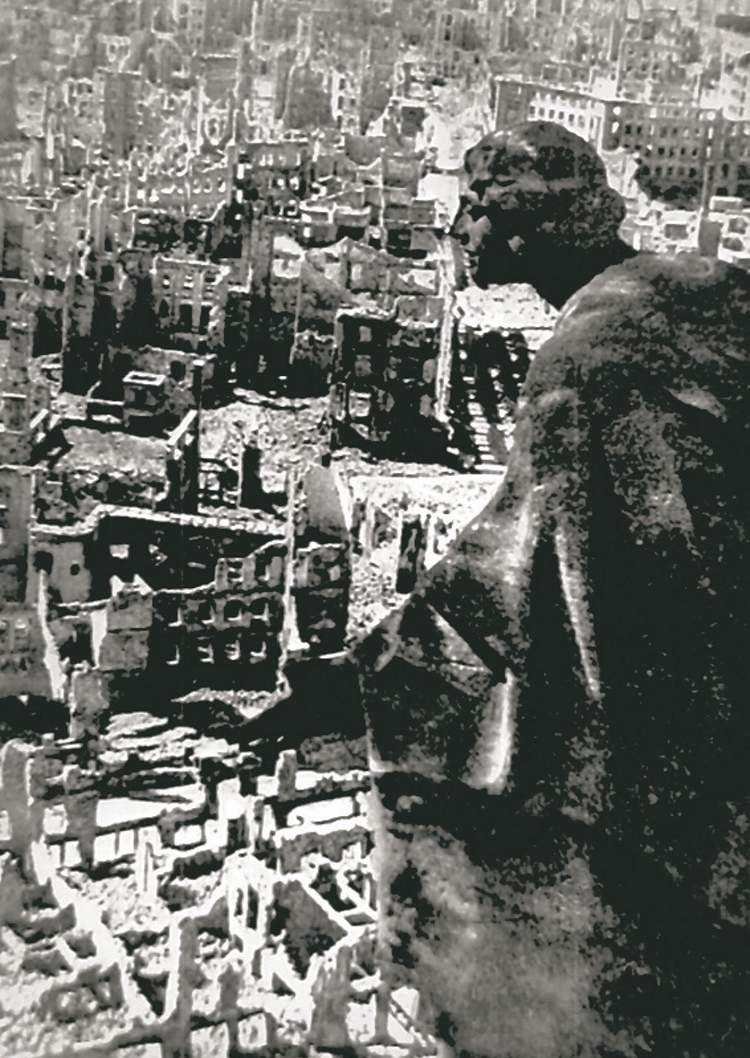
More controversial was Harris’s decision to order the bombing of Dresden in February 1945, a debatable military target and a brutal and deadly assault disparaged most famously by Kurt Vonnegut in his 1969 novel Slaughterhouse Five. In all, between 1942 and 1945, about 600,000 Germans were killed in air attacks by Bomber Command and the U.S. Army Air Force.
Once the war ended, few politicians or officials wanted to celebrate “Bomber” Harris and his men’s contributions to the victory. In the decades that followed, accusations were levelled about the uncivilized aspect of the air attacks and questions were raised by historians about the impact of the bombing on the war’s outcome.
According to the earliest assessments, the massive bombing did not damage German morale; in fact, the reverse might have happened.
And it was argued that Nazi military strength was not weakened, though that assessment has been revised in recent years following more research in German archives.
Mostly, however, the bombing was denounced, as it was in the controversial 1992 CBC documentary The Valour and the Horror, as excessive and immoral.
Arthur Harris, who died in 1984, remained adamant throughout his life that he had implemented the correct strategy in the face of such an implacable enemy as the Nazis, challenging his numerous critics.
“Tell me one operation of war which is moral,” he said in an early 1980s interview. “Sticking a bayonet into a man’s belly, is that moral? Then they say, well, of course strategic bombing involved civilians. Civilians are always involved in major wars. After all, previous wars ended up in the besieging of major cities, and in besieging a city, what was the idea? To cut off all supplies… the besieging forces lobbed every missile they could lay their hands on into the city, more or less regardless of where those missiles landed, as an added incentive to surrender.”

In 2006, yet another controversy erupted over the Canadian War Museum’s depiction and explanation of the bombing in its exhibit, in particular the phrase “indiscriminate massive area bombing.” In the end, veterans and others who disagreed with the museum succeeded in having the wording on two plaques slightly altered.
One of the historians asked to evaluate the text in question was David Bercuson of the University of Calgary, who supported a revision. But it is his report’s concluding comments that especially resonate and should be kept in mind by anyone who questions the erection of the new memorial to the courageous and neglected men of Bomber Command.
“The (combined bomber offensive) killed a large number of German civilians,” Bercuson wrote. “It was intended to do so whether or not air crews were let in on the secret. The killing of those civilians was the inevitable outcome of the need to critically damage the German ability to wage war well in advance of the break-in to Germany on the ground. War, by its very nature, is a collective act, and no one who is part of the collectivity that is war can expect to be saved harmless from it. The ultimate immorality would have been to not fight the Nazis with all the power at the command of the Allied leadership.”
Now & Then is a column in which historian Allan Levine puts the events of today in an historical context.