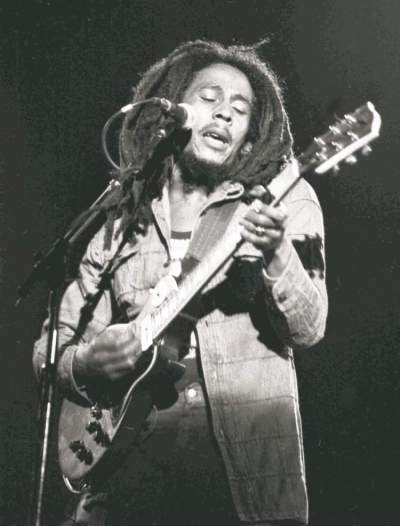
Who wrote the book of rock? No. 3 — Bob Marley
Reggae legend's infectious sound and spirit catapulted him from Jamaica to the world stage, where he influenced musicians of all stripes
Advertisement
Read this article for free:
or
Already have an account? Log in here »
To continue reading, please subscribe:

Digital Subscription
One year of digital access for only $205*
- Enjoy unlimited reading on winnipegfreepress.com
- Read the E-Edition, our digital replica newspaper
- Access News Break, our award-winning app
- Play interactive puzzles
*First annual payment billed as $205.00 + GST for one year. This annual subscription will automatically renew at $233.00 + GST every 52 weeks (10% off the regular annual price of $259.35). Offer available to new and qualified returning subscribers only. Cancel any time.
To continue reading, please subscribe:
Add Free Press access to your Brandon Sun subscription for only an additional
$1 for the first 4 weeks*
- Enjoy unlimited reading on winnipegfreepress.com
- Read the E-Edition, our digital replica newspaper
- Access News Break, our award-winning app
- Play interactive puzzles
*Your next Brandon Sun subscription payment will increase by $1.00 and you will be charged $17.95 plus GST for four weeks. After four weeks, your payment will increase to $24.95 plus GST every four weeks.
Read unlimited articles for free today:
or
Already have an account? Log in here »
Hey there, time traveller!
This article was published 22/07/2012 (5169 days ago), so information in it may no longer be current.
In this 10-part series, we pay tribute to the rock ‘n’ roll-era visionaries who came up with the musical vocabulary we’re still hearing today — the ones without whom the language of rock ‘n’ roll would not sound the same.
If one man made rock musicians start to see beyond the American blues and country-based framework from which their music evolved, and if a single figure began the process of expanding their vocabulary past even the European influences that marked post-Beatles art rock, it was surely Bob Marley.
If we now fully expect hybrids that mix rock with Third World rhythms, and if we have come to think of popular music’s language as something global, we owe Marley a debt of gratitude.
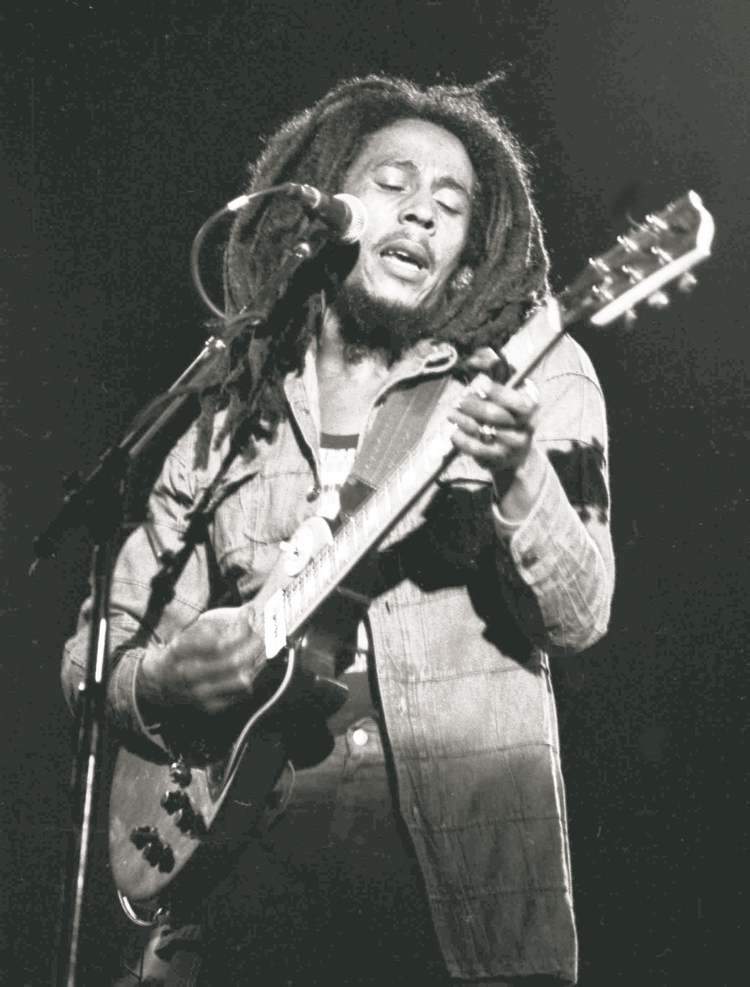
The Jamaican superstar was not necessarily the first to reach any specific destination. Records that can now be called reggae had been waxed before the Wailers first walked into Studio One in 1963. Desmond Dekker brought Jamaican rhythm to the crucial American market with Israelites, a Top-10 hit five years before Eric Clapton’s cover of I Shot the Sheriff first had mainstream rock fans in North America asking “Who is this Marley guy?” Nor was Marley a trailblazer for socially-conscious lyrics, which helped define his work.
He was, however, a rock-style star whose stature on the global stage was unprecedented for a Third World artist. And in the years since his death in 1981 at 36, it has only grown. The 1984 compilation Legend is the best-selling reggae album of all time, having found its way into 25 million homes around the world. The collection has been on the Billboard charts almost constantly since it was released. In 1999, Time Magazine ranked Exodus (1977) as the best album of the 20th century. Marley’s name recognition — at least when considered on a worldwide scale — rivals that of just about any rock ‘n’ roll legend.
Marley’s music did not come out of a vacuum. He and fellow founding Wailers Peter Tosh and Bunny Wailer were heavily transformed by American R&B, soul and doo-wop records by the likes of the Drifters, Frankie Lymon and the Impressions. That much is evident in their early 1960s records for Studio One and their seminal — some would argue their finest — recordings in the early 1970s, some self-produced and some helmed by the wildly inventive Lee “Scratch” Perry.
The Island albums that start with Catch a Fire in 1973 are Marley’s most commonly cited oeuvre. This is where reggae’s stirring beat, its strong pulse and its cries for social justice and global unity, often inspired by the Rastafarian faith, begin to blast from stereo systems in the bedrooms of American youngsters. (Inexplicably, white kids jumped in with both feet, while Marley had difficulty getting black youth to follow suit — a situation that persisted into the last years of his career.)
Marley’s ability to bring reggae’s message and sound to a large audience struck a particularly important chord with disenfranchised punks in the U.K., who drew inspiration from the newly discovered beat and its social commentary to revitalize rock ‘n’ roll in the late 1970s, just when it was in need of a transfusion.
If the rest of us now also take that distinctive beat as a given in our musical vocabulary, it’s a gift from Bob Marley.
— Postmedia News
Tiken Jah Fakoly on Bob Marley:
I discovered Bob Marley in 1980, in my small village, Gbéleban, north of the Ivory Coast. I was going to school. One day, I met somebody who spoke English and I asked him to explain the message to me.
When I discovered what it was, that is when I decided to sing. He was talking about injustice, equality, slavery times and colonization. Because we had injustice in our society, too, Bob Marley inspired me to sing about it.
The first song I heard was Africa Unite. This song was for us. We consider him our prophet.

Bob Marley made music a weapon — to fight against all the world’s injustice. Before him, I thought music was just to dance to or perform.
And before him, anyone who wanted to sing had to be well-dressed, even African artists. We came from poor families, so we couldn’t buy these beautiful clothes.
But that changed for me when I saw Bob Marley singing with his dreadlocks and his clothes a bit dirty. He made it possible for us to wear the same pants for a week.
Tiken Jah Fakoly is a reggae singer from the Ivory Coast. Since civil war broke out in his country in 2002, he has lived in exile in Mali. His most recent album is African Revolution.
KEY TRACKS:
1. Simmer Down
2. Get Up, Stand Up
3. No Woman, No Cry
4. Jamming
5. Redemption Song
Related Articles
Who wrote the book of rock? No. 1 -- The Beatles
Advertisement Advertise With Us
Advertisement Advertise With Us