Lyme disease may lurk in your own backyard
Bite from deer tick a health nightmare
Advertisement
Read this article for free:
or
Already have an account? Log in here »
To continue reading, please subscribe:

Digital Subscription
One year of digital access for only $205*
- Enjoy unlimited reading on winnipegfreepress.com
- Read the E-Edition, our digital replica newspaper
- Access News Break, our award-winning app
- Play interactive puzzles
*First annual payment billed as $205.00 + GST for one year. This annual subscription will automatically renew at $233.00 + GST every 52 weeks (10% off the regular annual price of $259.35). Offer available to new and qualified returning subscribers only. Cancel any time.
To continue reading, please subscribe:
Add Free Press access to your Brandon Sun subscription for only an additional
$1 for the first 4 weeks*
- Enjoy unlimited reading on winnipegfreepress.com
- Read the E-Edition, our digital replica newspaper
- Access News Break, our award-winning app
- Play interactive puzzles
*Your next Brandon Sun subscription payment will increase by $1.00 and you will be charged $17.95 plus GST for four weeks. After four weeks, your payment will increase to $24.95 plus GST every four weeks.
Read unlimited articles for free today:
or
Already have an account? Log in here »
Hey there, time traveller!
This article was published 31/08/2012 (5106 days ago), so information in it may no longer be current.
Do you believe you must be in an infected area to get Lyme disease? If you do, think again. A 10-year study reports you can catch this malady in your own backyard. And since spring and fall are prime times for this disease, being forewarned is forearmed. Particularly since a bite of the deer tick can have far-reaching health consequences.
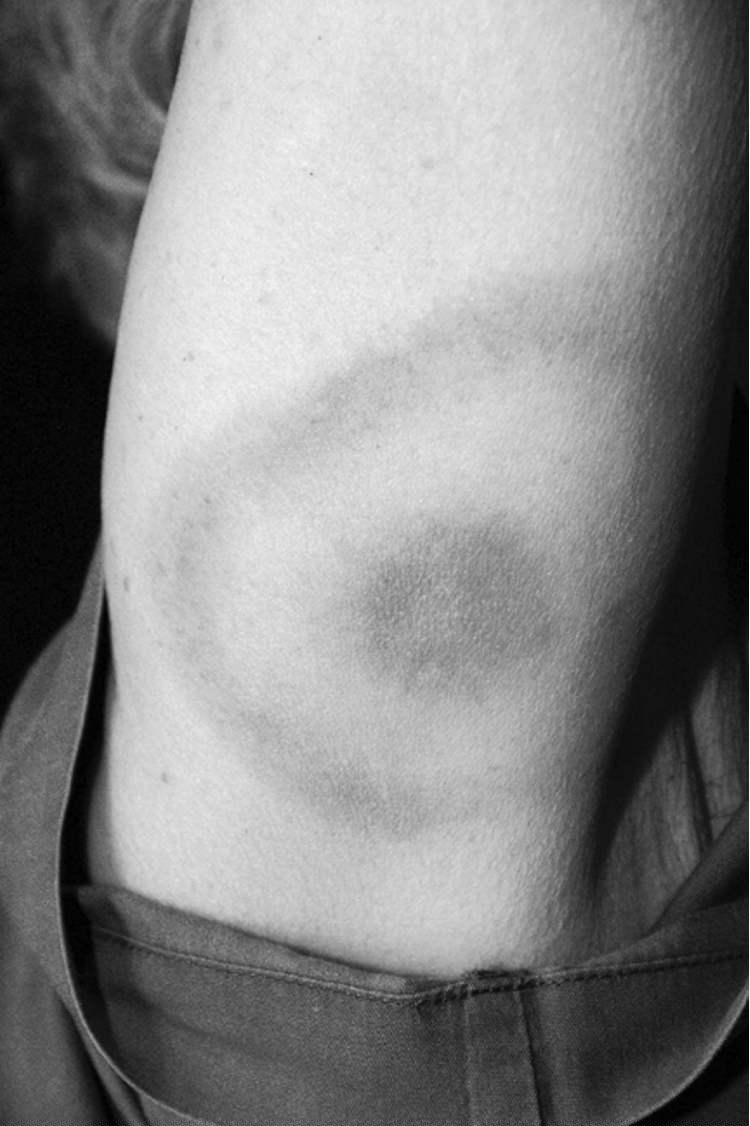
Lyme disease was first suspected in North America in 1975. In Lyme, Conn., an unusual number of children were developing what was initially thought to be juvenile rheumatoid arthritis. So a team of scientists from Yale University were sent to study this cluster of patients. These children all exhibited a “bull’s-eye” rash. In addition, they suffered from muscular, heart and neurological problems. The final diagnosis? Lyme disease.
The first case occurred in Canada in 1977, when a 13-year-old girl in southwestern Ontario was diagnosed with the disease.
Lyme disease is due to a bacterial germ, Borrelia burgdorferi, which resides in deer, mice, squirrels and other small animals. The blacklegged tick (deer tick) becomes infected when feeding on these animals and its bite then transmits the disease to humans.
Ticks are not insects. They are closely related to spiders and mites. They usually have a two-year life cycle during which time they feed three times.
Studies show there may be 2,000 infected ticks per acre of forested land. They stay at the end of tall grass or on other vegetation waiting for unsuspecting people to walk by.
They must remain attached to the skin for several hours to transmit Lyme disease.
The 10-year study revealed the blacklegged tick is present as far north as the 50th parallel.
Researchers studied 591 blacklegged ticks collected from dogs, cats, horses and people who had not travelled out of Ontario or who had not been to a Lyme disease-infected area. They found 12 per cent of ticks, usually females, were infected with B. burgdorferi.
The widespread distribution is believed due to songbirds dispersing immature blacklegged ticks during their northward spring migration.
The message for doctors and the public is people and domestic animals are at risk of contracting Lyme disease in their own communities.
Lyme disease has been labelled as The Great Imitator. Like syphilis, it can mimic many different diseases and has a multitude of clinical symptoms. The result is the diagnosis is often missed by doctors.
The first sign is usually a rash that erupts within a month after the initial bite of an infected tick. It’s often found at the site of the bite and is red and circular with a clear centre that resembles a bull’s eye.
But a report from the U.S. Centers for Disease Control and Prevention says only three out of 10 people get a bull’s-eye rash.
The rash my be painless, or painful and itchy, and hot. Patients normally complain of flu-like symptoms, such as fatigue, headache, aching muscles and low-grade fever. There may be pain in the joints and enlargement of lymph nodes.
If untreated three to five months later, the disease strikes again. About one in 10 patients develops cardiac abnormalities, such as irregular heart beat or heart block. The majority recover after a short time.
Neurological complications occur in about 10 per cent of patients. Peripheral nerves may be involved or patients suffer from encephalitis, meningitis or Bell’s palsy.
The last stage of Lyme disease occurs five months to five years after the initial infection.

Patients complain of pain, primarily in large joints such as the knees. A few cases have been reported in which symptoms were similar to multiple sclerosis.
The best treatment for Lyme disease is prevention. Wear long-sleeve shirts and pants tucked into socks while walking in wooded areas. Light-coloured clothing is also preferable as ticks can be more easily spotted. Use an insect repellent. Check clothes for ticks and examine your body, including hair and scalp. It’s also prudent to check pets and brush them off outdoors.
Prompt treatment with antibiotics is essential to prevent later complications.
See the website: www.docgiff.com For comments: info@docgiff.com