

Compassion serves a political purpose
Manitoba tweaks feds on refugee health

Advertisement
Read this article for free:
or
Already have an account? Log in here »
To continue reading, please subscribe:
Digital Subscription
One year of digital access for only $1.44 a week*
- Enjoy unlimited reading on winnipegfreepress.com
- Read the E-Edition, our digital replica newspaper
- Access News Break, our award-winning app
- Play interactive puzzles
*Billed as $5.77 plus GST every four weeks. After 52 weeks, price increases to the regular rate of $19.95 plus GST every four weeks. Offer available to new and qualified returning subscribers only. Cancel any time.
To continue reading, please subscribe:
Add Free Press access to your Brandon Sun subscription for only an additional
$1 for the first 4 weeks*
- Enjoy unlimited reading on winnipegfreepress.com
- Read the E-Edition, our digital replica newspaper
- Access News Break, our award-winning app
- Play interactive puzzles
*Your next Brandon Sun subscription payment will increase by $1.00 and you will be charged $17.95 plus GST for four weeks. After four weeks, your payment will increase to $24.95 plus GST every four weeks.
Read unlimited articles for free today:
or
Already have an account? Log in here »
Hey there, time traveller!
This article was published 15/09/2012 (5148 days ago), so information in it may no longer be current.
Whenever there is a funding dispute in an area of shared jurisdiction, it is generally accepted that you never volunteer to increase your contribution to cover a shortfall in the interim. As soon as one level of government starts funding a previously cost-shared program, there really is no more negotiation. You blinked, and now you have to pay for it.
Not blinking usually means the people using the service or program in dispute end up suffering. For example, the provinces have fought with Ottawa over legal-aid funding. The federal government, at one time, covered half the total cost; today, it pays 20 per cent. The provinces have increased their share, but more is needed. With both sides refusing to blink, it’s unlikely it will ever be adequately funded.
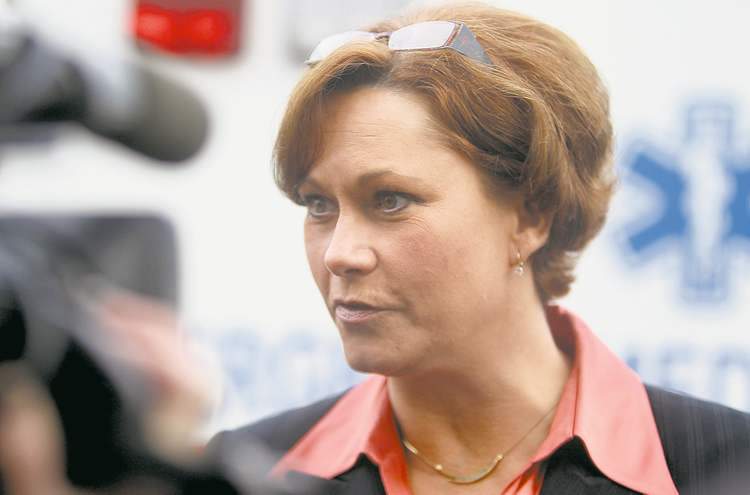
Why, then, would Manitoba Health Minister Theresa Oswald step up to fund extended health benefits for privately sponsored refugees, a program Ottawa previously funded? It is fair to conclude compassion played a key role.
Privately sponsored refugees typically arrive in Canada never having seen First World health care, and with significant chronic health problems. They are also less likely to be able to earn a living, at least at first, which would allow them to pay for many of the ancillary health-care services and devices they need to live a normal healthy life.
However, altruism is likely not the only motivation for Oswald’s decision. With no recrimination, there is some politics in this narrative.
Last spring, Ottawa suddenly and without clear explanation took over control of the delivery of immigrant settlement services in Manitoba. Prior to that, the province delivered settlement services as part of a broader agreement within the provincial nominee immigration program. This program allowed Manitoba to recruit immigrants specifically to Manitoba; the success it enjoyed with settlement services ensured they stayed here.
Manitoba did such a good job of settling its nominees that other provinces were clamouring for the same deal. Then Ottawa pulled the plug. Federal officials said they wanted to standardize settlement services and reclaim a program better delivered by Ottawa. For those who understood the success Manitoba had enjoyed delivering the services, that claim rang very hollow indeed.
What was slowly revealed as this story evolved was the federal Conservative government deeply resented the political mileage Manitoba’s NDP government was getting off the success of the nominee program. The feds decided it was time the level of government providing most of the funding got all the political credit. In this context, Oswald’s compassion takes on an elegant political purpose.
In the context of this decision, the withdrawal of support for refugee health care seems particularly ironic. How could Ottawa demand control over settlement services on the one hand, then withdraw from the provision of services to one stream of immigration? No adequate explanation exists.
Immigration advocates were already solidly behind the province in protesting Ottawa’s decision to take over settlement services. However, backfilling health-care services for refugees is still an effective reminder to those advocates, and immigrants in general, of the importance of the province’s role in settling immigrants.
Provincial officials will deny there is politics at work, but Manitoba’s response is out of character for a province in a funding dispute. On most files, even ones as compelling as this, Manitoba has consistently refused to step in where it believes Ottawa has unfairly withdrawn.

In 2008, Manitoba and Ottawa reached an agreement called Jordan’s Principle, in which both levels of government agreed that no First Nation child in need of special medical services would go without because of a funding dispute. The principle was named for Jordan Anderson, a five-year-old First Nations boy who died in 2005 after being forced to move to Winnipeg from Norway House to receive medical treatment. The move was necessary because the two levels of government could not agree on which would pay to provide services in his home community.
Despite a stated commitment to Jordan’s Principle, the province and federal government continue to spar over special-needs services to First Nations children on reserve. In some cases, this has meant children go without while negotiations continue.
In the case of refugee health-care services, the province stepped in without concern about losing leverage. Perhaps it was because it believes Ottawa would never relent, and Manitoba didn’t want to leave refugees vulnerable. Or perhaps it was because it amplifies the province’s protests on immigrant settlement services.
Or perhaps it was a combination of the two. It appears there are times when it is possible to be altruistic and politically strategic at the same time.
dan.lett@freepress.mb.ca
Dan Lett is a columnist for the Free Press, providing opinion and commentary on politics in Winnipeg and beyond. Born and raised in Toronto, Dan joined the Free Press in 1986. Read more about Dan.
Dan’s columns are built on facts and reactions, but offer his personal views through arguments and analysis. The Free Press’ editing team reviews Dan’s columns before they are posted online or published in print — part of the our tradition, since 1872, of producing reliable independent journalism. Read more about Free Press’s history and mandate, and learn how our newsroom operates.
Our newsroom depends on a growing audience of readers to power our journalism. If you are not a paid reader, please consider becoming a subscriber.
Our newsroom depends on its audience of readers to power our journalism. Thank you for your support.
Advertisement Advertise With Us
Advertisement Advertise With Us