

Helping workers live normal lives
Schizophrenia no barrier
Advertisement
Read this article for free:
or
Already have an account? Log in here »
To continue reading, please subscribe:
Digital Subscription
One year of digital access for only $1.44 a week*
- Enjoy unlimited reading on winnipegfreepress.com
- Read the E-Edition, our digital replica newspaper
- Access News Break, our award-winning app
- Play interactive puzzles
*Billed as $5.77 plus GST every four weeks. After 52 weeks, price increases to the regular rate of $19.95 plus GST every four weeks. Offer available to new and qualified returning subscribers only. Cancel any time.
To continue reading, please subscribe:
Add Free Press access to your Brandon Sun subscription for only an additional
$1 for the first 4 weeks*
- Enjoy unlimited reading on winnipegfreepress.com
- Read the E-Edition, our digital replica newspaper
- Access News Break, our award-winning app
- Play interactive puzzles
*Your next Brandon Sun subscription payment will increase by $1.00 and you will be charged $17.95 plus GST for four weeks. After four weeks, your payment will increase to $24.95 plus GST every four weeks.
Read unlimited articles for free today:
or
Already have an account? Log in here »
Hey there, time traveller!
This article was published 01/10/2012 (5132 days ago), so information in it may no longer be current.
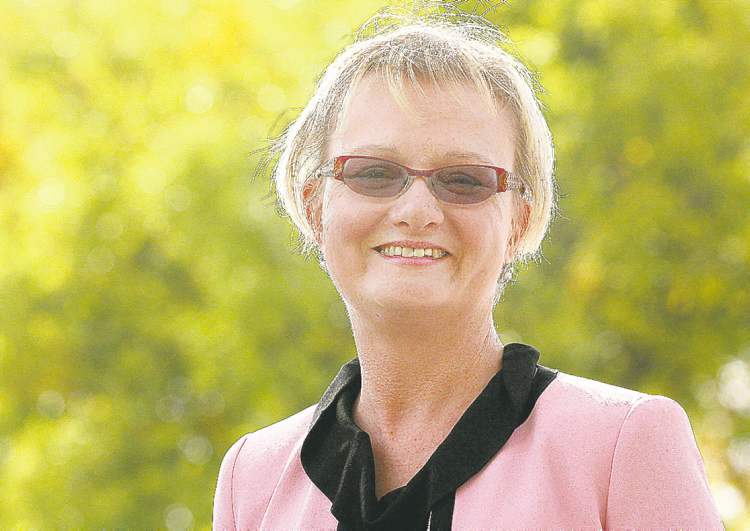
Barb, a successful community nurse in Winnipeg, couldn’t find a support group for people like her, who have been diagnosed with schizophrenia. So she started one.
“Two and a half years ago, I came to the Manitoba Schizophrenia Society and asked whether they had a support group for working professionals like myself living with schizophrenia, and when they said no, Chris Summerville, the executive director of the society, said ‘Why don’t you start one?’ “
So Barb, who was diagnosed in 1997, created the Partners in Awareness group at the society, a peer support group made up of dynamic Manitoba professionals living with schizophrenia. When she isn’t working, Barb volunteers her time facilitating the group, which meets the first Tuesday of every month.
“It’s been hard, at times, to get the message out because there is so much stigma, it’s so large and overwhelming, that a lot of people keep their diagnosis a secret; they want to stay in the closet. But we’ve put posters out and had a public service announcement on CTV.”
Barb understands the struggle to overcome stigma first-hand.
“My dad said I was lazy, and my brother said ‘Just snap out of it; just flip on the switch and you’ll be fine.’ So it’s hard when you’re getting that kind of response from your own family,” says Barb. “And then, with the Vince Li case (the man who beheaded a sleeping passenger on a Greyhound bus), that put us back years, just when we were starting to gain some ground.”
“This organization, this society, has given me a shot in the arm of encouragement and empowerment, a total acceptance of who I am and such a great sense of belonging that I’ve never really experienced before, so it’s just marvellous, so amazing,” says Barb.
Since Barb started the group, her volunteering experience has grown. She is definitely a woman on a mission — she is a volunteer board member; she is on the planning committee for their national conference, which will be taking place in the spring of 2013; she has participated in the Partners in Mental Health I’m Not Myself Today campaign; and even attended last spring’s international Together Against Stigma conference in Ottawa.

The Manitoba Schizophrenia Society defines schizophrenia as a complex biochemical brain illness, the cause of which is not yet known. The illness affects each person differently and can follow a varying course over time.
“I guess what people need to know about schizophrenia is, as long as a person is compliant with taking medication, you can fulfil your life; you can have the same dreams and aspirations as someone living without it,” says Barb, “because even with my mental illness, I’ve obtained two bachelor’s degrees — a bachelor of arts and a bachelor of nursing. And I obtained the bachelor of nursing after I was diagnosed with schizophrenia.”
“But there are still so many people who fall through the cracks of the mental-health system and so many people with schizophrenia are part of the homeless, on the street,” says Barb.
The Manitoba Schizophrenia Society provides one-on-one consultation, peer support groups for people living with schizophrenia and their families, workshops and public educational presentations. For more information on resources or how to become involved, visit their website (www.mss.mb.ca)
If you know a special volunteer who strives to make his or her community a better place to live, please contact Carolyn Shimmin at carolynshimmin@gmail.com .