

Today’s aboriginal elders — with their links to the past — are forging an environmental future
Advertisement
Read this article for free:
or
Already have an account? Log in here »
To continue reading, please subscribe:
Digital Subscription
One year of digital access for only $1.44 a week*
- Enjoy unlimited reading on winnipegfreepress.com
- Read the E-Edition, our digital replica newspaper
- Access News Break, our award-winning app
- Play interactive puzzles
*Billed as $5.77 plus GST every four weeks. After 52 weeks, price increases to the regular rate of $19.95 plus GST every four weeks. Offer available to new and qualified returning subscribers only. Cancel any time.
To continue reading, please subscribe:
Add Free Press access to your Brandon Sun subscription for only an additional
$1 for the first 4 weeks*
- Enjoy unlimited reading on winnipegfreepress.com
- Read the E-Edition, our digital replica newspaper
- Access News Break, our award-winning app
- Play interactive puzzles
*Your next Brandon Sun subscription payment will increase by $1.00 and you will be charged $17.95 plus GST for four weeks. After four weeks, your payment will increase to $24.95 plus GST every four weeks.
Read unlimited articles for free today:
or
Already have an account? Log in here »
Hey there, time traveller!
This article was published 17/11/2012 (4950 days ago), so information in it may no longer be current.
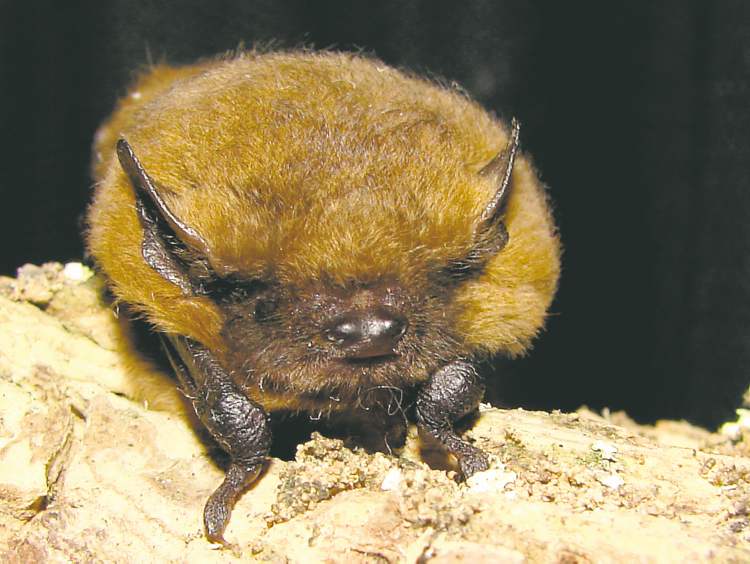
Heidi Cook’s late grandfather, a Cree trapper and hunter, cherished the limestone caves that are home to little brown bats near Grand Rapids in northern Manitoba.
He helped the province understand the significance of the area and helped pave the way for a proposal in which the Cree and the Manitoba government would share management of the caves, the bats and the land around the unique collection of natural subterranean caverns.
The proposed ecologically protected area is to be named after Cook’s grandfather, The Walter Cook Park Reserve.
The area is also a living illustration of the traditional practice of Ohcinewin, the Cree law of consequence. Ohcinewin refers to the belief in a prime directive; that if you go to a place or do something that causes needless harm, you’ll risk consequences.
“That’s something you don’t play around with,” said Cook, a Duff Roblin Scholar at the University of Winnipeg whose also a land manager for her Cree homeland Misipawistik Cree Nation in Grand Rapids.
“It’s the community members who know the land and have the knowledge to look after it. We need to become involved in setting the rules. If it becomes a protected area, then we need to know what to protect it for and what to protect it from,” she said.
It used to be that you’d ask an elder if you had a question about anything aboriginal or wanted to understand traditions such as Ohcinewin.
But now, those in younger generations, such as Cook, 33, bring that ancient wisdom to bear on new applications, such as university programs in Western Canada that focus on aboriginal governance, environmental practices and literature. With the environment, the most practical application of traditional knowledge is tied to land management.
During the last two decades, agreements between First Nations, the province and Ottawa to co-manage lands and natural resources serve double duty: to recognize land rights and to apply traditional knowledge and science to conservation (see box).
It’s a vastly different way of looking at environmental stewardship, says Gabriel Nemoga, University of Winnipeg associate professor of indigenous studies.
“Indigenous knowledge, compared to western knowledge, is rooted in a different cosmology,” said the Colombian-born professor.
It’s not about magic or superstition either, he said.
“It means from an indigenous perspective that we are not separate from nature. We belong to nature and there is no disconnect between humans and nature. That’s something we find in most indigenous cosmologies, that we are not here to dominant or exploit nature. We’re here to protect it and take care of it,” Nemoga said. “This is the indigenous understanding.”
In Manitoba, the best known example of such a partnership is Pimachiowin Aki, the world heritage project to protect the heart of Canada’s boreal forest straddling the Manitoba-Ontario border. The partnership involves five boreal First Nations and both provincial governments.
“My passion for this work comes from my own experience, in relearning the teachings that come from my elders,” Sophia Rabliauskas, a Poplar River First Nation resident and a corporate spokeswoman for Pimachiowin Aki. (The name is Ojibway for “the land that gives life.”)
“Their experience and knowledge of their surroundings was the key to their survival. My father said if we do not care for the land, the land will suffer and we’ll suffer with her. I believe that applies to the whole human race,” she said.
Elsewhere in the world, countries such as Australia are working on land-management agreements with indigenous people for the same reason.

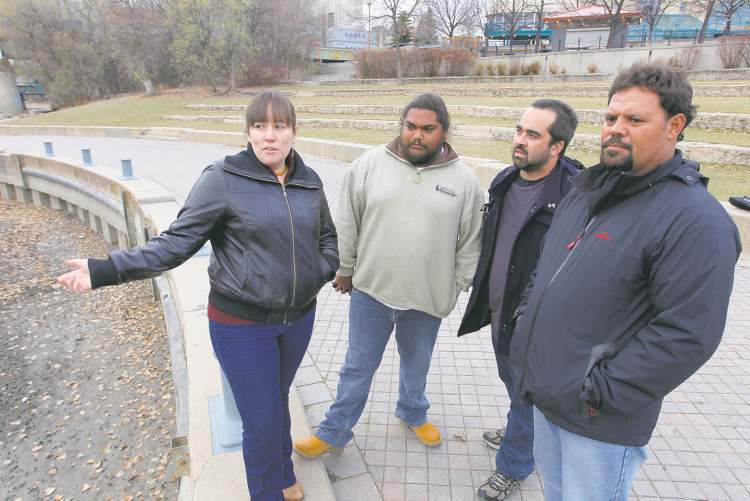
A delegation of three aboriginal Australians met with experts, including traditional aboriginal elders and land managers, in Winnipeg early this month to talk about how they manage part of the Outback.
“We use traditional knowledge and scientific knowledge to improve conditions in country. It makes our environment work more stronger,” said Philip Bibido McCarthy, a Bardi Jawi Ranger on the northwest coast of Australia.
The group also stopped in Vancouver, Yellowknife, N.W.T., and Ottawa as part of a Canadian tour sponsored by the American-based Pew Environment Group.
“The fact is that most of us in both countries live in cities but there are incredibly important ecological areas where there are a lot of aboriginal people who have a strong desire to live, manage and control the future of their lands,” Australian Pew Environment spokesman Patrick O’Leary said, during a forum at the University of Winnipeg.
alexandra.paul@freepress.mb.ca
History
Updated on Saturday, November 17, 2012 11:27 AM CST: corrects name of Pew Environment Group
Updated on Saturday, November 17, 2012 11:39 AM CST: adds fact box