

Largest flax mill moving to U.S.
Angusville plant had 60 employees
Advertisement
Read this article for free:
or
Already have an account? Log in here »
To continue reading, please subscribe:
Monthly Digital Subscription
$1 per week for 24 weeks*
- Enjoy unlimited reading on winnipegfreepress.com
- Read the E-Edition, our digital replica newspaper
- Access News Break, our award-winning app
- Play interactive puzzles
*Billed as $4.00 plus GST every four weeks. After 24 weeks, price increases to the regular rate of $19.95 plus GST every four weeks. Offer available to new and qualified returning subscribers only. Cancel any time.
Monthly Digital Subscription
$4.99/week*
- Enjoy unlimited reading on winnipegfreepress.com
- Read the E-Edition, our digital replica newspaper
- Access News Break, our award-winning app
- Play interactive puzzles
*Billed as $19.95 plus GST every four weeks. Cancel any time.
To continue reading, please subscribe:
Add Free Press access to your Brandon Sun subscription for only an additional
$1 for the first 4 weeks*
*Your next subscription payment will increase by $1.00 and you will be charged $16.99 plus GST for four weeks. After four weeks, your payment will increase to $23.99 plus GST every four weeks.
Read unlimited articles for free today:
or
Already have an account? Log in here »
Hey there, time traveller!
This article was published 07/12/2012 (4796 days ago), so information in it may no longer be current.
Manitoba has been out-duelled again for business by a nearby state with news that the world’s largest flax mill is moving to the United States, says the family who started the company.
The Glanbia International flax mill, located at Angusville just east of Russell, is relocating to Sioux Falls, S.D., taking 60 jobs with it.
The flax mill was a great local success story. It started in 1990 with Glenn and Linda Pizzey baking flax bread in their kitchen and selling loaves to supermarkets across Manitoba. They eventually built what they believe to be the world’s largest flax mill right on their farm. The couple sold the plant in 2007 to Glanbia Nutritionals, a publicly traded multinational based in Kilkenny, Ireland.

The plant burned down last March. Glanbia always said it planned to rebuild, but word came recently that will take place elsewhere.
It’s the second Manitoba firm in less than a month to announce it’s moving to the United States. Medical-device company, IMRIS Inc., with 130 employees in Winnipeg, recently announced it’s moving to Minneapolis.
“(Glanbia’s decision) didn’t surprise me in the least because of how the business climate is outside of Winnipeg,” Linda Pizzey said in a telephone interview.
In part, said Pizzey, it’s the old question of whether to process where the raw product is grown or where the product is consumed. The mill’s flax is grown on the Prairies but most of its sales are in the U.S., she said.
But Pizzey believes the relocation was also influenced by poor treatment the flax processor received from the provincial government.
The flax mill is on Highway 476, which is “full of potholes” and unfit for large trucks hauling raw flax in or finished product out. It couldn’t handle full truckloads.
Instead of repairing the gravel road, Pizzey said, the province sent inspectors to make sure there were no overloaded trucks going to and from the mill.
“They have money for that but no money to even grade the road,” she said. “The province put absolutely nothing into infrastructure to encourage this company to stay here.”
Throw in Manitoba’s payroll tax and it’s not surprising companies are relocating to Saskatchewan, the Dakotas or Minnesota, she said. The flax plant has been a major economic driver in a region struggling to hold population.
Glanbia would only say its relocation decision is based on good highway and rail systems in South Dakota and proximity to customers and suppliers.
The company says it will try to accommodate its 58 employees with jobs in Sioux Falls, but Pizzey doesn’t expect many to relocate.
“All of the employees are our neighbours and friends, and most of them have lived in the community all their lives. It’s not very likely they’ll want to uproot their families.”
— — —
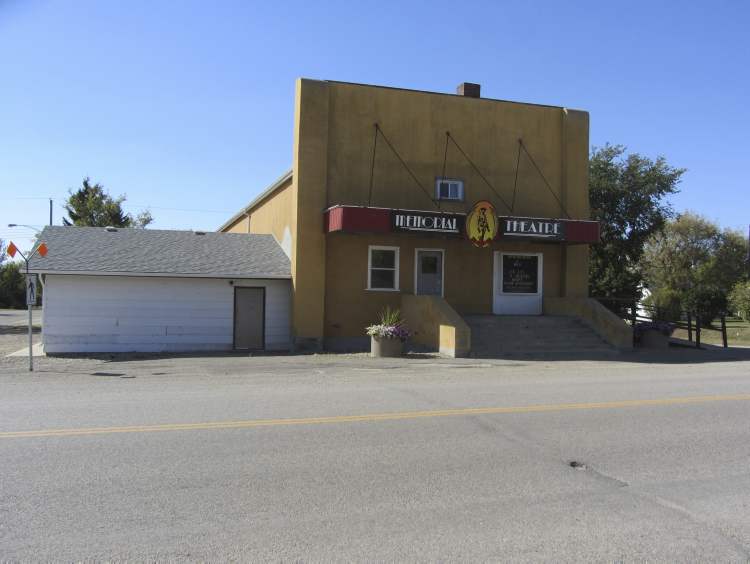
RICHARDSON RESCUE — Another small rural movie theatre has been saved, this time with help from the Richardson family’s Tundra Oil and Gas Ltd.

Tundra recently donated $40,000 so the Reston Memorial Theatre can go ahead and buy a digital movie projector and restore the building.
Reston is located in the heart of Manitoba’s oilpatch. Many small rural movie houses are expected to go out of business with the movie industry going digital-only in 2013. Digital projectors cost $60,000 to $100,000.
The Reston theatre was built in 1948 and named in honour of veterans of the world wars. It is owned by the RM of Pipestone. Other individuals and businesses have also contributed funds.
“We were quite ecstatic as a theatre board to get that money (from Tundra),” said board chairman Ian Milliken.
bill.redekop@freepress.mb.ca