Walking dead walking tall as vampires become anemic
Advertisement
Read this article for free:
or
Already have an account? Log in here »
To continue reading, please subscribe:

Digital Subscription
One year of digital access for only $205*
- Enjoy unlimited reading on winnipegfreepress.com
- Read the E-Edition, our digital replica newspaper
- Access News Break, our award-winning app
- Play interactive puzzles
*First annual payment billed as $205.00 + GST for one year. This annual subscription will automatically renew at $233.00 + GST every 52 weeks (10% off the regular annual price of $259.35). Offer available to new and qualified returning subscribers only. Cancel any time.
To continue reading, please subscribe:
Add Free Press access to your Brandon Sun subscription for only an additional
$1 for the first 4 weeks*
- Enjoy unlimited reading on winnipegfreepress.com
- Read the E-Edition, our digital replica newspaper
- Access News Break, our award-winning app
- Play interactive puzzles
*Your next Brandon Sun subscription payment will increase by $1.00 and you will be charged $17.95 plus GST for four weeks. After four weeks, your payment will increase to $24.95 plus GST every four weeks.
Read unlimited articles for free today:
or
Already have an account? Log in here »
Hey there, time traveller!
This article was published 12/01/2013 (4972 days ago), so information in it may no longer be current.
THE Walking Dead, the most popular drama series in U.S. cable-television history, is a heart-warming story of a man and his son who hack, slash, stab and shoot their way through zombie-infested, post-apocalyptic Georgia.
Warm Bodies, one of the most anticipated movies of the young year, is a Romeo and Julietstyle romance about a very dead boy who falls in love with a girl who’s not exactly dying to reciprocate his affections.
The Zombie Survival Guide, Max Brooks’ tonguein- cheek survival manual, is No. 9 this week on the New York Times’ paperback-nonfiction bestseller list, despite first being published back in 2003.
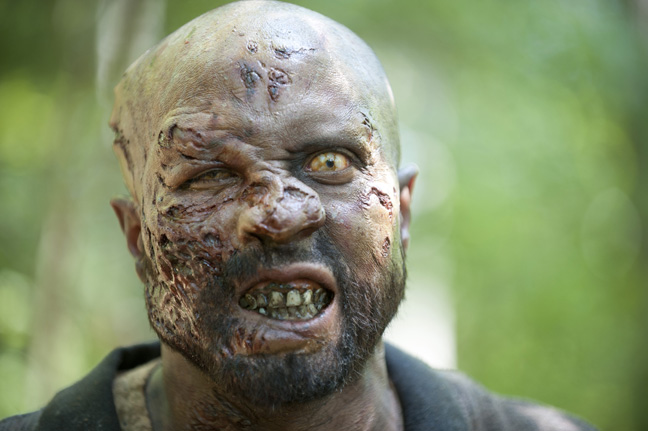
After shuffling and moaning around the fringes of popular culture for decades, reanimated, cannabilistic corpses have finally conquered mainstream television, film and literature.
Zombies, once considered too gory for anything but horror audiences and video games, are now more common than clowns and teddy bears and easily a far better box-office draw, even for children, as the animated undead tale ParaNorman proved by grossing $100 million during the latter months of 2012.
“Zombies are the new vampires. Didn’t you know that?” quipped Arlene Bellefleur, Carrie Preston’s waitress character, during the fourth-season finale of True Blood, a vampire-centric horror-comedy series that’s aired on HBO since 2008.
This sly little snippet of meta-commentary suggests it really is twilight time for undead creatures with fangs. In their place, the stage has been set for corpses that do nothing but amble around, say nothing besides “uuurgh” and serve no other purpose on the screen or on the page than to act as plot devices to compel human characters to do something else.
Compared to vampires, which are capable of speech and character development, zombies are uncharismatic. So why exactly are the creatures so popular?
Part of the answer has to do with allegory, as critics have long praised zombie art of any sort for serving as provocative social commentary. George A. Romero’s Night of the Living Dead, the 1968 black-and-white film considered the most influential zombie movie of all time, was parsed at the time as both an antiwar statement and a racism parable.
On a far less high-minded note, zombies may simply be popular because Hollywood prefers a safe bet. After the 2004-2005 release of three profitable zombie flicks — the comedy Shaun of the Dead, Zack Snyder’s Dawn of the Dead remake and Romero’s own Land of the Dead — every major studio started considering scripts that called for characters in various states of decomposition.
But copycat behaviour doesn’t explain the popular fascination with zombies well outside of the realm of film. In 2009, when Seth Graeme-Smith reimagined an 1813 Jane Austen classic as Pride and Prejudice and Zombies, the bizarre mashup became a bestseller. There are now university courses devoted to zombie literature. Before Idle No More, the only way to convince young Canadians to take to the streets was to hold a zombie walk.
Obviously, the fascination with zombies goes well beyond gore. Here are some of the possible reasons zombies speak to so many of us, especially at the moment:
The consumerism allegory
It was no accident George Romero set the original 1978 Dawn of the Dead inside a shopping mall. Upon encountering empty stores, the human characters of the film go on a hedonistic binge that demonstrates they really aren’t that different from the mindless flesh eaters that mill about outside. In an even-less-subtle analogy, the human survivors find themselves effectively trapped inside the mall, the very place that offers them anything they could possibly every need.
The culture of passivity
Building on critiques of consumerism, more recent zombie movies suggest modern society has already reduced human beings to a state of zombification. Shaun of the Dead has tremendous fun with this concept, most notably when Simon Pegg’s hapless anti-hero Shaun is too busy flipping channels to notice the zombie apocalypse unfolding around him — or when his video-game-addicted friend Ed (Nick Frost) displays little behaviorial change after becoming a zombie.
Fear of science and technology
While some zombie films portray the undead as supernatural creatures, a minority explain their existence as the result of a virus or other pathogen, often created through the hubris of human beings.
In 2002’s 28 Days Later, biological experiments unwittingly transform the population of England into fast-moving, perpetually enraged zombies. A virus is also responsible for transforming Americans into fleet-footed rage monsters in the unfortunate 2007 remake of I Am Legend, starring a miscast Will Smith.
The message here is as old as the Icarus legend — don’t mess with technology you cannot control.
Fear of contagion in general
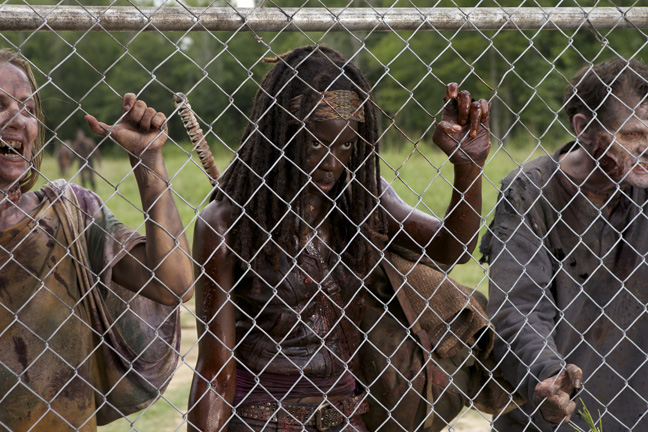
In many recent zombie conceptions, flesh-eaters can create more flesh-eaters, either through a scratch, a bite or both.
This idea has served as a proxy for all manner of real-life infectious threats, from HIV to SARS.
While humanity has feared plague since medieval times, only recently have biologists understood the concept of the zoonotic disease — a bug that jumps from animals to people and sometimes proves more lethal to its human host, as it has not had time to adapt. After all, the most successful parasites don’t kill their hosts. This concept has given rise to fears of environmental destruction contributing to our own demise. In 2009’s mostly comedic Zombieland, the plague gets started when someone eats a hamburger infected with mad-cow disease.
Apocalypticism
With the exception of flicks like Fido, where zombies are incorporated into society, most modern zombie plots involve a complete breakdown of society and its institutions. In the aftermath, the human beings struggling to survive often do horrific things, allowing authors and filmmakers to pose questions about what it really means to be human. This is the central premise that drives The Walking Dead, which consistently portrays postapocalyptic existence as a battle between competing instincts to survive and be compassionate.
In 1951, John Wyndham’s sci-fi novel The Day of the Triffids created a lot of the post-apocalyptic tropes now familiar to fans of the zombie-apocalypse subgenre. In Wyndham’s novel, about a comet that blinds most of humanity, scattered groups of survivors struggle to fight off both bioengineered vegetable monsters and each other as they attempt to re-establish some semblance of society. This idea plays into libertarian fantasies about living without the encumbrance of government rules or regulations. It also plays into both religious and secular fears the world is in fact coming to an end, as it was supposed to when Mayan calendar flipped over last December, or when the Gregorian calendar flipped over at the end of 1999.
Human beings have always been enamoured with the idea life as we know it is at an end. Maybe that’s because we yearn for another existence. Or maybe we simply have too many digits on our Visa balances.
Mistrust of government
If anything has accelerated the relatability of post-apocalyptic scenarios, it’s the real-life failure of governments to adequately respond to disasters.
In 2005, after Hurricane Katrina flooded New Orleans, there was real-life looting and violence, real-life impotence on the part of federal emergency agencies and real-life profiteering in the wake of the destruction. A post-apocalyptic scenario unfolded on CNN.
There’s now a widespread belief western governments cannot and will not be able to respond to climate change, economic collapse or new security threats.
So we watch zombie movies as a form of mental preparation.
Or we simply play more zombie video games, like Ed in Shaun of the Dead, and hope the hell that is to come won’t be much different than the one we have now.
bartley.kives@freepress.mb.ca
Second-coming soon
The most-anticipated zombie invasions of 2013
Warm Bodies
Release date: Feb. 1 Wrongly billed as the zombie-romance answer to the Twilight vampire-romance schlockfest, this very-deadRomeo & Juliet story promises to be more of a social satire, in a similar vein toShaun of the Dead or Fido. Nicholas Hoult, who played Beast in X-Men: First Class and will also star as the titular beanstalk climber in Jack The Giant Slayer, plays a zombified teenage boy who falls in love with a living female after consuming the brains of her boyfriend. Much hilarity apparently ensues.
The Walking Dead: Season 3.5
Air date (AMC): Feb. 10 One of the most intense dramas on TV returns from its twomonth mid-season hiatus to resolve a cliffhanger: the gun battle between two surviving groups of humans in zombie-infested, post-apocalyptic Georgia. Fans are dying to know the fate of good-guy redneck Daryl Dixon (Norman Reedus), but an even more-perplexing meta-cliffhanger was the December announcement showrunner Glen Mazzara would leave the series after the third season winds up this spring. Seeing as Walking Dead series creator Frank Darabont was turfed in the middle of the second season, it’s possible the show will survive such a drastic behindthe- scenes change.
World War Z
Release date: June 20 The big-screen adaptation of Max Brooks’ 2006 novel stars Brad Pitt as a UN researcher who zips around the world in an effort to figure out how to stop a planet-wide zombie apocalypse. The advance buzz is negative, mainly because the much-loved novel took the form of a series of interviews and did not have any sort of linear narrative. The initial trailer also reveals fast-moving, CGIgenerated zombies, arguably the least favourite variety among the genre’s hardcore fans.
R.I.P.D.
Release date: July 19 This not-so-promising buddy movie is based on the comic book
Rest In Peace Department, which follows the exploits of undead cops. Ryan Reynolds, who didn’t have the gravitas to play Green Lantern, is a recently dead detective who tries to solve his own murder with the help of a dead-for-centuries partner played by The Dude himself, Jeff Bridges.
— Kives


Advertisement Advertise With Us
Advertisement Advertise With Us