Growing hope
Ending global hunger realistic, but not inevitable

Advertisement
Read this article for free:
or
Already have an account? Log in here »
To continue reading, please subscribe:
Digital Subscription
One year of digital access for only $1.44 a week*
- Enjoy unlimited reading on winnipegfreepress.com
- Read the E-Edition, our digital replica newspaper
- Access News Break, our award-winning app
- Play interactive puzzles
*Billed as $5.77 plus GST every four weeks. After 52 weeks, price increases to the regular rate of $19.95 plus GST every four weeks. Offer available to new and qualified returning subscribers only. Cancel any time.
To continue reading, please subscribe:
Add Free Press access to your Brandon Sun subscription for only an additional
$1 for the first 4 weeks*
- Enjoy unlimited reading on winnipegfreepress.com
- Read the E-Edition, our digital replica newspaper
- Access News Break, our award-winning app
- Play interactive puzzles
*Your next Brandon Sun subscription payment will increase by $1.00 and you will be charged $17.95 plus GST for four weeks. After four weeks, your payment will increase to $24.95 plus GST every four weeks.
Read unlimited articles for free today:
or
Already have an account? Log in here »
Hey there, time traveller!
This article was published 08/06/2013 (4777 days ago), so information in it may no longer be current.
A decade ago, Lizzie Shumba set out to convince farmers in northern Malawi changing what they grew on their small plots of land would directly benefit the health of their children.
Now she has proof planting soybeans, groundnuts and other legumes — and introducing them into the local diet — has reduced child malnutrition by two-thirds in the catchment area of the Ekwendeni Hospital, which serves about 75,000 people.
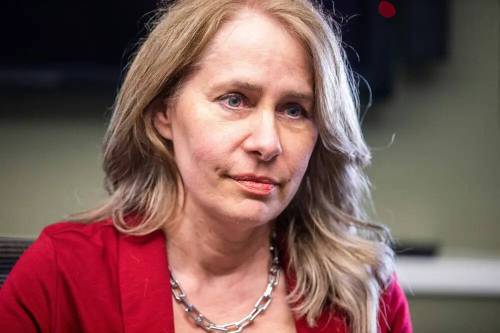
“Now our children are healthy and they are no longer admitted” to hospital for malnutrition, explains Shumba, program coordinator for the Soils, Food and Healthy Communities Program in Malawi by telephone from Toronto.

Shumba visits Winnipeg next week for a two-day international conference on fighting world hunger, organized by the Canadian Foodgrains Bank to commemorate the 30th anniversary of the Christian relief and development organization.
The conference also includes a free public event addressing the question, “How will the world feed nine billion people?” (Thursday, June 13, 7:30 p.m., at Elim Chapel, 546 Portage Ave.)
By 2050, the world population is projected to increase to nine billion, up from the current seven billion.
“We want to have a conversation about three approaches that make a real difference in terms of hunger,” explains organizer Stuart Clark about the public event.
Projects like the one in Malawi, which began in a hospital catchment area of 600-square kilometres and now has spread to neighbouring jurisdictions, demonstrate hunger and malnutrition can be solved from the ground up, says Jim Cornelius of the Canadian Foodgrains Bank, which supported the Soil, Food, and Healthy Communities program in the southeast African country.
“Most of the progress in reducing hunger in the world is the result of actions being taken by national governments and their own citizens,” he says. “The solution to hunger is two things: a livelihood and a social safety net system.”
An estimated 800 million people in the world deal with food shortages and malnutrition, but the prevalence of hunger is still significantly less than when the food bank was first conceived by the Mennonite Central Committee in the mid-1970s.
“This is not a hopeless cause,” he says, pointing to statistics showing about 16 per cent of the world population deals with hunger, down from 38 per cent 40 years ago. “The possibility of ending global hunger is realistic, but it’s not inevitable.”
In 1983, the MCC invited other churches to join them in addressing world hunger. Now 15 church agencies representing 32 Canadian denominations are involved in the Canadian Foodgrains Bank.

Over the years, getting food to hungry people has changed due to technology, says Cornelius. Gone are the days when the organization shipped grain donated by Canadian farmers directly to hungry people halfway around the world. The organization still accepts Canadian-grown commodities, but it converts those donations into cash so their international partners can purchase food on site.
“We used to joke that it would be nice if we could just email the food,” Cornelius says. “We’re not far away from making (electronic) transfers to people who need it through their cellphones.”
What hasn’t changed in three decades is the willingness of Canadian Christians to support the organization, which used its $40-million budget last year to feed two million people in 37 countries.
“It still goes back to the Old Testament principles of setting aside some of your land for the poor and hungry,” says Cornelius. “We’re still about sharing.”
brenda@suderman.com
The Free Press is committed to covering faith in Manitoba through our Religion in the News project. This reporting continues because readers like you step forward to fund it.
Donate now to support our reporting on religion.
Your donation is eligible for a charitable tax receipt.
BECOME A FAITH JOURNALISM SUPPORTER
Brenda Suderman has been a columnist in the Saturday paper since 2000, first writing about family entertainment, and about faith and religion since 2006.
Our newsroom depends on a growing audience of readers to power our journalism. If you are not a paid reader, please consider becoming a subscriber.
Our newsroom depends on its audience of readers to power our journalism. Thank you for your support.
The Free Press is committed to covering faith in Manitoba through our Religion in the News project. This reporting continues because readers like you step forward to fund it.
Donate now to support our reporting on religion.
Your donation is eligible for a charitable tax receipt.
BECOME A FAITH JOURNALISM SUPPORTER
Brenda Suderman has been a columnist in the Saturday paper since 2000, first writing about family entertainment, and about faith and religion since 2006.
Our newsroom depends on a growing audience of readers to power our journalism. If you are not a paid reader, please consider becoming a subscriber.
Our newsroom depends on its audience of readers to power our journalism. Thank you for your support.
Advertisement Advertise With Us
Advertisement Advertise With Us
The Free Press acknowledges the financial support it receives from members of the city’s faith community, which makes our coverage of religion possible.