

These eggs are just ducky
Advertisement
Read this article for free:
or
Already have an account? Log in here »
To continue reading, please subscribe:
Monthly Digital Subscription
$1 per week for 24 weeks*
- Enjoy unlimited reading on winnipegfreepress.com
- Read the E-Edition, our digital replica newspaper
- Access News Break, our award-winning app
- Play interactive puzzles
*Billed as $4.00 plus GST every four weeks. After 24 weeks, price increases to the regular rate of $19.95 plus GST every four weeks. Offer available to new and qualified returning subscribers only. Cancel any time.
Monthly Digital Subscription
$4.99/week*
- Enjoy unlimited reading on winnipegfreepress.com
- Read the E-Edition, our digital replica newspaper
- Access News Break, our award-winning app
- Play interactive puzzles
*Billed as $19.95 plus GST every four weeks. Cancel any time.
To continue reading, please subscribe:
Add Free Press access to your Brandon Sun subscription for only an additional
$1 for the first 4 weeks*
*Your next subscription payment will increase by $1.00 and you will be charged $16.99 plus GST for four weeks. After four weeks, your payment will increase to $23.99 plus GST every four weeks.
Read unlimited articles for free today:
or
Already have an account? Log in here »
Hey there, time traveller!
This article was published 29/06/2013 (4663 days ago), so information in it may no longer be current.
Since prehistoric times, bird eggs have been a valuable food source.
Chickens and ducks were probably domesticated from jungle fowl in Asia before 7500 BC, introduced to Egypt by 1500 BC and Greece and Rome by 800 BC.
Most bird eggs are edible — I once served scrambled ostrich egg for a summer backyard brunch. It was a hit, but it was not easy getting through the shell, considering it can withstand the weight of a grown human. I eventually had the hammer and chisel out… ha.
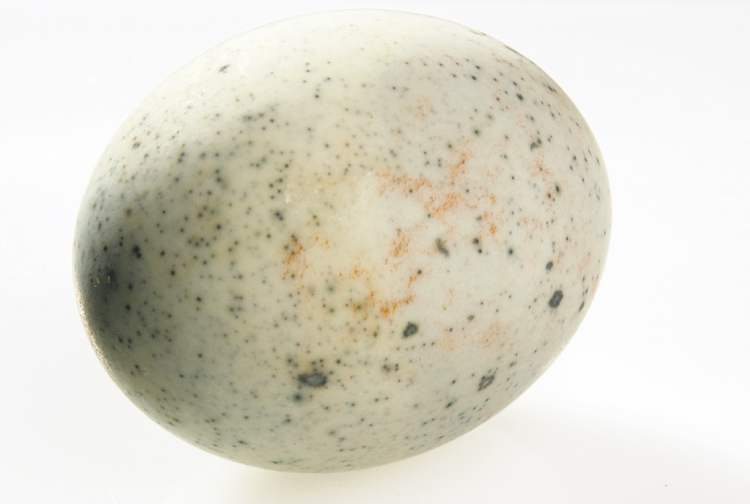
Roman meals often started with an egg course and, in the Middle Ages, eggs were forbidden during Lent because they were considered rich. Interestingly, the word mayonnaise is derived from the medieval French word moyeu for yolk or centre.
Here is a piece of Canadiana — the egg carton was invented in 1911 by Joseph Coyle of B.C. to resolve a dispute between a farmer and a hotel manager about broken eggs.
Duck eggs, fresh and salted, are commonly used in Asian cultures.
They have twice the nutritional value of chicken eggs, are an alkaline producing food and have more Omega 3 fatty acids
Use duck eggs when baking; their whites make fluffier and richer cakes and creamier baked custards or cr®me caramel.

Unfortunately, they are higher in cholesterol — but I’m not giving medical advice.
How to cook duck eggs?
Same as chicken eggs — they are delicious fried, scrambled, boiled or poached. You can also try pickling them, which makes them a meal in itself.
— Keith F. Mºller, Dean, School of Hospitality and Culinary Arts, Red River College