Choreographer’s adaptation of Margaret Atwood’s dystopian novel strikes current chord

Advertisement
Read this article for free:
or
Already have an account? Log in here »
To continue reading, please subscribe:

Digital Subscription
One year of digital access for only $205*
- Enjoy unlimited reading on winnipegfreepress.com
- Read the E-Edition, our digital replica newspaper
- Access News Break, our award-winning app
- Play interactive puzzles
*First annual payment billed as $205.00 + GST for one year. This annual subscription will automatically renew at $233.00 + GST every 52 weeks (10% off the regular annual price of $259.35). Offer available to new and qualified returning subscribers only. Cancel any time.
To continue reading, please subscribe:
Add Free Press access to your Brandon Sun subscription for only an additional
$1 for the first 4 weeks*
- Enjoy unlimited reading on winnipegfreepress.com
- Read the E-Edition, our digital replica newspaper
- Access News Break, our award-winning app
- Play interactive puzzles
*Your next Brandon Sun subscription payment will increase by $1.00 and you will be charged $17.95 plus GST for four weeks. After four weeks, your payment will increase to $24.95 plus GST every four weeks.
Read unlimited articles for free today:
or
Already have an account? Log in here »
Hey there, time traveller!
This article was published 12/10/2013 (4658 days ago), so information in it may no longer be current.
Lila York doesn’t sound stressed, exactly, but there’s a note of urgency and excitement in her voice. The New York-based choreographer’s bold adaptation of Margaret Atwood’s bestselling dystopian novel The Handmaid’s Tale, commissioned by the Royal Winnipeg Ballet, is finally making its world première next week at the Centennial Concert Hall.
The full-length story ballet, which will kick off the RWB’s 74th season Wednesday night, has been percolating in York’s imagination for the better part of a decade. To see it in its final days of rehearsals has been gratifying — and the fact that it’s a big, anticipated show isn’t lost on her.
“It’s the quintessential Canadian project,” she says. “It’s one of the most well-read Canadian novels by Canada’s most celebrated author.”
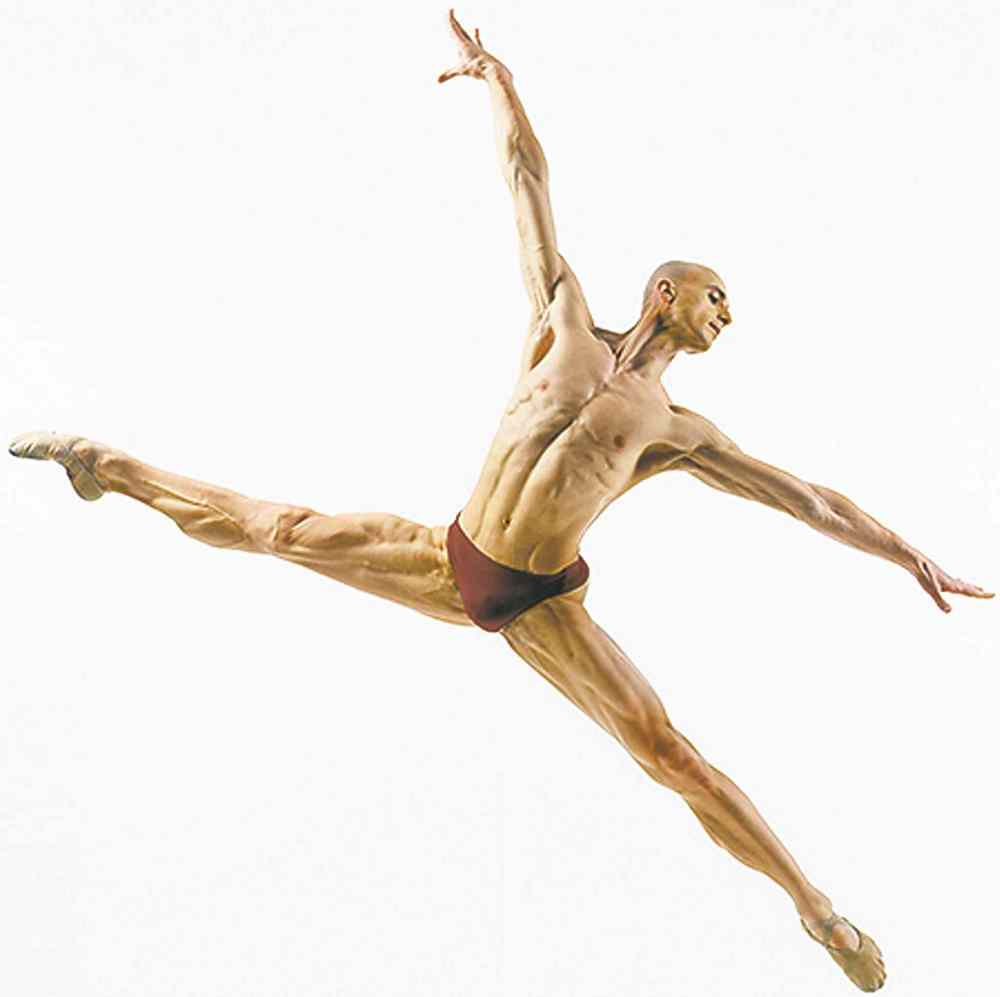
It’s also still incredibly timely. Published in 1985, The Handmaid’s Tale paints a horrifying picture of a totalitarian society in the not-so-distant future in which women have no rights and are separated into classes, as recounted by a Handmaid named Offred, who has been placed in the home of Commander Fred and his wife, Serena Joy. Handmaids are used as reproductive servants whose sole function is to produce children for the Wives.
Nearly 30 years later, when women are still battling for reproductive rights and sexual agency — particularly in York’s native U.S., where a woman’s uterus is very much regulated by the government — Atwood’s book feels strikingly current.
“Everything she wrote about is still relevant, maybe even more relevant,” York says. “Women’s issues are really front and centre in the U.S. right now. Even though it’s technically legal at the federal level, there are states that are still trying to outlaw abortion. The whole issue of women being able to control their own bodies and their own decisions, that’s what The Handmaid’s Tale is about. A lot of political pundits reference The Handmaid’s Tale. You’ll see a story about contraception in North Carolina, for example, and they’ll say, ‘This is real Handmaid’s Tale stuff.’ It’s part of the zeitgeist.”
York says there’s plenty of room in ballet, alongside perennial classics such as Sleeping Beauty and Swan Lake, to reflect modern concerns. “I’m interested in ballet taking on story ballets that speak to our time and our issues,” she says. “Opera is doing that more now, but it’s not something ballet really has ventured into. I’m hoping we’ll see more of it.”
The RWB, helmed by artistic director André Lewis, has proven progressive on that front, thanks to its willingness to take risks and its ambitious, challenging programming. The company was a perfect fit for The Handmaid’s Tale.
“I knew I wanted it to be a Canadian company,” York says. “André Lewis has been interested since the beginning, which was really heartening for me. It was interesting as an idea for a lot of companies — but it’s a bold choice. I’m so grateful to the RWB.”
While certainly topical. York wouldn’t characterize her iteration The Handmaid’s Tale, which has previously been adapted as a 1990 movie and a 2000 opera, as overtly political. Her ballet cuts to the emotional core of the story, focusing on its main characters.
“I did that intentionally,” she says of her plot-based approach. “The issues that surround it are certainly political, and most people are aware of what’s currently going on in the world. It’s not my job to preach. It’s my job to make a moving, poignant story ballet. It’s about these characters and how they function within this society.”
Still, she recognizes the story she’s telling has inherent politics. When it comes to The Handmaid’s Tale, the personal is political.
“It’s very much a woman’s story,” she says. “There are four really meaty female roles (Offred, Ofglen, Moira and Serena Joy). It’s about women fighting for their freedom and figuring out how to deal with these assaults on their liberties. The way Offred experiences it and the way Moira experiences it are different. Then you have the Commander’s wife, Serena Joy, who is supposedly part of the coup but is betrayed by them. They took her career from her.”
York first read The Handmaid’s Tale in college. “Then I read it many more times once I started working on this project,” she says with a laugh. While Atwood’s precise, evocative language lends well to balletic interpretation, the book is dense, which posed challenges. Each read revealed new details.
“She created this whole strata,” York marvels. “There are the Marthas, the Aunts, the Wives. But this is a company of 26 dancers, so there are no Marthas, for example. There are a lot of details I just couldn’t deal with.”
She toyed with the idea of doing a voice-over or using text. “I had to stop and ask myself, ‘Do I want to use language?’ It’s a big decision. I decided I should translate the language into movement. Watching movement, it’s a right-brain experience. It’s visceral. Bringing language brings the left brain into it, which is why I decided not to use language.
“I’ll let you know after it premieres if that was the right decision.”
York says the book’s action-driven plot made it easier to translate into movement. “Most novels take place in the mind of the narrator and they’re about psychological growth and changes that happen within. This is a novel in which things happen.”
Still, for her adaptation to work, York had to make one crucial change. While Atwood’s text is written in the past tense, York’s ballet is firmly in the present.
“I wanted the audience to experience it as Offred experiences it. I consulted Margaret Atwood about that because it was such a big change, and she was fine with it. She was absolutely great to work with.” Atwood will be in attendance on Wednesday night for a pre-show talk.
Another departure is York’s handling of the book’s explicit sex scenes. “I tried to remain faithful to the novel while stripping away the sexual content. I’ve abstracted it. It’s a safe work to bring children to.”
The choreography boasts a mix of classical and contemporary vocabulary (the women wear pointe shoes, but the men do not). “All choreographers do the same thing — we all use classical language and try to make it look new,” York says, laughing.
York’s dancers have appreciated her approach. Outgoing soloist Alexander Gamayunov, who will be retiring from the company after this run of shows, is dancing in the role of the Commander. “What I love about Lila’s vocabulary is that her language is very understandable for the audience, even when it’s abstract,” he says.

Newly minted soloist Sophia Lee, who makes her solo debut as Moira, a rebellious Handmaid and friend of Offred, has been pleasantly challenged by the athleticism of York’s choreography.
“The solo I do is pretty powerful; it’s almost like it should be for a man,” she says. “I almost don’t want to wear pointe shoes for it. To be honest, (the biggest challenge) is stamina. The solo is very, very hard.”
For York’s part, working with the RWB on this project has been nothing short of a dream.
“It’s been sublime. I’ve been working with ballet companies for 25 years and this has been, without a doubt, the best experience I’ve ever had.”
jen.zoratti@freepress.mb.ca
Jen Zoratti is a columnist and feature writer working in the Arts & Life department, as well as the author of the weekly newsletter NEXT. A National Newspaper Award finalist for arts and entertainment writing, Jen is a graduate of the Creative Communications program at RRC Polytech and was a music writer before joining the Free Press in 2013. Read more about Jen.
Every piece of reporting Jen produces is reviewed by an editing team before it is posted online or published in print – part of the Free Press‘s tradition, since 1872, of producing reliable independent journalism. Read more about Free Press’s history and mandate, and learn how our newsroom operates.
Our newsroom depends on a growing audience of readers to power our journalism. If you are not a paid reader, please consider becoming a subscriber.
Our newsroom depends on its audience of readers to power our journalism. Thank you for your support.
The Handmaid’s Tale
Royal Winnipeg Ballet
Oct. 16-19, 7:30 p.m.
Oct. 20, 2 p.m.
Centennial Concert Hall
Tickets start at $27, available at rwb.org
Soloist takes on new role
After 12 years with the company, Royal Winnipeg Ballet soloist Alexander Gamayunov is retiring from performance. His role as the Commander in The Handmaid’s Tale will be his last.
Gamayunov danced for the National Ballet of Ukraine upon graduating from the National Ballet School of Kiev. In 2001, he moved to Canada to join the RWB as a member of the corps de ballet. He was promoted to second soloist in 2003 and soloist in 2005.
Gamayunov has enthralled audiences in many leading roles, among them Dracula in Mark Godden’s Dracula, Prince Seigfreid in Swan Lake, Captain Hook in Jorden Morris’s Peter Pan, as well as his personal favourite, Tybalt in Rudi van Dantzig’s Romeo and Juliet.
He’s thrilled to add the Commander to the list.
“It’s a great opportunity for me to go out on a high note,” he says. “I was so happy (choreographer Lila York) considered me for this role.”
Still, the physically demanding part hasn’t been without its challenges. “For me, it’s my injuries,” Gamayunov says. “I’ve been dancing for 20 years and no matter how much you maintain your body, you still have injuries. I have a bad back. I’m trying not to think about the injuries — when you get onstage, you leave everything else behind.”
Gamayunov says he’ll miss connecting with audiences on an intimate, emotional level.
The veteran dancer has accepted a faculty position at the RWB School Professional Division, which begins after this run of shows. He’s excited to inspire shape a new generation of dancers. “I feel like I have a lot of experience to share.”
Gamayunov is also settling into another new role, that of family man. He and his wife, former RWB second soloist Carrie Broda, have a four-month-old son. He says his spouse has been his rock throughout his career.
“My beautiful wife is my support and my therapist. She was always there to listen and give me good advice. We always had a good time in the studio together. I want to thank her for that.”
Jen Zoratti is a columnist and feature writer working in the Arts & Life department, as well as the author of the weekly newsletter NEXT. A National Newspaper Award finalist for arts and entertainment writing, Jen is a graduate of the Creative Communications program at RRC Polytech and was a music writer before joining the Free Press in 2013. Read more about Jen.
Every piece of reporting Jen produces is reviewed by an editing team before it is posted online or published in print – part of the Free Press‘s tradition, since 1872, of producing reliable independent journalism. Read more about Free Press’s history and mandate, and learn how our newsroom operates.
Our newsroom depends on a growing audience of readers to power our journalism. If you are not a paid reader, please consider becoming a subscriber.
Our newsroom depends on its audience of readers to power our journalism. Thank you for your support.
Advertisement Advertise With Us
Advertisement Advertise With Us
History
Updated on Wednesday, October 16, 2013 9:55 AM CDT: Video added