

Firefighters battling cold as well as hot situations
Advertisement
Read this article for free:
or
Already have an account? Log in here »
To continue reading, please subscribe:

Digital Subscription
One year of digital access for only $205*
- Enjoy unlimited reading on winnipegfreepress.com
- Read the E-Edition, our digital replica newspaper
- Access News Break, our award-winning app
- Play interactive puzzles
*First annual payment billed as $205.00 + GST for one year. This annual subscription will automatically renew at $233.00 + GST every 52 weeks (10% off the regular annual price of $259.35). Offer available to new and qualified returning subscribers only. Cancel any time.
To continue reading, please subscribe:
Add Free Press access to your Brandon Sun subscription for only an additional
$1 for the first 4 weeks*
- Enjoy unlimited reading on winnipegfreepress.com
- Read the E-Edition, our digital replica newspaper
- Access News Break, our award-winning app
- Play interactive puzzles
*Your next Brandon Sun subscription payment will increase by $1.00 and you will be charged $17.95 plus GST for four weeks. After four weeks, your payment will increase to $24.95 plus GST every four weeks.
Read unlimited articles for free today:
or
Already have an account? Log in here »
Hey there, time traveller!
This article was published 07/01/2014 (4596 days ago), so information in it may no longer be current.
WET mitts that stick to ladders, hoses filled with slushy water and protective gear that stiffens in the cold.
While Winnipeggers bemoan slippery streets and stalled cars, city firefighters, fresh off battling three blazes overnight Sunday, have been grappling with unique cold-weather challenges.
Acting fire-paramedic Chief Bill Clark said firefighters are used to all the challenges of a Prairie winter, and plan for all cold-weather complications. “They know what to expect,” said Clark. “They know what’s coming.”
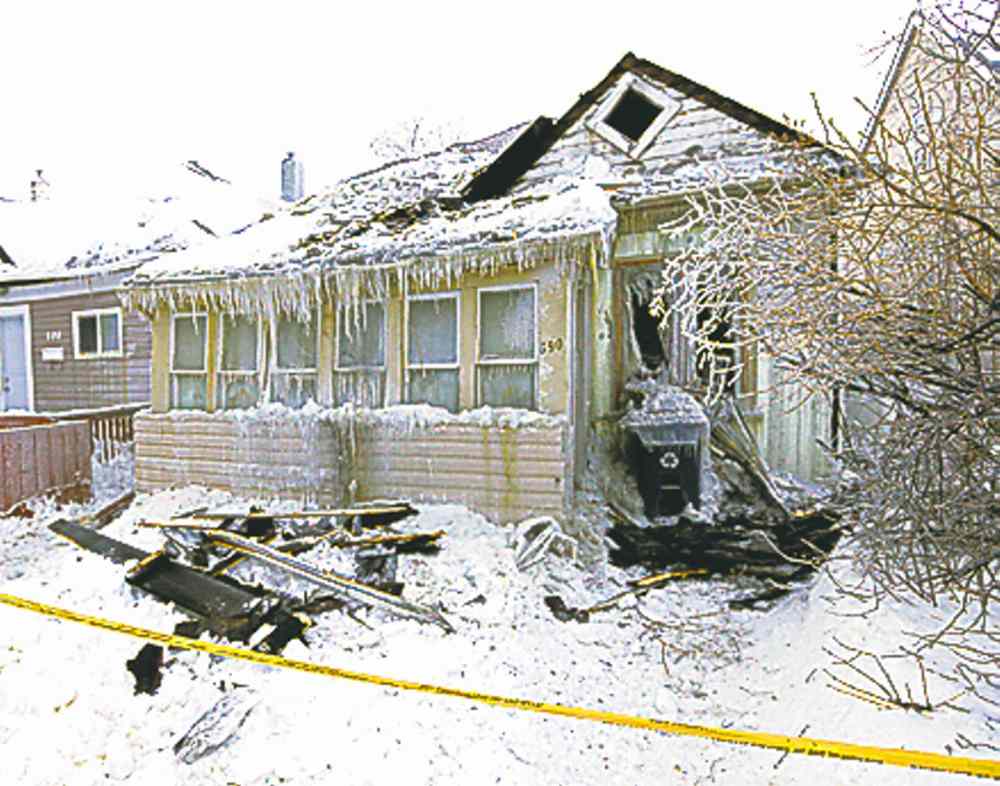
But that often means significantly more work for crews as they struggle with frozen water, slippery conditions and a job that offers little break from the cold.
A firefighter’s breathing apparatus can often quit working as warm breath condenses in the cold and freezes the contraption. The water left inside hoses after a fire begins to freeze as soon as the hydrant is turned off, so the hoses are typically loaded into a truck and taken back to the station to thaw and dry out. Then they’re treated with what’s essentially antifreeze so they won’t freeze up again as soon as the next call comes in. Water tanks must also be drained as soon as firefighters are connected to hydrants at the scene of a fire. Otherwise, the water begins to freeze and expand, damaging the tank and the truck. And the heavy protective suits firefighters wear quickly become stiff in the cold, making it hard to move.
“I remember doing this a lot, becoming very, very stiff like a robot,” said Clark.
He also recalls fighting the deadly Haselmere Apartments fire in January 1974. Clark found himself cocooned in ice and back at the fire hall he needed to be steamed to thaw the frozen buckles and snaps of his protective suit before he could get out of it.
A firefighter’s face and head are typically the most difficult to keep warm, especially if he or she is manning a ladder and is up high in the wind. Fresh crews rotate through a scene every half-hour so firefighters have a chance to get warm and dry.
In addition to a garage fire Sunday night, city firefighters battled a pair of house fires early Monday.

One man suffered smoke inhalation during a fire at a home in the 600 block of Pritchard Avenue in the North End at about 1:30 a.m. The cause is still unknown but the blaze caused approximately $125,000 in damage. Flames spread to a home next door as well, causing $85,000 in damage.
Around 6 a.m., two people escaped a fire at a home in the 1200 block of Edderton Avenue in Fort Garry. The fire appeared to have started in the attached garage and spread to the house. There was $270,000 in damage to the home and about $150,000 to its contents.
Winnipeg summers tend to bring garage and garbage bin fires, but winter blazes are often caused by improper heating, especially during long cold snaps. Clark said it’s important Winnipeggers ensure car plugs are in good condition and avoid heating their homes using unconventional methods such as an oven or hibachi.
Ruts, slippery streets, heavy snow and seasonal traffic have also slowed response times slightly in recent week, said Clark.
maryagnes.welch@freepress.mb.ca
Related Articles
Ice rescues for autos near completion


Advertisement Advertise With Us
Advertisement Advertise With Us
History
Updated on Tuesday, January 7, 2014 8:12 AM CST: adds video