

Forensic evidence presented at trial
Advertisement
Read this article for free:
or
Already have an account? Log in here »
To continue reading, please subscribe:

Digital Subscription
One year of digital access for only $205*
- Enjoy unlimited reading on winnipegfreepress.com
- Read the E-Edition, our digital replica newspaper
- Access News Break, our award-winning app
- Play interactive puzzles
*First annual payment billed as $205.00 + GST for one year. This annual subscription will automatically renew at $233.00 + GST every 52 weeks (10% off the regular annual price of $259.35). Offer available to new and qualified returning subscribers only. Cancel any time.
To continue reading, please subscribe:
Add Free Press access to your Brandon Sun subscription for only an additional
$1 for the first 4 weeks*
- Enjoy unlimited reading on winnipegfreepress.com
- Read the E-Edition, our digital replica newspaper
- Access News Break, our award-winning app
- Play interactive puzzles
*Your next Brandon Sun subscription payment will increase by $1.00 and you will be charged $17.95 plus GST for four weeks. After four weeks, your payment will increase to $24.95 plus GST every four weeks.
Read unlimited articles for free today:
or
Already have an account? Log in here »
Hey there, time traveller!
This article was published 31/01/2014 (4586 days ago), so information in it may no longer be current.
A blood-revealing chemical police sprayed in the garage where Chad Davis was allegedly murdered revealed several spots of interest to investigators, a jury heard Thursday.
The trial of Corey Tymchyshyn, 37, and Kristopher Brincheski, 31, is now delving heavily into the complex world of forensic testing done by RCMP after the 22-year-old’s body was recovered from a black plastic barrel found in a Manitoba lake on July 23, 2008.
Police and prosecutors suspect Davis was killed in Winnipeg many months earlier, on Feb. 6, inside the garage at 703 Prince Rupert Ave. His body was placed in the barrel, which was driven out in his own Jeep to the Lac du Bonnet area and dumped in the water, the Crown alleges.
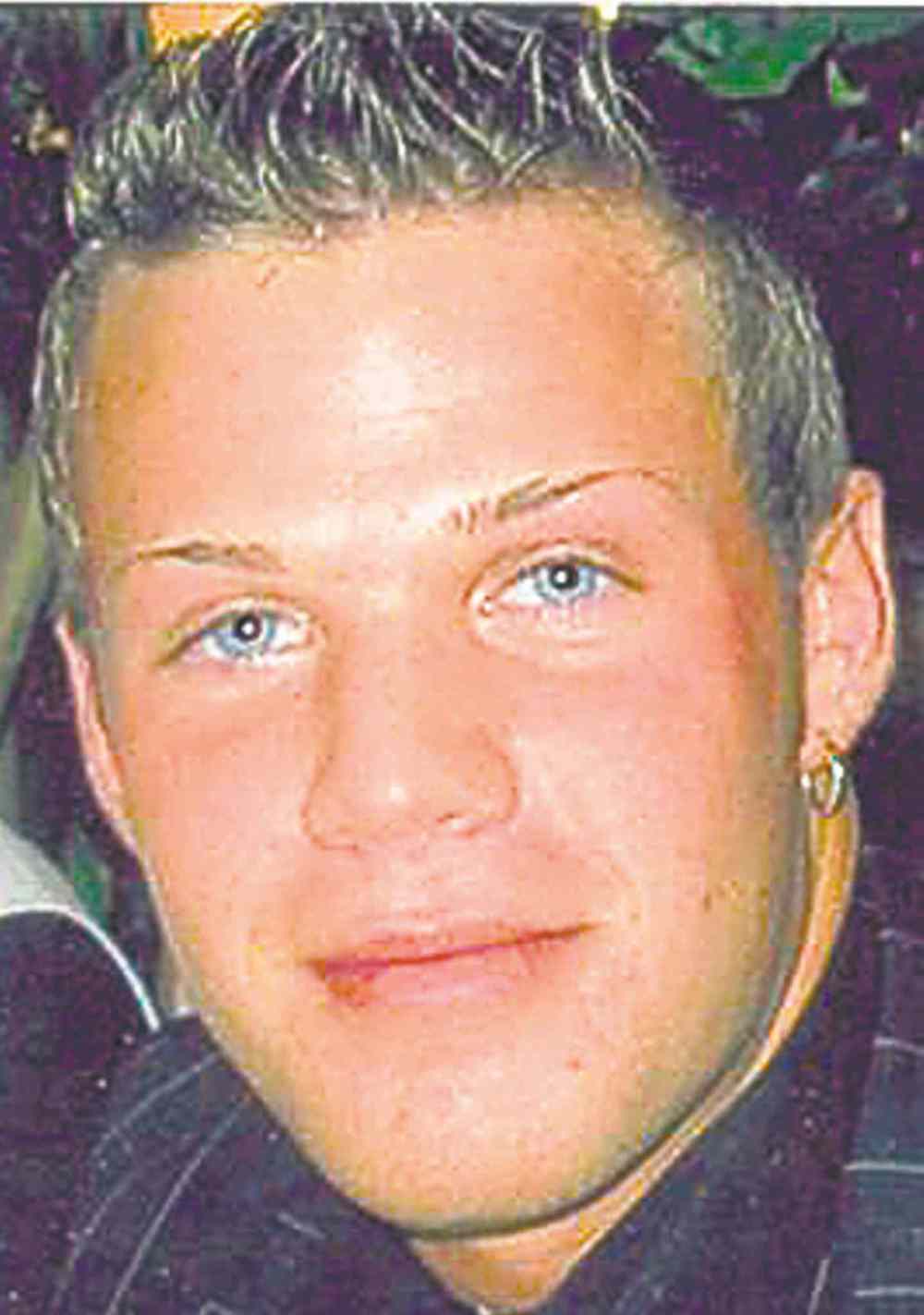
Tymchyshyn and Brincheski have pleaded not guilty to first-degree murder and are presumed innocent.
Tiny plastic shavings, found in a box that had once been in Davis’s Jeep but was moved, appeared physically and chemically indistinguishable from a sample of the barrel, RCMP forensic chemist Dr. Kimberly Kenny testified Thursday.
This finding comes with a significant caveat, court heard. Both samples tested were simply “low-density polyurethane,” a versatile and cheap plastic used in ubiquitous items such as shopping bags or plastic containers, said Kenny.
Kenny also did a microscopic chemical analysis on bits of black-on-white plastic seized from boards that had been removed from the garage, as well as a tarp found inside the barrel with Davis.
Again, a comparison of the glossy plastic bits found them to be indistinguishable from the tarp sample.
RCMP searched the garage and home on Prince Rupert over several days starting on Sept. 7, 2008, Cpl. Maria Forester testified. A chemical that glows when in contact with blood on a surface was used on the garage floor, revealing several spots of interest, she said.
Swabs of certain regions were taken and sent for forensic analysis, she said. Forester could not speak to any results of those tests.

Crown attorney Brent Davidson read to jurors a statement of facts from Tymchyshyn’s ex-girlfriend, meaning she will not be called to testify.
The woman said she had lived with Tymchyshyn at 703 Prince Rupert, and between February and April 2007 recalled seeing three large plastic barrels on the property. Two of them were in the garage.
One was blue and the other black, the statement said.
She knew Tymchyshyn to be “very familiar” with the Lac du Bonnet area, court heard.
james.turner@freepress.mb.ca
Related Articles
Chad Davis murder trial: The evidence in week two

Advertisement Advertise With Us
Advertisement Advertise With Us