

Primary care network cleared for launch
Advertisement
Read this article for free:
or
Already have an account? Log in here »
To continue reading, please subscribe:
Monthly Digital Subscription
$1 per week for 24 weeks*
- Enjoy unlimited reading on winnipegfreepress.com
- Read the E-Edition, our digital replica newspaper
- Access News Break, our award-winning app
- Play interactive puzzles
*Billed as $4.00 plus GST every four weeks. After 24 weeks, price increases to the regular rate of $19.95 plus GST every four weeks. Offer available to new and qualified returning subscribers only. Cancel any time.
Monthly Digital Subscription
$4.99/week*
- Enjoy unlimited reading on winnipegfreepress.com
- Read the E-Edition, our digital replica newspaper
- Access News Break, our award-winning app
- Play interactive puzzles
*Billed as $19.95 plus GST every four weeks. Cancel any time.
To continue reading, please subscribe:
Add Free Press access to your Brandon Sun subscription for only an additional
$1 for the first 4 weeks*
*Your next subscription payment will increase by $1.00 and you will be charged $16.99 plus GST for four weeks. After four weeks, your payment will increase to $23.99 plus GST every four weeks.
Read unlimited articles for free today:
or
Already have an account? Log in here »
Hey there, time traveller!
This article was published 01/03/2014 (4417 days ago), so information in it may no longer be current.
STEINBACH — A large, private family medical practice here is the launch point for a new model of delivering primary health care to Manitobans.
Steinbach Family Medical, with 19 family physicians and three general surgeons, serves 23,000 patients in a vast area extending to the Ontario and U.S. borders and west to the Red River and beyond.
In the next few weeks, the clinic will begin to work collaboratively with five new health professionals supplied by the local regional health authority to form the province’s first primary care network (PCN).
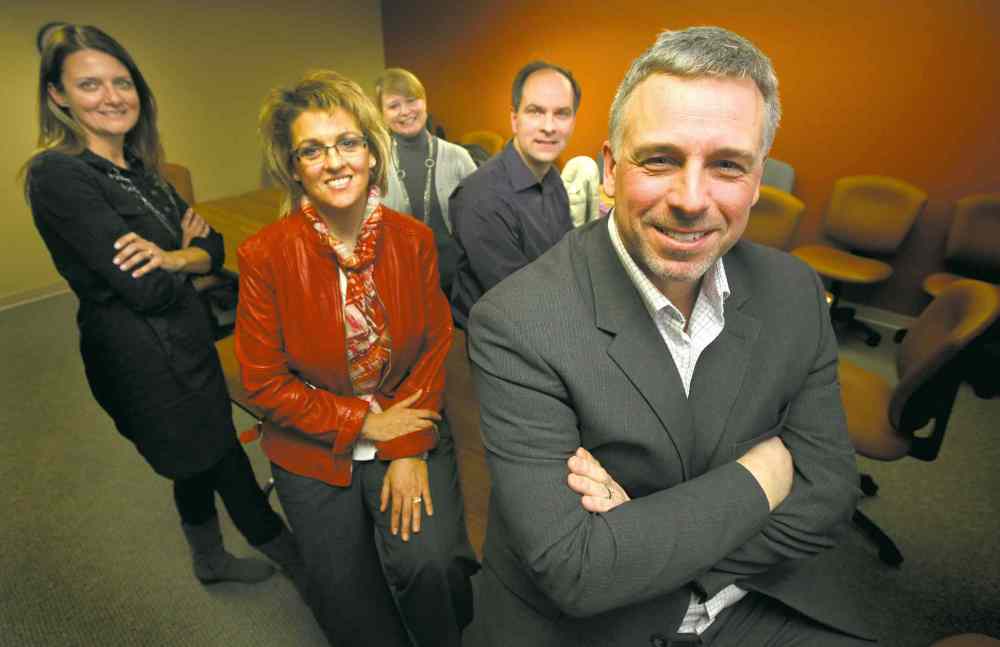
Manitoba Health plans to form 14 of these multidisciplinary teams in all regions of the province by next year. Six of them will be located in Winnipeg, where it’s anticipated that groups of clinics will form service delivery networks in collaboration with regional health staff.
In doing so, Manitoba will join several Canadian provinces that are in various stages of implementing a concept that has its roots in the United States and has been trumpeted by the College of Family Physicians of Canada since 2011.
The doctors’ group calls the concept the “Patient’s Medical Home.” The patient-centred team approach aims to provide timely and comprehensive health care tailored to the needs of the community. A key goal is that everyone within the geographic region served by the team has their own family doctor.
Each primary care network in Manitoba will receive an initial $525,000 per year for support staff and other expenses, plus performance incentives that could bring the annual budget in each area to $750,000.
“This is about collaboration and making the system better at the end of the day,” said Fred Pauls, clinic manager at Steinbach Family Medical.
As the guinea pig, the Steinbach clinic has worked with the province and the Southern Health Authority for months to develop a model suited to its region.
Based on the number of young immigrant families in the district, the region is supplying two part-time public health nurses who will focus largely on child and reproductive health and perform immunizations. The PCN will also include a full-time chronic disease nurse, a full-time dietitian and a part-time mental health worker. Most of these professionals will work out of space already leased by the RHA. The mental health worker will have an office in the physicians’ clinic.
While it’s hardly new for family physicians to collaborate with other professionals, the new system seeks to help them work more efficiently. In Steinbach, the clinic will integrate the other team members into its electronic medical records system.
Right now, if clinic doctors want to refer a diabetic to a chronic disease nurse, they must fill out a form and fax it over. An appointment is then booked. But with the two working from the same electronic system — and with the nurse’s appointment openings visible — the doctor can book the appointment with a few keystrokes.
Meanwhile, a quick look at the electronic record will show the nurse what medications the patient is taking and the results of any lab tests. Having that information at hand will prevent the duplication of tests, saving time for health-care provider and patient alike.
“That will potentially be a big efficiency,” said Dr. Mark Duerksen, one of the clinic’s family physicians.
The collaboration could mean Duerksen would see a diabetes patient twice instead of four times a year, with the chronic disease nurse taking on the other two visits. Similarly, a public health nurse working as part of the team could take on some of the early childhood immunizations he now administers. This would allow him to see new patients or provide prompter care to existing patients.
“That’s what we’re looking at — how do we improve access by using other team members to support care?” said Karen Ilchyna, regional director of primary health care integration with Southern Health.
Another advantage of the team approach is the chronic disease nurse, for example, could organize group educational sessions with several of the doctors’ patients.
‘This is about collaboration and making the system better at the end of the day’
— Fred Pauls, clinic manager
Doctors in southeast Manitoba are hardly begging for work. The demand there is high, as it is everywhere in the province.
When Steinbach Medical took on five new family physicians between July and September of last year, they were operating at full capacity within months.
The clinic is set up so two doctors are available during weekdays for same-day appointments. It also operates a walk-in on Saturday mornings.
The plan is for the Steinbach-based primary care network to add other government-paid health professionals down the road and form links with community groups that can advise on any gaps in patient cared.
Barb Wasilewski, executive director of primary care with Manitoba Health, said the 14 networks now being set up will cover much of the city of Winnipeg and more than half the communities in the province. The actual size of some of the networks is still being determined.

The first three PCNs to get off the ground in Winnipeg will be in St. James/Assiniboia, River Heights/Fort Garry and Seven Oaks/Inkster.
The primary care networks will also function as a means of standardizing care across the province so patients can expect the same level of care whether they live in Winnipeg, Steinbach or Portage la Prairie, Wasilewski said.
However, she emphasized the makeup of the PCNs themselves will be determined by the health needs of the particular community.
One of the keys to success for the PCNs is getting the vast majority of the province’s medical clinics using electronic medical records as soon as possible. A few years ago, fewer than 30 per cent of clinicians were hooked up. Now, the number is closer to 70 per cent, Wasilewski said.
larry.kusch@freepress.mb.ca