

Batoche artifact may be imposter, documentary says The Bell of Frog Lake?
Advertisement
Read this article for free:
or
Already have an account? Log in here »
To continue reading, please subscribe:

Digital Subscription
One year of digital access for only $205*
- Enjoy unlimited reading on winnipegfreepress.com
- Read the E-Edition, our digital replica newspaper
- Access News Break, our award-winning app
- Play interactive puzzles
*First annual payment billed as $205.00 + GST for one year. This annual subscription will automatically renew at $233.00 + GST every 52 weeks (10% off the regular annual price of $259.35). Offer available to new and qualified returning subscribers only. Cancel any time.
To continue reading, please subscribe:
Add Free Press access to your Brandon Sun subscription for only an additional
$1 for the first 4 weeks*
- Enjoy unlimited reading on winnipegfreepress.com
- Read the E-Edition, our digital replica newspaper
- Access News Break, our award-winning app
- Play interactive puzzles
*Your next Brandon Sun subscription payment will increase by $1.00 and you will be charged $17.95 plus GST for four weeks. After four weeks, your payment will increase to $24.95 plus GST every four weeks.
Read unlimited articles for free today:
or
Already have an account? Log in here »
Hey there, time traveller!
This article was published 13/04/2014 (4525 days ago), so information in it may no longer be current.
So, the bell of Batoche may not be the Bell of Batoche.
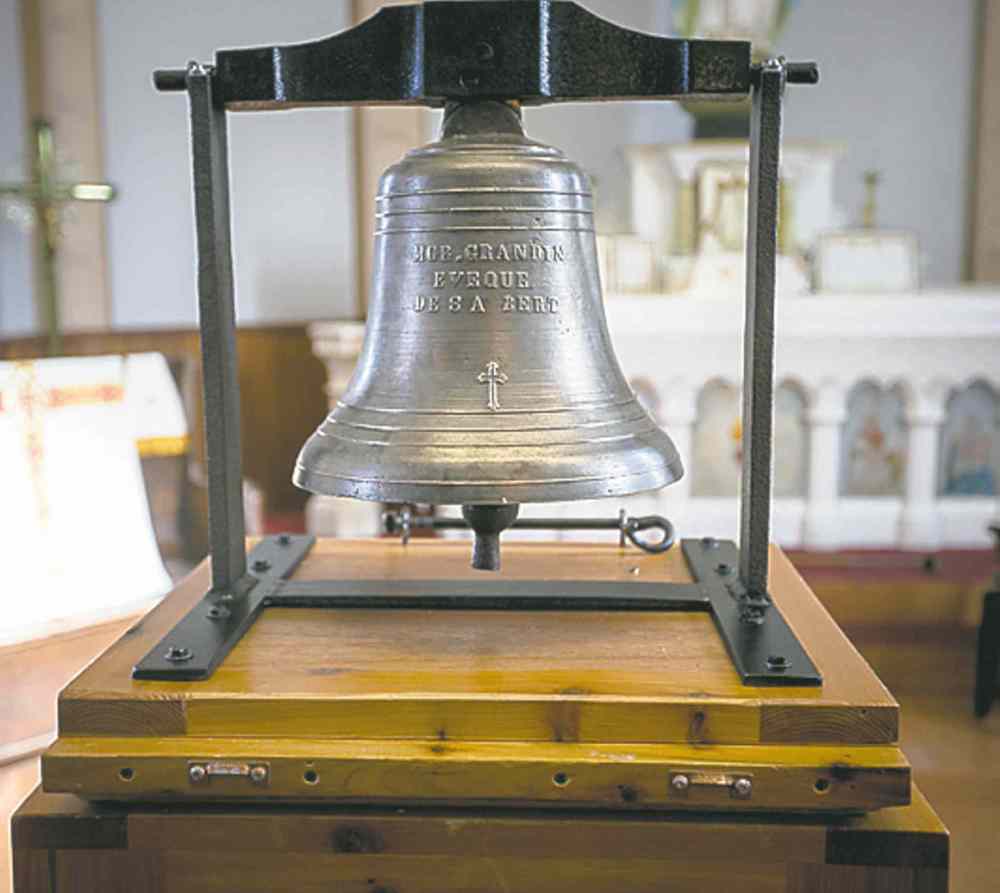
The lore that the bell, a revered Métis symbol, may be an imposter is the focus of CBC documentary The Mystery of the Bell, which aired last week.
According to that account, the bell stolen by soldiers and taken to Millbrook, Ont., is really from Frog Lake, the scene of a massacre that isn’t nearly as well-known as the more famous Battle of Batoche, although both are linked to the North West Rebellion of 1885. “I don’t question that the Batoche bell was taken. But I don’t think it was the one taken to Millbrook,” said Ontario playwright Robert Winslow.
Charles Winslow, his great-great uncle, was captain of one of the many companies of soldiers sent west to quell the rebellion. Believing they were fighting Roman Catholics — the issue of the Métis was secondary to Protestants from Ontario 150 years ago — taking a bell from a Catholic church as a trophy appealed to the soldiers.
The mystery that envelopes the Bell of Batoche is irresistible today.
“It just pushes at something so fundamental about our history and all the different aspects and divides within our history. Regionally, religiously, culturally and everything. It’s fascinating,” Winslow said.
Robert Winslow staged a play about the Frog Lake link to the bell in 2000, called Crossings: the Bell of Batoche.
The bell, recognized in Manitoba and Saskatchewan as the Bell of Batoche, is now held at the St. Boniface Museum. The museum director did not return an email last week on the resurgence of questions about the bell’s provenance.
“There’s overwhelming evidence it’s the Frog Lake bell that the soldiers brought back to Millbrook,” Winslow said.
Both bells — Frog Lake and Batoche — were part of a batch of bells distributed in the northern plains to support the Roman Catholic missions. It is believed all the bells were poured at the same foundry about the same time, possibly in Spain.
“I heard some talk they (the bells) may have had names, that they were christened,” Winslow said.
“I know the one in Batoche was named Marie Antoinette. They had godparents and stuff. I don’t know the name of the one in Frog Lake.”
Unless the name Marie Antoinette was engraved on the inside of the bell at Batoche, as some old stories say, there would be no way to tell them apart.
“They were identical and there were several of them,” Winslow said.
For some reason, the fiercely Catholic Métis cherished the bell at Batoche but neglected the bell at Frog Lake.
Cree chief Wandering Spirit led warriors in an attack on Frog Lake in 1885, killing nine settlers, taking 70 captive and burning the church to the ground.
Three months later, in June 1885, Winslow’s great-great-uncle led his company of soldiers to Frog Lake, where they found the bell abandoned in a bell tower and took it with them, he said.
This latest story adds to the long and complicated history of the bell.
Installed in the steeple of the Batoche church in 1884, the bell was removed and taken as a trophy by Canadian troops following the final battle of the Northwest Rebellion in 1885.
A bell linked to the Riel Rebellion resurfaced in a fire station in Millbrook, Ont., in 1930 but was badly damaged in a fire a year later.
The Royal Canadian Legion in Millbrook took ownership of the bell after the fire and it remained in a display case there until 1991, the year it vanished again from the public eye.

By that time, it was universally accepted that relic was the Bell of Batoche, despite oral tradition to the contrary in Ontario.
Bragging rights for who really returned the bell to the Métis has engendered contradictory accounts from several sources.
The most common accounts have former Pine Creek First Nation chief BillyJo Delaronde as the mastermind behind the 1991 disappearance, driving secretly to Millbrook to remove the bell and bring it back to Manitoba.
One man who claims to have kept the Bell of Batoche under wraps told the Manitoba francophone paper La Liberté that the 12-kilogram bell briefly ended up in his oven. He said he eventually gave it to the Union nationale Métisse Saint-Joseph du Manitoba (UNMSJM), and from there it went to the St. Boniface Museum.
alexandra.paul@freepress.mb.ca