

Front-page challenge: The right headline, photo can stand the test of time
The right headline and photo can stand the test of time
Advertisement
Read this article for free:
or
Already have an account? Log in here »
To continue reading, please subscribe:
Monthly Digital Subscription
$1 per week for 24 weeks*
- Enjoy unlimited reading on winnipegfreepress.com
- Read the E-Edition, our digital replica newspaper
- Access News Break, our award-winning app
- Play interactive puzzles
*Billed as $4.00 plus GST every four weeks. After 24 weeks, price increases to the regular rate of $19.95 plus GST every four weeks. Offer available to new and qualified returning subscribers only. Cancel any time.
Monthly Digital Subscription
$4.99/week*
- Enjoy unlimited reading on winnipegfreepress.com
- Read the E-Edition, our digital replica newspaper
- Access News Break, our award-winning app
- Play interactive puzzles
*Billed as $19.95 plus GST every four weeks. Cancel any time.
To continue reading, please subscribe:
Add Free Press access to your Brandon Sun subscription for only an additional
$1 for the first 4 weeks*
*Your next subscription payment will increase by $1.00 and you will be charged $16.99 plus GST for four weeks. After four weeks, your payment will increase to $23.99 plus GST every four weeks.
Read unlimited articles for free today:
or
Already have an account? Log in here »
Hey there, time traveller!
This article was published 03/05/2014 (4371 days ago), so information in it may no longer be current.
For nearly 600 years, since shortly after the invention of movable type, newspapers have reported events of interest, argued for reforms and lampooned the mighty.
One of the chief weapons in their battle for attention and revenue is the headline, particularly on the front page. The biggest, boldest, sassiest type, especially in screaming capital letters, announces what the editors think is news, in a hierarchy they decide.
Even today, when the front pages of newspapers such as the Winnipeg Free Press are mostly photos, headlines remain vital.
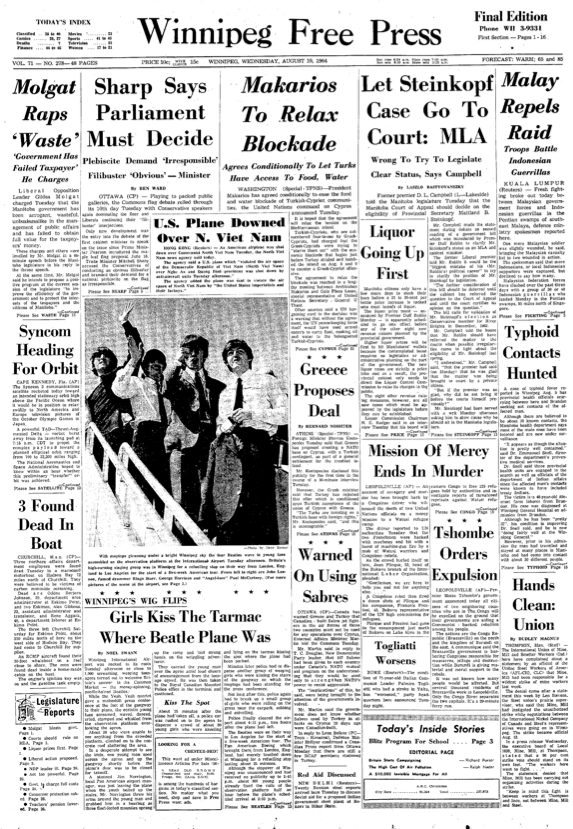
But if newspapers were to die tomorrow (don’t worry; they won’t) there would still be almost as many headlines in the world as there are today.
Headlines are such a beautifully succinct form of communication that we use them as text messages by phone, as subject lines on emails, as 140-character bursts on Twitter: Rob Ford lies; Jets lose. Perhaps next year, or some year, anyway: Jets win.
The ideal headline marries compelling information with a memorable phrase, usually focused on a punchy verb.
My candidate for greatest headline of all time lacks a verb, but it leaps off the front page anyway: Headless body in topless bar.
That’s from the New York Post in 1983. It tells the story, and it leaves you breathless.
Here’s one that does employ a strong verb to impart important information: Dewey defeats Truman.
Unfortunately, that Chicago Tribune headline from 1948 lacks another requirement of the craft: truth. The paper’s decision desk should have waited just a bit longer before picking the winner of that year’s U.S. presidential election. Harry Truman won, as the headlines in later editions acknowledged. But who remembers them?
Right or wrong, front-page headlines grab our attention, titillate or infuriate us, and tell us what editors think we need or want to know.
One of the most significant Winnipeg headlines, at least for newspaper devotees, contained no words at all in its main line, just a chilling number.
Reporting its own death at the hands of its cynical and short-sighted corporate masters in 1980 at age 90, the Winnipeg Tribune invoked the traditional newspaper shorthand for the end of a story: 30.
War and terrorism, naturally, create many memorable headlines.
One of the saddest, because it has so often been proven wrong, is the Denver Post’s in 1918: World at peace.
In 1982, the U.K.’s ultra-tabloid Sun celebrated the sinking of an Argentine ship in the Falklands War with the headline Gotcha. That was another one-edition wonder, though; even the Sun had to tone down its jubilation over the deaths of more than 350 sailors.
Another simple, clear, one-word headline: Bastards! in the Sept, 12, 2001 San Francisco Examiner.
On May 8, 1945, the Globe and Mail marked the end of the Second World War in Europe with: This is victory.
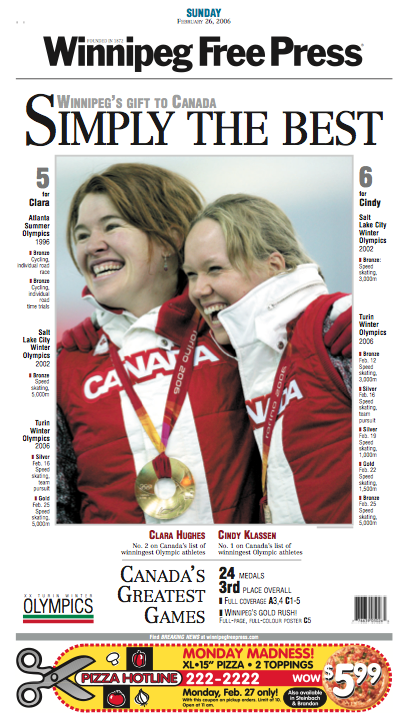
Three months later, with the war in the Pacific still not over, the paper’s coverage of the atomic-bomb attack on Hiroshima included the memorable headline: New weapon diabolical, Japs whine.
Today, we would label that headline racist. It reveals eloquently, though, how we dehumanize our enemies.
Other headlines on real human achievement include our species’ moon landing: Man on Moon was a typical theme.
Many newspapers printed their moon headlines in what irreverent journalists used to call Jesus type, the largest font available, which was winkingly reserved for the supposed second coming of that figure. In 1969, they got to use it for a real story.
So who writes these anonymous bulletins?
Odd though it might appear, newspaper reporters generally don’t. That’s not to say they don’t receive many complaints about the headlines on their stories.

To meet the quirky folks who write headlines at the Free Press, check out this video made by Matthew TenBruggencate, who laboured in their company for a couple of recent summers: http://wfp.to/headsvid
See? Despite what reporters sometimes claim, headline writers aren’t evil or even bad. Some are actually quite funny.
They seek inspiration, or at least coherence, against deadlines in unforgiving spaces on the page and in the hopeful tradition of 19th-century journalists who labelled news from dubious sources in far-off places: Important if true.
Duncan McMonagle has retired from teaching journalism at Red River College.