

To spray or not to spray
Neighbourhoods differ on malathion buffer zones
Advertisement
Read this article for free:
or
Already have an account? Log in here »
To continue reading, please subscribe:

Digital Subscription
One year of digital access for only $205*
- Enjoy unlimited reading on winnipegfreepress.com
- Read the E-Edition, our digital replica newspaper
- Access News Break, our award-winning app
- Play interactive puzzles
*First annual payment billed as $205.00 + GST for one year. This annual subscription will automatically renew at $233.00 + GST every 52 weeks (10% off the regular annual price of $259.35). Offer available to new and qualified returning subscribers only. Cancel any time.
To continue reading, please subscribe:
Add Free Press access to your Brandon Sun subscription for only an additional
$1 for the first 4 weeks*
- Enjoy unlimited reading on winnipegfreepress.com
- Read the E-Edition, our digital replica newspaper
- Access News Break, our award-winning app
- Play interactive puzzles
*Your next Brandon Sun subscription payment will increase by $1.00 and you will be charged $17.95 plus GST for four weeks. After four weeks, your payment will increase to $24.95 plus GST every four weeks.
Read unlimited articles for free today:
or
Already have an account? Log in here »
Hey there, time traveller!
This article was published 07/07/2014 (4408 days ago), so information in it may no longer be current.
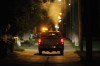
Debbie Lynch says she used to run after the fogging truck in her neighbourhood when she was a child.
She remembers it smelled like diesel.
Years later, she said she’s still happy to see the malathion-spraying trucks roll by, as it means she’ll be able to enjoy her gardening a little more.

Lynch lives in the Maples, which, like most other neighbourhoods in the city, gets fogged when the city-wide mosquito trap count grows high enough.
Lynch said mosquitoes have been especially bad this year, and as long as the fogging isn’t complete, she clips a mosquito repellent on her belt while she gardens. She said most people who live near her in the Maples area are pro-fogging and anti-mosquito.
“Everyone’s lived through the hard winter. Why would you want to live with mosquitos?” she asked.
The city’s northwest corner appears to hate mosquitoes and favour fogging. Neighbourhoods such as the Maples, Inkster Gardens and Tyndall Park had among the lowest rates of buffer zones last summer, as did relatively new developments in west Transcona and Harbourview South.
The Maples had a rate of 0.34 buffer zones per 1,000 residents, with only three buffer zones in place last summer.
The per-1,000-dwellings is used to compare neighbourhoods, which are based on postal codes and can have varying population sizes.
A few doors down from Lynch, fellow Maples resident Filomena Andrade said she preferred fogging to dealing with mosquitoes and even looks forward to the trucks rolling in to her street. “I kept telling my kids ‘We can look forward to tomorrow because they’re starting the fogging tonight,’ ” she said.
With fogging beginning anew over the weekend for what’s expected to be a very buggy summer, new data obtained by the Free Press show, for the first time, the city’s buffer-zone hot spots.
Buffer zones, which offer residents a 90-metre no-spray zone around their homes, have long been contentious neighbourhood issues, especially following widespread anti-fogging protests that erupted a decade ago and saw activists block fogging trucks and barricade streets. Since then, the threat of the West Nile virus has dampened local anti-malathion sentiment.
Last summer, 1,115 Winnipeggers requested buffer zones, including hundreds who rushed to sign up when the city announced fogging would begin in early July. That’s lower than past years, when 1,600 people requested no-spray zones around their homes.
Last fall, the Free Press filed an access-to-information request with the city asking for the postal code associated with each buffer zone in 2013. The city denied the request. But following an appeal to Manitoba’s ombudsman, the city agreed to release the buffer-zone numbers for each postal code prefix. The prefix, the first three digits of a postal code, covers a relatively large area, and the city agreed the privacy of citizens with buffer zones would not be compromised.
At 186, Wolseley had the highest number of buffer zones last summer — no surprise, since Wolseley is typically the centre of anti-pesticide sentiment. That number equals 16.89 zones per 1,000 dwellings.
More surprising was the number of buffer zones in Old St. Boniface and River Heights. Both neighbourhoods had a high rate of buffer zones, with Old St. Boniface getting 7.74 zones per 1,000 dwellings, or 61 zones in total. River Heights had a rate of 51 or 6.84 per 1,000 dwellings.
Madeleine Matte, one of the residents in the Old St. Boniface neighbourhood, said she doesn’t like fogging in her neighbourhood. Her biggest worry is malathion.
“I once got hosed by the malathion truck while I was on my bike, and it just about knocked me out. That stuff is really harsh,” she said.
Matte said she doesn’t like mosquitoes either, but wishes the city would find a more natural alternative to malathion.
Other residents in Old St. Boniface weren’t as sure of their support, or lack thereof, of the fogging.

Like Matte, Nicola Parent said she’s not a big fan of the malathion and doesn’t like that it also kills the dragonflies in the neighbourhood. But with the severity of the mosquito situation, fogging is the only way she can play outside with the children, Parent said.
“We have tried all kinds of other methods. We used bug stuff on the kids, the kid-safe stuff, and it really doesn’t do much when the bugs are this bad,” she said.
Parent said she respects those who decide to put buffer zones up, and has thought about it herself, but so far hasn’t put one around her house. In the future she might, she said, depending on what the research on malathion shows.
Skewing the numbers is the rural area south of Wilkes Avenue in Charleswood. There, two homes requested buffer zones, but because there are so few dwellings in the area, it became an unlikely statistical hot spot for no-spray requests.
oliver.sachgau@freepress.mb.ca maryagnes.welch@freepress.mb.ca
Where are Winnipeg’s buffer zones?
The map below displays buffer zone registration in Winnipeg in 2013 by rate, that is, the number of buffer zones per 1,000 dwellings. Click on any area to see the total number of registrations for each area.
Can't see the map below? Try viewing it in a new window.
Going postal over bug spraying
No malathion!
The postal code prefixes with the most buffer zones are:
- R3G (Wolseley) — 186, or 16.89 per 1,000 dwellings
- R3S (Wilkes South) — 2, or 12.58 per 1,000 dwellings (there are only 159 dwellings in this postal code)
- R3M (Crescentwood/Grant Park) — 90, or 8.37 per 1,000 dwellings
- R2H (Old St. Boniface) — 61 or 7.74 per 1,000 dwellings
- R3N (River Heights) — 51 or 6.84 per 1,000 dwellings
No mosquitoes!
The postal code prefixes with the fewest buffer zones are:
- R3W (Harbourview) — 3 or 1.2 per 1,000 dwellings
- R3A (West Alexander) — 2, or 1.13 per 1,000 dwellings
- R2R (Tyndall Park/Inkster Gardens) — 0.66 per 1,000 dwellings
- R2P (The Maples) — 3, or 0.34 per 1,000 dwellings
- R3H (Airport area) — 0 (R3H only has 4 dwellings)
— source: City of Winnipeg
Related Articles
Cut mosquito-fogging buffer zones: Steeves
Advertisement Advertise With Us
Advertisement Advertise With Us
History
Updated on Monday, July 7, 2014 6:54 AM CDT: Fixes headline, adds map, replaces photo
Updated on Monday, July 7, 2014 9:06 AM CDT: adds buffer zone map