The Beyoncé brand
She’s young, gifted and black, but superstar singer’s pop-culture reign has transcended mere talent and tunes

Advertisement
Read this article for free:
or
Already have an account? Log in here »
To continue reading, please subscribe:

Digital Subscription
One year of digital access for only $205*
- Enjoy unlimited reading on winnipegfreepress.com
- Read the E-Edition, our digital replica newspaper
- Access News Break, our award-winning app
- Play interactive puzzles
*First annual payment billed as $205.00 + GST for one year. This annual subscription will automatically renew at $233.00 + GST every 52 weeks (10% off the regular annual price of $259.35). Offer available to new and qualified returning subscribers only. Cancel any time.
To continue reading, please subscribe:
Add Free Press access to your Brandon Sun subscription for only an additional
$1 for the first 4 weeks*
- Enjoy unlimited reading on winnipegfreepress.com
- Read the E-Edition, our digital replica newspaper
- Access News Break, our award-winning app
- Play interactive puzzles
*Your next Brandon Sun subscription payment will increase by $1.00 and you will be charged $17.95 plus GST for four weeks. After four weeks, your payment will increase to $24.95 plus GST every four weeks.
Read unlimited articles for free today:
or
Already have an account? Log in here »
Hey there, time traveller!
This article was published 26/07/2014 (4404 days ago), so information in it may no longer be current.
Back in May, Saturday Night Live aired a now-viral faux movie trailer called The Beygency. In it, host Andrew Garfield dares to admit in public that he’s just not that into Drunk In Love, and now he must go on the lam for fear of retribution from The Beygency, a covert operation that takes out Beyoncé haters.
“He turned against his country, and its queen,” the voiceover intones. “A man with nowhere to run and no taste.”
Who run the world, indeed. In 2014, it certainly feels like Beyoncé-worship has reached an all-time high — and is practically a requirement, if you’re to believe SNL, to maintain your U.S. citizenship. The cult of Queen Bey is a far-reaching one. There’s rumoured to be National Church of Bey in Atlanta. Academia is also on board, with many institutions — including the University of Victoria — offering courses on her. In the just-released trailer for the film Fifty Shades of Grey, the fact that she contributed a sexed-up version of Crazy in Love gets billing over, you know, the cast. And if you hate on Beyoncé? The message is clear: bow down to Bey or bow out.
After all, she is more an than a diva. She is royalty. She is (whisper) Beyoncé.
“Beyoncé has become something more than just a superstar. She is a kind of national figurehead, an Entertainer in Chief; she is Americana. Someday, surely, her Single Ladies leotard will take its place alongside Mickey Mouse and the Model T Ford and Louis Armstrong’s trumpet in a Smithsonian display case,” writes culture critic Jody Rosen in a rather effusive profile.
“Historically speaking, this is no small achievement. Black women have always been dominant figures in American popular music, but no one, not even Aretha Franklin, has reached the plateau that Beyoncé occupies: pop star colossus, adored bombshell, ‘America’s sweetheart.’”
Why Beyoncé is famous isn’t exactly a mystery. She’s incredibly talented, in possession of one of pop music’s most soulful voices. She’s got a cavalcade of hits to her credit. She’s got a puritan’s work ethic. She’s beautiful. But then, that’s all true of many other bankable pop stars. Why Beyoncé is the girl on top of the world is the more interesting question.
At 32, she’s already an industry veteran. After hitting the Houston song-and-dance competition circuit as a kid, she rose to fame in the ’90s as the frontwoman of R&B girl-group Destiny’s Child. Her solo career in the following decade was successful, garnering fistfuls of Grammys, blockbuster record sales and chart-dominating hits — but, while 2008’s Single Ladies will enjoy a lasting legacy as the soundtrack to the bouquet toss at weddings for the rest of time, Bey didn’t have the same kind of ubiquity she has today.
That all changed with Beyoncé. On Dec. 13, 2013, Bey’s fifth solo album — composed of 14 songs and 17 videos for a gloriously decadent multimedia binge watch — was dropped on iTunes with zero advance promotion. The move was unprecedented. And, like everything else Beyoncé does, calculated.
It’s telling that this album is self-titled, while its predecessor, I Am… Sasha Fierce, was named for an alter-ego. Beyoncé announced the arrival of a new Beyoncé. A Beyoncé who could mix her Southern family values with graphic descriptions of raunchy sex. A Beyoncé who could work out discussions of motherhood, feminism and body image on the dance floor. A Beyoncé who maintains a cool air of mystery while still seeming warm and approachable.
In an era in which most pop stars still desperately want to be perceived as girls, Queen Bey sets herself apart by making it crystal clear that she is a grown woman.
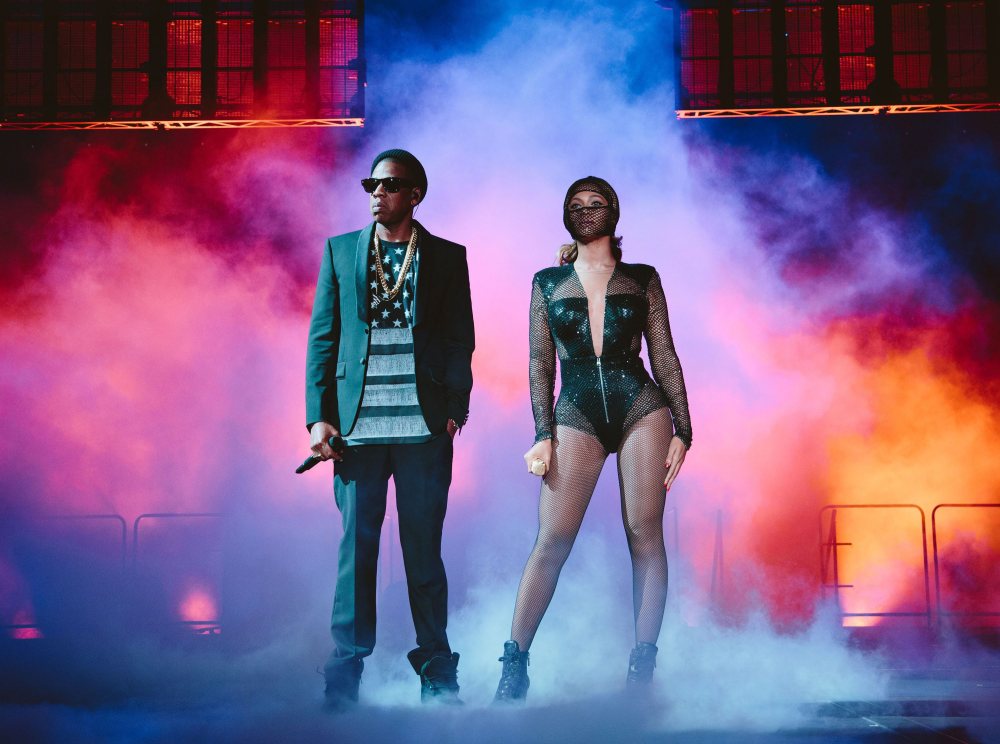
She knows what she’s doing, of course. Mrs. Knowles-Carter — who will bring her On the Run stadium spectacle with husband Jay Z to Investors Group Field on Sunday night — is a shrewd businesswoman. She’s savvy in a way that most pop stars are not. The Beyoncé we think we know is the Beyoncé she allows us to know; she has figured out how to manipulate a game that is so often rigged against women. She puts her thong on one leg at a time and gyrates the same way female pop stars always have, but she reveals herself on her terms.
In our culture, many people feel entitled to unfettered access to famous women’s bodies — which goes a long way in explaining the Internet outrage over the fact there weren’t more shots of Beyoncé’s pregnant body in her 2013 HBO autobiographical film Life Is But a Dream. (Many conspiracy theorists are also on a mission to prove that Blue Ivy was carried by a surrogate.) Bey has boundaries.
It’s rare for a celebrity of her magnitude to have full control and ownership of her narrative and image — and how it’s all marketed — the way Beyoncé does. There’s little doubt about who is in the driver’s seat of her career. She’s a noted perfectionist; a 2013 GQ cover story detailed the official Beyoncé archive, a temperature-controlled digital storage facility that houses every scrap of ephemera from her career. Every interview she participates in is videotaped. She records every concert and critiques each show back at the hotel. Pages of notes are disseminated to crew. Photographers who are not on her payroll are are not allowed to photograph her in concert; she did, after all, try to have “unflattering” photos from her Super Bowl halftime performance scrubbed from the Internet.

That aforementioned HBO “documentary?” Financed, directed, produced, narrated by Beyoncé. She’s an active Instagrammer, but every shot is carefully chosen. Her life looks perfect, of course, yet real. Her feed reveals a woman who quite literally Has It All — a career on fire, an adorable baby girl, a hot sex life with a loving husband, wealth and opportunity. She makes us believe that maybe we can have versions of It All, too. Because she’s just one of us gals. That mix of aspirational and inspirational is what the Beyoncé brand is built on — and what has, coupled with elite athlete-level discipline and raw talent, helped make her the highest paid black musician in history.
It’s also why that whole elevator fracas with Jay Z and her sister Solange held so many rapt; it represented a crack in her carefully presented veneer. It’s also why many are bummed out by the rumours that Beyoncé and Jay Z are splitting up after their On the Run tour wraps. They are a power couple to be sure — a net worth pegged around $1 billion with a B — but it’s nice to think that they are still crazy in love. That their home life is as idyllic as it is on Instagram.
Because Beyoncé doesn’t just sell albums or stadium spectacles. She sells the American dream.
jen.zoratti@freepress.mb.ca
Jen Zoratti is a columnist and feature writer working in the Arts & Life department, as well as the author of the weekly newsletter NEXT. A National Newspaper Award finalist for arts and entertainment writing, Jen is a graduate of the Creative Communications program at RRC Polytech and was a music writer before joining the Free Press in 2013. Read more about Jen.
Every piece of reporting Jen produces is reviewed by an editing team before it is posted online or published in print – part of the Free Press‘s tradition, since 1872, of producing reliable independent journalism. Read more about Free Press’s history and mandate, and learn how our newsroom operates.
Our newsroom depends on a growing audience of readers to power our journalism. If you are not a paid reader, please consider becoming a subscriber.
Our newsroom depends on its audience of readers to power our journalism. Thank you for your support.
Concert preview
On the Run Tour
- Beyoncé and Jay Z
- Investors Group Field, 8 p.m.
- Tickets: $55-$228, Ticketmaster
Jen Zoratti is a columnist and feature writer working in the Arts & Life department, as well as the author of the weekly newsletter NEXT. A National Newspaper Award finalist for arts and entertainment writing, Jen is a graduate of the Creative Communications program at RRC Polytech and was a music writer before joining the Free Press in 2013. Read more about Jen.
Every piece of reporting Jen produces is reviewed by an editing team before it is posted online or published in print – part of the Free Press‘s tradition, since 1872, of producing reliable independent journalism. Read more about Free Press’s history and mandate, and learn how our newsroom operates.
Our newsroom depends on a growing audience of readers to power our journalism. If you are not a paid reader, please consider becoming a subscriber.
Our newsroom depends on its audience of readers to power our journalism. Thank you for your support.
Advertisement Advertise With Us
Advertisement Advertise With Us