Mobster thriller a doggone good read

Advertisement

Advertise with us

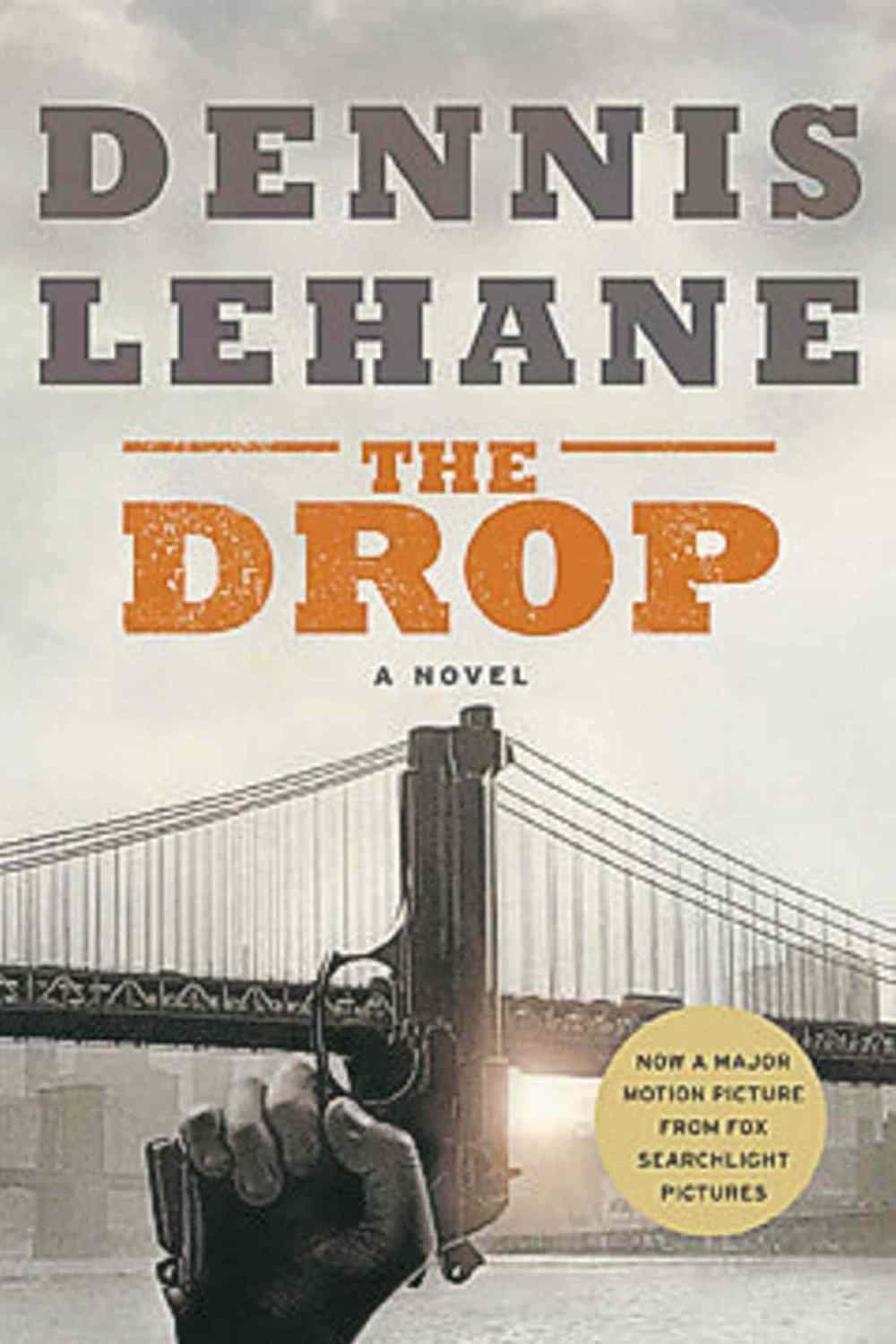
If you didn't get to vacation this summer, reading Dennis Lehane's latest -- a novelization of a screeenplay adapted from his short story Animal Rescue -- might be your best chance for a quick getaway. It'd be a deceptive, bloody, murderous getaway, but hey, in a pinch...

Read this article for free:


or

Already have an account? Log in here »

To continue reading, please subscribe:

Subscribe and receive a limited-edition Free Press branded hat or tote.

Digital Subscription

One year of digital access for only $205*

  • Enjoy unlimited reading on winnipegfreepress.com
  • Read the E-Edition, our digital replica newspaper
  • Access News Break, our award-winning app
  • Play interactive puzzles

*First annual payment billed as $205.00 + GST for one year. This annual subscription will automatically renew at $233.00 + GST every 52 weeks (10% off the regular annual price of $259.35). Offer available to new and qualified returning subscribers only. Cancel any time.

To continue reading, please subscribe:

Add Free Press access to your Brandon Sun subscription for only an additional

$1 for the first 4 weeks*

  • Enjoy unlimited reading on winnipegfreepress.com
  • Read the E-Edition, our digital replica newspaper
  • Access News Break, our award-winning app
  • Play interactive puzzles
Start now

*Your next Brandon Sun subscription payment will increase by $1.00 and you will be charged $17.95 plus GST for four weeks. After four weeks, your payment will increase to $24.95 plus GST every four weeks.

Hey there, time traveller!
This article was published 13/09/2014 (4354 days ago), so information in it may no longer be current.

If you didn’t get to vacation this summer, reading Dennis Lehane’s latest — a novelization of a screeenplay adapted from his short story Animal Rescue — might be your best chance for a quick getaway. It’d be a deceptive, bloody, murderous getaway, but hey, in a pinch…

No, Lehane’s latest isn’t for the faint of heart or stomach. The Drop is a chilling peek at the lives of two cousins who got caught up in shady dealings with Chechen gangsters.

And like Lehane’s previous New York Times bestsellers- turned-blockbusters — Gone, Baby, Gone, Mystic River and Shutter IslandThe Drop is a terrifyingly good thriller; the movie adaptation of the original story, starring Tom Hardy, Noomi Rapace, and the late James Gandolfini in his final cinematic role, hit theatres on Friday.
The Drop begins in a bar, as so many sordid stories do. Cousin Marv owned his own bar once upon a time, but lost ownership when his battles against drug addiction took a turn for the worse.

Now a front for more seedy schemes by local mobsters, Cousin Marv’s is a drop location for stacks upon stacks of dirty money. Bob Saginowski, Marv’s cousin and loyal bartender, tries to keep his head down and avoid any mess.

And he succeeds, until one day he discovers a poor, beaten puppy in a trash can. A spontaneous adoption sends Bob’s life into a tailspin.

Through themes of loyalty and loneliness, Lehane leads readers on a wild goose chase where every assumption goes awry.

After a robbery at the bar loses Cousin Marv $5,000 — money not his own, but the mob’s — threats surface, and Marv and Bob’s lives are in danger.

All the while Marv is trying to adjust to the newfound responsibilities of having a pet dog — difficult for someone who has lived on his own for decades.

Little does he know just how dangerous a little dog can be.

Nadia, a new friend and neighbour, helps out with the pup. She could become more than a friend, Bob muses, but two such independent people don’t typically take well to co-habitation at first.

For someone who had no friends, pets or death threats to his name, Bob does surprisingly well adjusting to his new life situations throughout the novel. He is by far the most likeable and seemingly straightforward character in the book.

Meanwhile, Lehane’s other characters are marred by corruption and ulterior motives. Cousin Marv is perhaps the biggest disappointment when he deceives his friends for the chance at a quick cash grab.

A psychotic gangster named Eric Deeds is also introduced later, and becomes a major hindrance to Bob’s otherwise (relatively) normal existence. When he arrives on Bob’s doorsteps proclaiming Bob’s new dog is his own, the soft-spoken bartender develops a steely exterior.

Lehane’s layered stories about a family legacy and their neighbourhood gone wrong fit together impressively well, and culminate perfectly. As it should, The Drop ends not with a whimper, but a bang, but (spoiler alert!) you will wish it hadn’t.


Jessica Botelho-Urbanski is the arts editor for OutWords Magazine and a journalism student at Red River College.

History

Updated on Saturday, September 13, 2014 7:47 AM CDT: Formatting.

Updated on Saturday, September 13, 2014 8:00 AM CDT: Adds link to film review.

Report Error Submit a Tip

More Stories

Three security guards charged with assault after Sea Bears star injured outside nightclub

Nicole Buffie 3 minute read Preview

Three security guards charged with assault after Sea Bears star injured outside nightclub

Nicole Buffie 3 minute read Thursday, Aug. 13, 2026

Three security guards are facing assault charges, accused of injuring a Winnipeg Sea Bears player at a nightclub earlier this month.

Read
Thursday, Aug. 13, 2026

Big Loser’s latest a winning mix of country, folk

Ben Waldman 4 minute read Preview

Big Loser’s latest a winning mix of country, folk

Ben Waldman 4 minute read 6:00 AM CDT

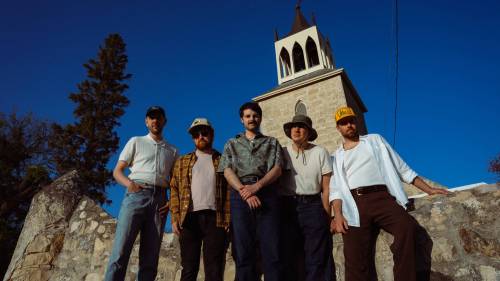
The yellow trucker hat for sale on Facebook Marketplace said “Selkirk Lumber,” so Adam Wayne Brown knew he had to hammer home a deal.

Like the other millennial members of Winnipeg folk-country band Big Loser, the bassist has an affinity for the nostalgic, taking every opportunity — through music, through lyrics and through wardrobe — to recall the unique circumstances of growing up in a changing Interlake.

“I remember the matte yellow trucks driving around — the lumber trucks — and so I’ve had this strange memory of something disappearing from my youth and then persisting,” says Brown, who, like the band’s frontman Alex Paradoski, moved to Winnipeg more than a decade ago.

“I have a photo of the Lockport Bridge in my dining room,” chimes in Paradoski, whose first job as a teenager was bunning wieners and chopping fries at Skinner’s, a drive-in mainstay since 1929 along Highway 44.

Read
6:00 AM CDT

WRHA directs three care homes to accommodate surge of hospital patients

Malak Abas 5 minute read Preview

WRHA directs three care homes to accommodate surge of hospital patients

Malak Abas 5 minute read Updated: Yesterday at 5:01 PM CDT

The Winnipeg Regional Health Authority has directed three long-term care centres to make space for hospital patients, citing “exceptionally high demand for care across the health-care system.”

Read
Updated: Yesterday at 5:01 PM CDT

City Lego seller continues to build up its business

Gabrielle Piché 4 minute read Preview

City Lego seller continues to build up its business

Gabrielle Piché 4 minute read Updated: Yesterday at 8:54 AM CDT

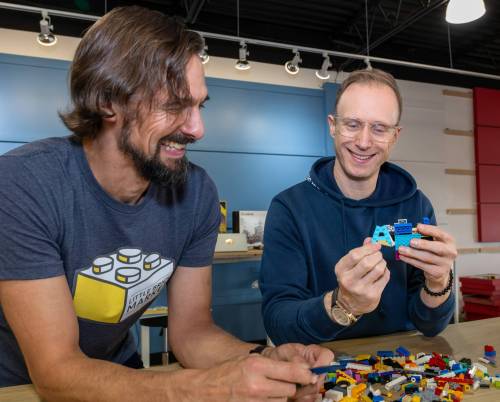
Brick by brick, a Winnipeg Lego seller is building its third expansion — in less than two years.

Read
Updated: Yesterday at 8:54 AM CDT

Human cost of AI bubble outweighs tech’s potential

Reviewed by Brandi Field 4 minute read Preview

Human cost of AI bubble outweighs tech’s potential

Reviewed by Brandi Field 4 minute read 3:00 AM CDT

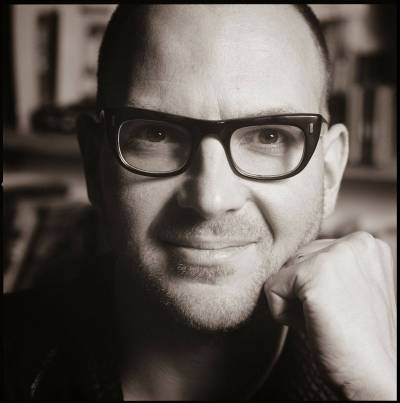
Despite the title of his new book, Cory Doctorow isn’t against artificial intelligence (AI). At least, not exactly — although, admittedly, the “Before It’s Too Late” of the book’s subtitle sounds ominous.

A self-described AI critic, Doctorow is against the scammy story tech companies are selling investors and bosses: that AI can replace workers, cut costs and keep tech companies growing forever.

Doctorow introduces the idea of “centaurs” and “reverse centaurs” to expose power relationships between people and AI. In automation theory, a centaur is a person who is helped by a machine. A reverse centaur is a person who is forced to help a machine. The difference, Doctorow argues, is whether the person gets to choose when, where and how to use the tool.

He wants readers to stop being dazzled by AI and start asking who uses it, from it and gets used by it.

Read
3:00 AM CDT

Meetings accomplish something that an email never could while respecting people’s time, building relationships

Tory McNally 7 minute read Preview

Meetings accomplish something that an email never could while respecting people’s time, building relationships

Tory McNally 7 minute read 3:00 AM CDT

There are few workplace experiences that unite employees quite like complaining about meetings. Ask almost anyone what frustrates them at work, and somewhere on the list will be the meeting that could have been an email. We’ve all been there. Thirty minutes scheduled for a simple update somehow turns into an hour. Half the attendees don’t need to be there. Someone shares their screen for ten minutes trying to find the right document. The meeting ends with everyone wondering what was actually decided.

It’s no surprise that organizations are looking for ways to reduce meeting fatigue. Every hour spent in a meeting is an hour that isn’t spent serving customers, solving problems, writing reports, or completing projects. As calendars become increasingly crowded, employees often find themselves working longer days simply to catch up on the work they couldn’t accomplish because they were in meetings.

The obvious solution seems simple: hold fewer meetings. In many cases, that’s exactly the right answer. Routine updates, policy reminders, project status reports, and information that doesn’t require discussion can often be shared through email and chat platforms. Not every piece of information deserves everyone’s calendar.

But eliminating meetings altogether would create a different problem, especially as more organizations embrace hybrid and remote work.

Read
3:00 AM CDT