Tailor training to your body type
Advertisement
Read this article for free:
or
Already have an account? Log in here »
To continue reading, please subscribe:

Digital Subscription
One year of digital access for only $205*
- Enjoy unlimited reading on winnipegfreepress.com
- Read the E-Edition, our digital replica newspaper
- Access News Break, our award-winning app
- Play interactive puzzles
*First annual payment billed as $205.00 + GST for one year. This annual subscription will automatically renew at $233.00 + GST every 52 weeks (10% off the regular annual price of $259.35). Offer available to new and qualified returning subscribers only. Cancel any time.
To continue reading, please subscribe:
Add Free Press access to your Brandon Sun subscription for only an additional
$1 for the first 4 weeks*
- Enjoy unlimited reading on winnipegfreepress.com
- Read the E-Edition, our digital replica newspaper
- Access News Break, our award-winning app
- Play interactive puzzles
*Your next Brandon Sun subscription payment will increase by $1.00 and you will be charged $17.95 plus GST for four weeks. After four weeks, your payment will increase to $24.95 plus GST every four weeks.
Read unlimited articles for free today:
or
Already have an account? Log in here »
Hey there, time traveller!
This article was published 01/11/2014 (4297 days ago), so information in it may no longer be current.
“So Maria Sharapova, ‘Pinball’ Clemons, and Oprah walk into a gym.”
No, this isn’t the lead-in to a crude Rodney Dangerfield joke as much as it is the plot to the make-believe weight-loss television show we came up with last week — let’s call it Three’s Company.
In last week’s column, we illustrated the fact that different body types (somatotypes) will respond differently to training, and some people have a propensity to either put on weight (endomorph), lose weight easily (ectomorph), or just be naturally muscular and disliked by all other body types (mesomorph). But what do we do with all this information? How do you tweak or supplement your current fitness plan in order to play to the strengths and weaknesses of your body type?
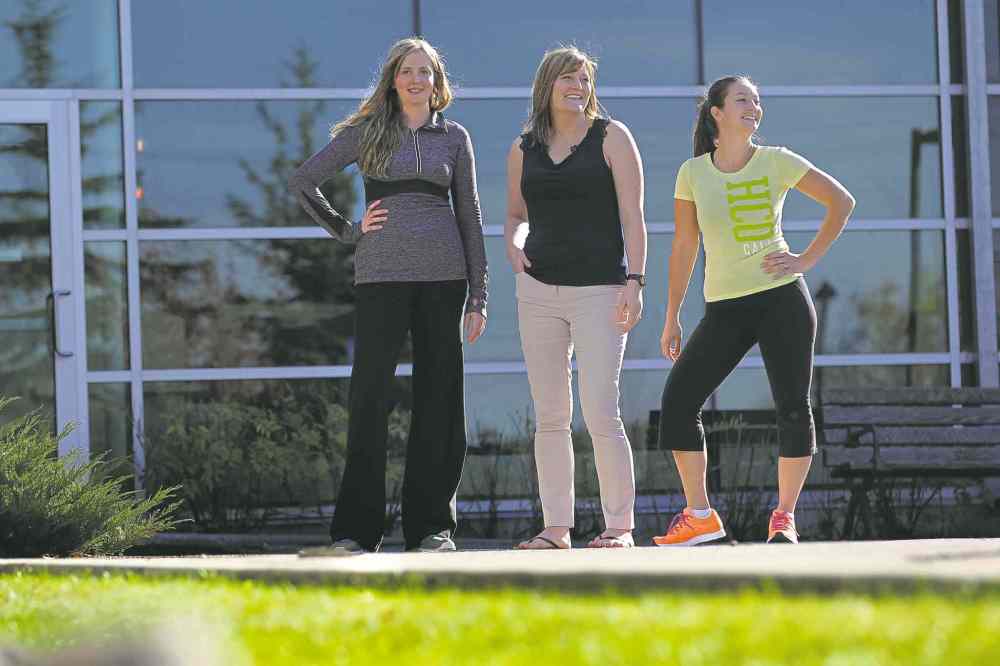
First, we need to stop focusing on the factors we can’t change. I always find it interesting that the list of modifiable factors goes on and on, yet we focus mostly on those we can’t. Things such as age, height, natural body types and musculoskeletal structure won’t change; so get them out of your head. Instead of treating them as obstacles to your goals, focus on the variables that you can change, such as lean muscle mass, metabolism, body fat, lifestyle habits, work ethic, posture, flexibility, etc. Consider the following after plotting yourself on the somatotype spectrum.
Endomorphs need to do everything possible to rev up their naturally sluggish metabolism. The most common error for this body type is focusing on traditional cardiovascular exercise to achieve weight loss. Traditional cardio burns a few calories without much effect on resting metabolism, and the repetitive nature of such training increases injury risk. Endomorphs do gain muscle with relative ease, and lean muscle increases metabolism. Dedicating training time to strength training, and more importantly interval training, is paramount. Big, multi-joint movements done safely will burn calories, increase metabolism and reduce repetitive-injury risk. During days off from strength training you can perform light, low-impact cardio to maintain a relatively consistent level of calorie usage throughout the week.
Another common error is removing fat from the diet and replacing it with high-sugar alternatives. Eating a balanced diet with a monitored (but not overly restricted) calorie intake, will help you achieve long-term results.
At the other end of the argument we find the classic ectomorph body type who battles to gain and maintain muscle on their tall, thin frame. Don’t scoff; it is an issue as important as weight loss for several reasons. The most common error in this class is an unfixed diet. In efforts to gain weight, or because of indifference and ignorance, ectomorphs plough through any food they want (reference: almost every adolescent athlete I’ve ever trained), not understanding it doesn’t adequately fuel the body to gain muscle. “Don’t worry, I won’t get fat,” is too often heard in the hockey dressing room when discussing a post-game meal. This applies to both kids and adults; eating a clean, fixed diet with an adequate but not ridiculous amount of protein will contribute to muscle growth and aid recovery.

The second most common error for the ectomorph is overtraining. The consensus in the gym is that ‘more is better.’ Mentioned last week, ectomorphs are susceptible to increased levels of stress hormones like cortisol — leading to overtraining. Excess cortisol levels from too much training lead to muscle breakdown. To avoid such issues, focus on intensity rather than volume, as well as heavier/high-load exercises, and find the right balance of work and recovery.
Now a much shorter discussion — mesomorphs respond well to and are capable of most types of training. A clean diet tailored slightly to gain or lose weight; strength exercises to build strength; traditional cardio will burn more calories with an already well-maintained metabolism.
It seems simple, and not everyone will fall into one of the three classic categories (I myself would be an ecto-mesomorph), but it’s time that we stop treating everyone with the same guidelines and recognize Oprah and Maria won’t get the same results, and can’t achieve their desired results from the same, general training program. Train in a way that’s right for you — not Oprah.
Tim Shantz is a certified athletic therapist and personal trainer. He can be reached at tim@mordenphysiotherapy.ca.