Sony cyberattack, terror threats put chill on targeting foreign leaders
Advertisement
Read this article for free:
or
Already have an account? Log in here »
To continue reading, please subscribe:

Digital Subscription
One year of digital access for only $205*
- Enjoy unlimited reading on winnipegfreepress.com
- Read the E-Edition, our digital replica newspaper
- Access News Break, our award-winning app
- Play interactive puzzles
*First annual payment billed as $205.00 + GST for one year. This annual subscription will automatically renew at $233.00 + GST every 52 weeks (10% off the regular annual price of $259.35). Offer available to new and qualified returning subscribers only. Cancel any time.
To continue reading, please subscribe:
Add Free Press access to your Brandon Sun subscription for only an additional
$1 for the first 4 weeks*
- Enjoy unlimited reading on winnipegfreepress.com
- Read the E-Edition, our digital replica newspaper
- Access News Break, our award-winning app
- Play interactive puzzles
*Your next Brandon Sun subscription payment will increase by $1.00 and you will be charged $17.95 plus GST for four weeks. After four weeks, your payment will increase to $24.95 plus GST every four weeks.
Read unlimited articles for free today:
or
Already have an account? Log in here »
Hey there, time traveller!
This article was published 20/12/2014 (4287 days ago), so information in it may no longer be current.
There are few things Hollywood loves — or relies on — more than a good villain.
From Charlie Chaplin’s The Great Dictator, which took satirical aim at Adolf Hitler, to countless Cold War-era pictures featuring Russian bad guys and more recent movies centred on Middle Eastern terrorists, filmmakers have routinely taken aim at the enemies of America — and sometimes drawn controversy for it.
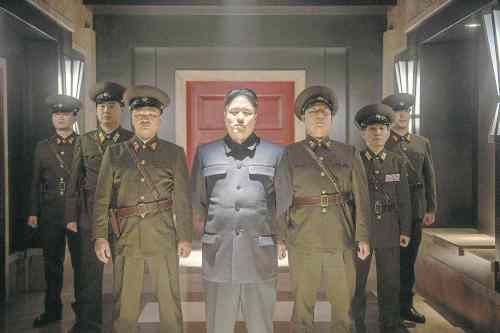
But any uproar in the past has easily been eclipsed by the fallout from Sony Pictures Entertainment’s comedy The Interview, about a fictional assassination attempt on North Korean leader Kim Jong Un.
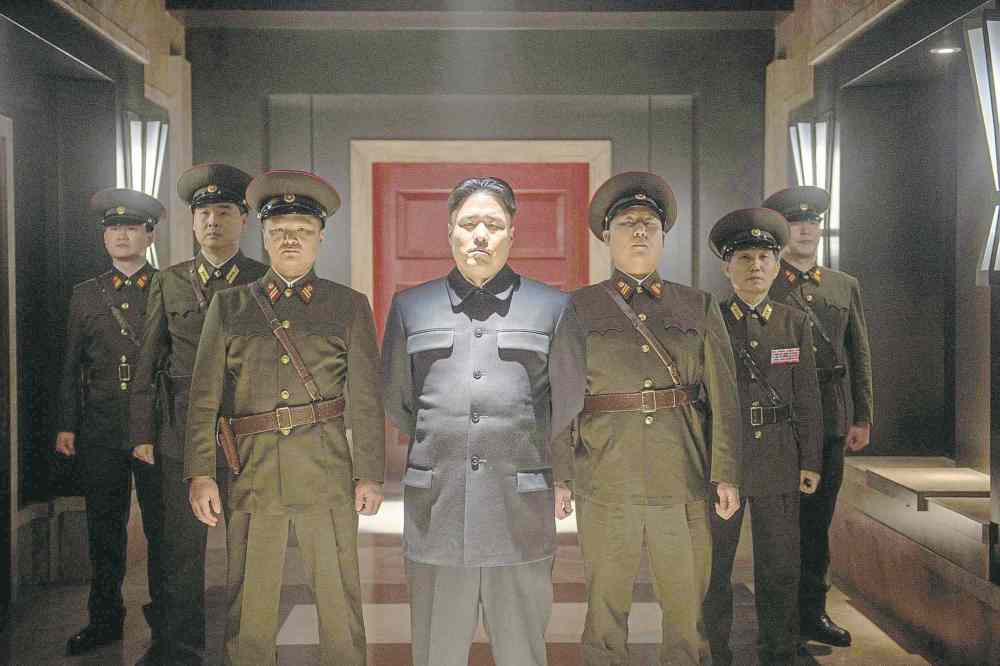
The film has been linked to a crippling cyberattack on Sony Pictures by hackers who call themselves Guardians of Peace. On Tuesday, the group suggested that it would attack theatres that show the movie.
The firestorm signals that the industry may be entering an era in which the villains that filmmakers focus on — particularly foreign nationalities or sitting world leaders — will be scrutinized more closely than ever.
North Korea first threatened retaliation over The Interview in June, calling it tantamount to “an act of war.” The hackers who took responsibility for the data breach, made public Nov. 24, have not been directly linked to North Korea, but their demand to Sony was to not release the film.
As the leaks continue, film producers and studio executives said they do not expect any major studios to move forward with projects that centre on North Korea.
“I’ve got to believe that this will spook anybody from considering making the North Koreans bad guys in a film,” movie producer Bill Gerber said. “Unless you were dealing with something that was fact-based and very compelling, it might not be worth it.”
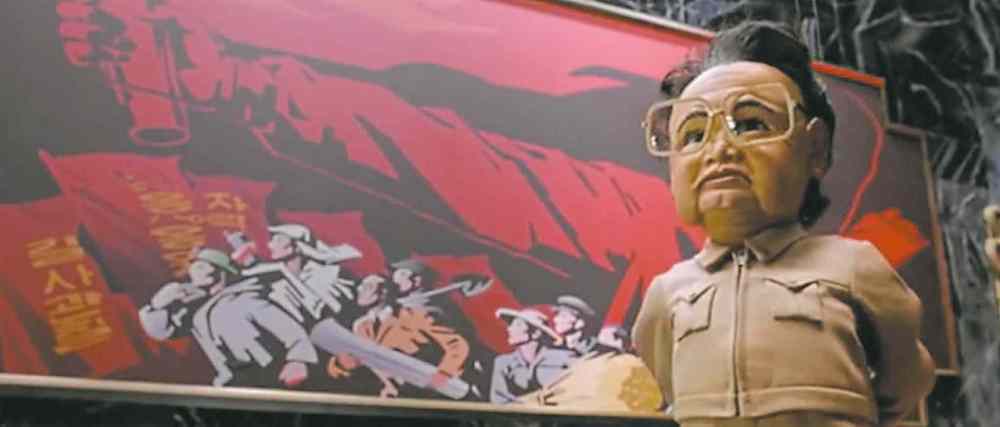
Just a few years ago, North Korea and its leaders were reliable fodder for Hollywood. Movies including Die Another Day (2002), Team America: World Police (2004), Salt (2010) and Olympus Has Fallen (2013) all depicted villainous North Koreans.
In the case of Team America, an all-puppet comedy from South Park creators Trey Parker and Matt Stone, former North Korean leader Kim Jong Il was lampooned mercilessly. But in that case the country’s response was limited to an unsuccessful effort to get the film banned in the Czech Republic.
Observers have speculated that the film did not rankle North Korea to the degree of The Interview because of its cartoonish nature. Also, Kim was at the time well into his decades-long reign and secure in his power. His son, Kim Jong Un, assumed control of North Korea only in 2012 and has reportedly purged several political and military chiefs to consolidate power.
North Korea had, for the last decade or so, been considered a safer target for filmmakers than other alternatives, particularly China.
In 2011, MGM altered its remake of Red Dawn — digitally removing Chinese villains over concerns about how the film would be perceived in China, the fastest-growing movie market in the world. Chinese flags and symbols were erased and new dialogue recorded was recorded. In the finished project, the antagonists are from North Korea.
USC professor Stanley Rosen, a Chinese film expert, said that for Hollywood, after “China was ruled out, North Korea was the last place left.”
“You are likely to increasingly see the studios make films where the bad guys are not from any known country,” he said.
That approach was initially considered by Sony Pictures and the filmmakers behind The Interview, co-directors Seth Rogen and Evan Goldberg.
In the end, after much debate, it was decided that the cult of personality around the North Korean leader made him an irresistible satirical target.
“It’s not that controversial to label them as bad,” Rogen said in an interview with The Times in mid-November, days before the hacking attack occurred. “Creatively that was appealing, like, ‘Oh, you can just villainize the guy and it’s OK because he is a villain.’… We didn’t make up anything in the movie. It’s all based on actual stuff.”
Of course The Interview is hardly the first film to land a major studio in hot water with a foreign country.
China condemned the 1997 Brad Pitt drama Seven Years in Tibet, which depicted a European mountain climber’s relationship with the Dalai Lama. In the film, distributed by Sony’s TriStar Pictures label, Chinese military officers were shown beating up Tibetans. Pitt and others connected to the film were banned from entering China, though that decree appears to have been lifted.
Hollywood often mines the headlines for its next diabolical villain. Over the decades, Germany, Russia and Vietnam have been the source of villainous regimes and characters. Middle Eastern countries have also long been a dependable font of bad guys.
That means the next villainous state could make itself apparent some day soon. In the interim, what’s the alternative? Gerber, who produced last year’s Grudge Match, had a few ideas.
“Actually, Russia is the current bad guy, according to most things I read,” he said. “Certainly Middle Eastern rogue states. If you watch Homeland, they seem to be pretty dependable bad guys.”
The industry could even see some self-censorship, said Paul Dergarabedian, senior media analyst for entertainment data firm Rentrak. “Of course we don’t want to see that, but it could happen,” he said.
What is clear is that studios are going to think differently about their movie villains. “There has to be a new perspective — and I’m not talking about self-editing to the point of not being creative,” Dergarabedian said. “But any studio is wise to look at their content.”
Still, even as Hollywood vows to leave North Korea alone — at least for the time being — some observers have applauded Sony Pictures for making The Interview.
“It is left to American corporations, including Sony Pictures, to stand up for the rights of free speech,” said Laura Martin, a senior media analyst at Needham & Co.
“Freedom of speech is one of the core differentiators of American society,” she added. “I applaud Sony for taking the risk” of angering North Korea.
— Los Angeles Times