

Building BLOCK
South Main Street buildings are among city's oldest
Advertisement
Read this article for free:
or
Already have an account? Log in here »
To continue reading, please subscribe:
Monthly Digital Subscription
$1 per week for 24 weeks*
- Enjoy unlimited reading on winnipegfreepress.com
- Read the E-Edition, our digital replica newspaper
- Access News Break, our award-winning app
- Play interactive puzzles
*Billed as $4.00 plus GST every four weeks. After 24 weeks, price increases to the regular rate of $19.95 plus GST every four weeks. Offer available to new and qualified returning subscribers only. Cancel any time.
Monthly Digital Subscription
$4.99/week*
- Enjoy unlimited reading on winnipegfreepress.com
- Read the E-Edition, our digital replica newspaper
- Access News Break, our award-winning app
- Play interactive puzzles
*Billed as $19.95 plus GST every four weeks. Cancel any time.
To continue reading, please subscribe:
Add Free Press access to your Brandon Sun subscription for only an additional
$1 for the first 4 weeks*
*Your next subscription payment will increase by $1.00 and you will be charged $16.99 plus GST for four weeks. After four weeks, your payment will increase to $23.99 plus GST every four weeks.
Read unlimited articles for free today:
or
Already have an account? Log in here »
Hey there, time traveller!
This article was published 18/01/2015 (4081 days ago), so information in it may no longer be current.
In its 2014-16 business plan, CentreVenture Development Corporation identifies south Main Street, between Graham and Assiniboine avenues, as a “key opportunity for intensification and redevelopment,” and is creating a redevelopment strategy that will soon be released to the public.
Today, this once-bustling section of Main Street is known more for its numerous surface parking lots, as many of its “anchor tenants,” including the Hudson’s Bay Co.’s original department store at York Avenue and the Empire Hotel at St. Mary Avenue, disappeared long ago.
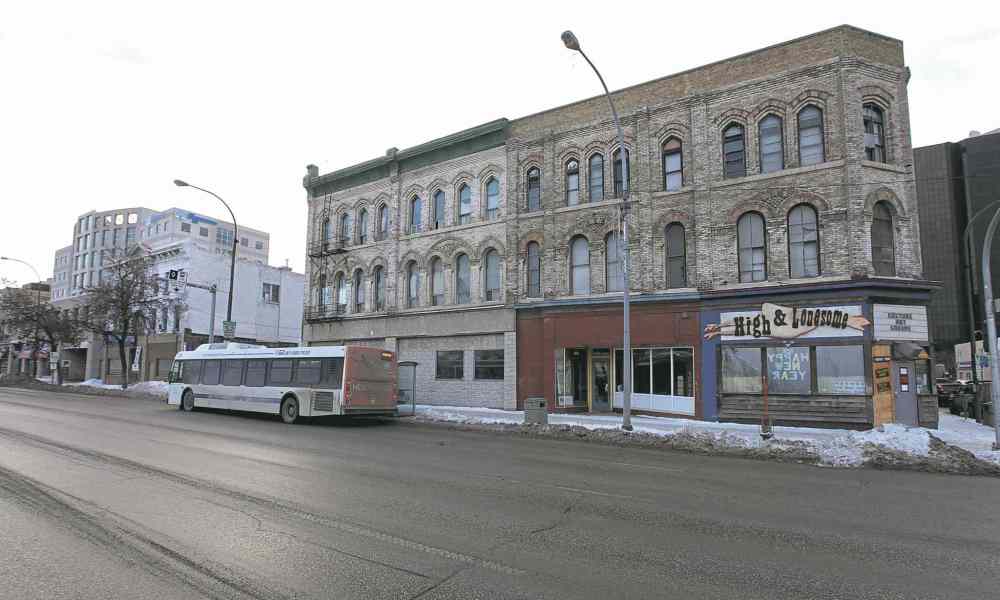
Three buildings — the Winnipeg Hotel, the McDonald Block and the Fortune Block — have managed to stand the test of time and are among Winnipeg’s oldest. Will they survive this new interest from developers?
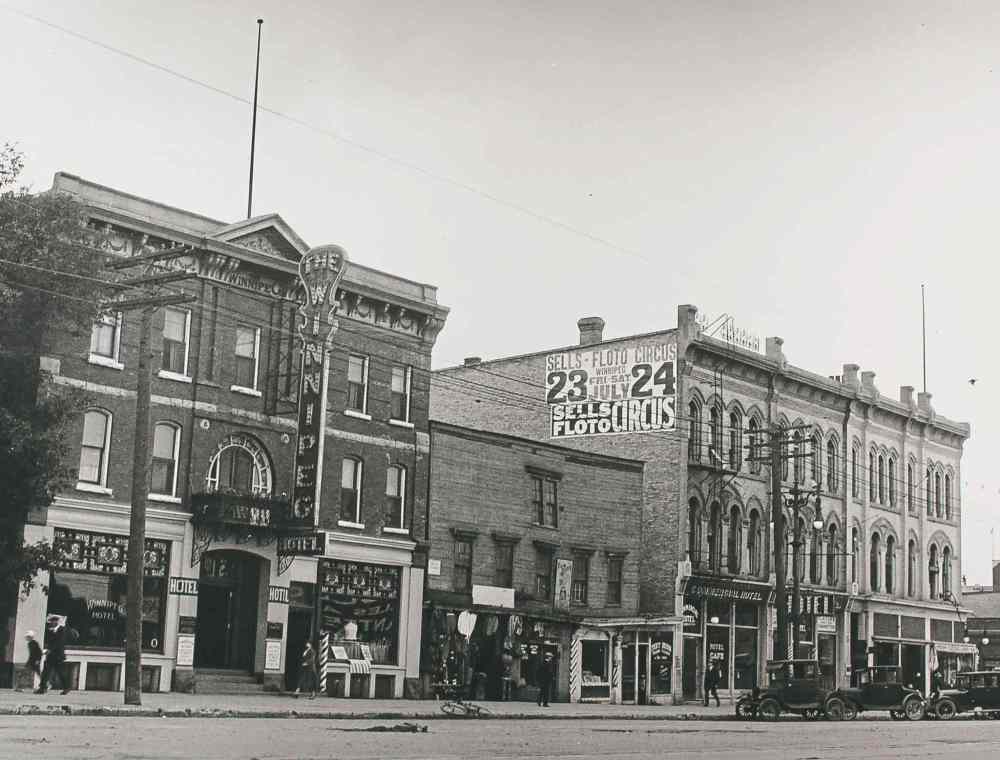
The origins of this stretch of Main Street go back to the early days of the Hudson’s Bay Co. Starting in the 1830s, it was a cart trail leading from Upper Fort Garry to Lower Fort Garry and beyond.
In 1869, HBC signed a deed of surrender with the federal government, turning over most of its vast land holdings for the sum of 300,000 pounds. The company didn’t take itself out of the local property game, though. Knowing the future city would eventually have to expand southward, HBC retained a large reserve of land that would generate income for decades to come. The reserve stretched from the junction of the Red and Assiniboine rivers to, approximately, present-day Portage Avenue and Osborne Street.
HBC created detailed urban plans for its reserve, laying out streets such as Broadway and York Avenue, and went to great lengths to try to ensure they became the core of the downtown. When the fledgling city tried to properly grade the Portage Road, an old cart trail that existed in a sort of no-man’s land between the reserve and the urban boundary, HBC filed a court injunction and threatened anyone found using the trail with trespassing charges.
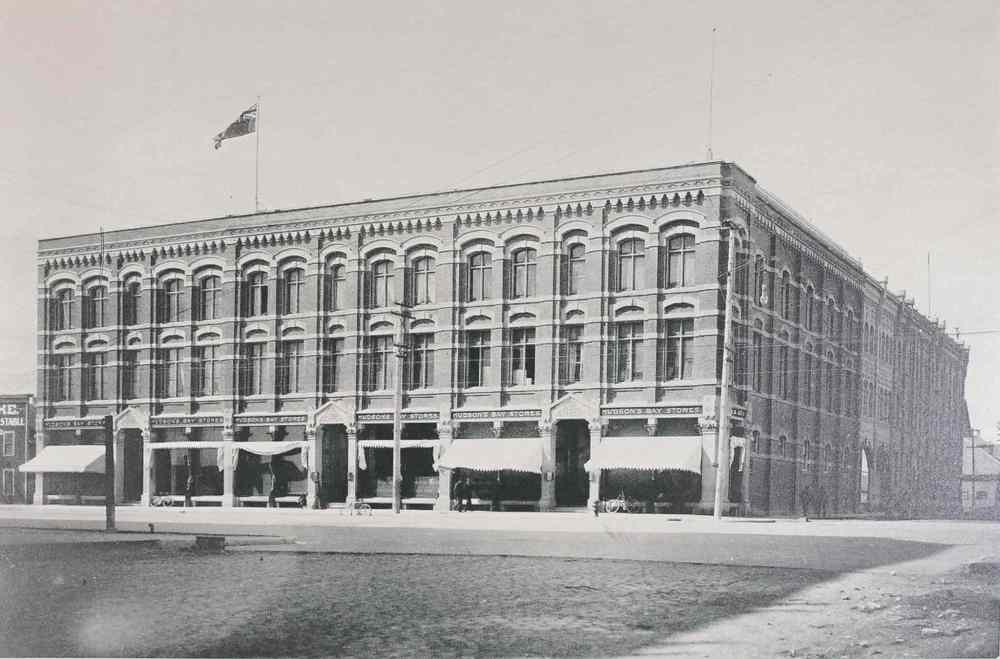
HBC envisioned its section of Main Street as home to a new retail centre for the city. The company was so intent on this, it built its first modern-era department store on Main Street at York Avenue in 1881 and expanded it many times before relocating to Portage Avenue in 1926.
The oldest of this trio of surviving buildings is the Winnipeg Hotel. When HBC subdivided its stretch of Main Street (which it called Garry Street) in 1872, hotelier James S. Wheeler purchased a lot. The following year, he built the Garry Saloon and received a liquor permit from the province on Nov. 1, 1873, exactly one week before the City of Winnipeg was incorporated. Two years later, Wheeler added rooms for rent to the back of the saloon and renamed it Garry House.
In 1881, he partnered with another hotelier with much deeper pockets. Thomas Montgomery had made his money in manufacturing and land speculation and helped finance the addition of two floors of rooms above the saloon. The rechristened Winnipeg Hotel formally opened in August 1883. According to the city’s historic buildings committee and newspaper articles of the day, the existing building was expanded, not demolished, which means the Winnipeg Hotel is likely the oldest operating commercial building in the city.
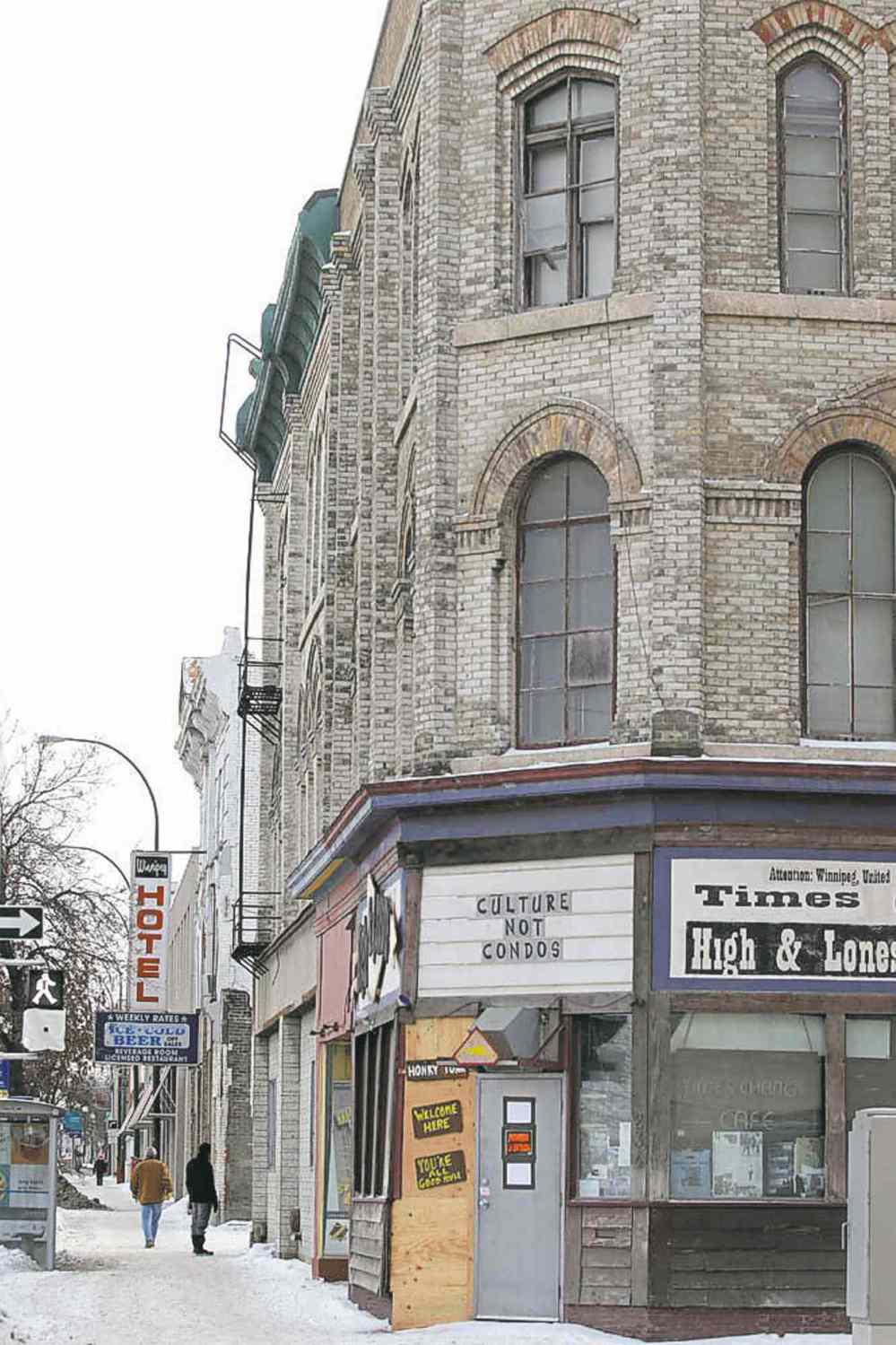
In 1895, Montgomery — who by this time owned the hotel in partnership with his brother — hired architect Walter Chesterton to upgrade the building. The $20,000 job included replacing its facade with new brick and a sandstone trim, creating the oval archway above the front door and installing an impressive iron cornice. It transformed the building from a functional, Prairie-town hostelry into a modern, urban hotel.
The new development along south Main Street attracted the likes of Mark Fortune, who was becoming a rich man in the land-speculation business. He financed the construction of his Fortune Block in 1882, designed by architects Willmot and Stewart and built by Grant And Geeley. By the time it opened in February 1883, Fortune had already flipped it to grocery wholesaler Alexander MacDonald. Fortune did, however, retain an office in this block for a number of years, and subsequent owners did not bother to change the name. (Fortune, of course, is best known for having gone down with the Titanic.)
The Fortune Block was a mixed-use building, with two large retail stores on the main floor and 15 suites upstairs, some used as residences and others as offices. The retail mix was usually a combination of general goods retailers and specialty shops, such as a butcher or confectionery store. Now the home of the Times Change(d) High and Lonesome Club, the main floor housed a café from the 1920s to the 1950s.
A notable office occupant was Dr. Lillian Yeomans, considered the first woman to practise medicine in Winnipeg. She graduated from Michigan State University’s medical school in 1882, specializing in midwifery and children’s diseases. When she returned to Winnipeg, she set up her office in the Fortune Block. Her mother, Amelia, graduated from the same medical school in 1883 and joined her daughter. In 1884, the two lived and practised in the upper floors of the Fortune Block before moving further south on Main Street.
In October 1888, the Manitoba Institution for the Education of the Deaf and Dumb, the forerunner to the Manitoba School for the Deaf, opened at the Fortune Block. It was founded by American deaf-education advocate James Watson and was soon joined by Duncan McDermid. The following year they moved to a larger space further south on Main Street, and eventually to their first permanent home at Sherbrook Street and Portage Avenue in 1890.
When Alexander MacDonald purchased the Fortune Block in 1883 he immediately had another building, which he named the Macdonald Block, built next to it. It is thought he used the same architects, Willmot and Stewart. The buildings are so similar in style at first glance, they are often mistaken for being one structure.
The Scottish-born Macdonald came to Winnipeg in 1871, and the following year was one of the founders of the Manitoba Free Press, even operating the presses for its inaugural edition. Though he sat on a number of boards, his core business was A. Macdonald and Co., a grocery retailing and wholesaling company he ran out of the new Macdonald Block.
During his time on south Main Street, Macdonald founded the Great-West Life Assurance Company in 1892 and served as president of the Tribune Publishing Company from 1887 to 1888, a city councillor from 1887 to 1888 and the city’s mayor in 1892.
His grocery business spread throughout the Prairies, and in 1902 he relocated to larger premises in the Exchange District. The company would go on to become known as Macdonalds Consolidated, which in 1928, just months after his death, was sold to Safeway as it was preparing to enter the Canadian market.
The next owner of the buildings was Sam Cook, a local hotelier who converted the Macdonald Block into the 50-room Commercial Hotel. While his predecessor left the Fortune block as a stand-alone building, it is likely Cook used part of its upper floors as additional hotel rooms.

The decades have not been kind to south Main Street, including these three buildings, which have received little in the way of renovations or restoration. The last time a developer took an interest in the area was in the 1970s, when the Trizec Corporation convinced the city to purchase and demolish dozens of buildings south of Portage Avenue as part of a three-tower redevelopment that was to stretch from Portage to Graham. Only one tower ever materialized.
Thanks to new projects such as the Canadian Museum for Human Rights and Upper Fort Garry Provincial Park, developers have rediscovered the area. While they look to various hotel and restaurant chains to fill in the gaps left by decades of neglect, let’s hope they give a little consideration for the buildings that have stood there for more than 130 years.
Christian Cassidy writes about local history on his blog, West End Dumplings.