Trending that caught Doug’s eye: Oscar snubs
Advertisement
Read this article for free:
or
Already have an account? Log in here »
To continue reading, please subscribe:

Digital Subscription
One year of digital access for only $205*
- Enjoy unlimited reading on winnipegfreepress.com
- Read the E-Edition, our digital replica newspaper
- Access News Break, our award-winning app
- Play interactive puzzles
*First annual payment billed as $205.00 + GST for one year. This annual subscription will automatically renew at $233.00 + GST every 52 weeks (10% off the regular annual price of $259.35). Offer available to new and qualified returning subscribers only. Cancel any time.
To continue reading, please subscribe:
Add Free Press access to your Brandon Sun subscription for only an additional
$1 for the first 4 weeks*
- Enjoy unlimited reading on winnipegfreepress.com
- Read the E-Edition, our digital replica newspaper
- Access News Break, our award-winning app
- Play interactive puzzles
*Your next Brandon Sun subscription payment will increase by $1.00 and you will be charged $17.95 plus GST for four weeks. After four weeks, your payment will increase to $24.95 plus GST every four weeks.
Read unlimited articles for free today:
or
Already have an account? Log in here »
Hey there, time traveller!
This article was published 21/02/2015 (4204 days ago), so information in it may no longer be current.
Let’s face it: You know you’re going to watch, and we know you’re going to watch.
As you have already deduced, we’re talking about Sunday night’s broadcast of the 87th annual Academy Awards.
There’s no reason to be ashamed about wallowing in Hollywood’s over-the-top, self-congratulatory celebration. There are some excellent reasons to watch the Oscars, including: 1) Making fun of the bizarre outfits the stars wear on the red carpet; and 2) Trying to prevent your eyes from glazing over during the long-winded acceptance speeches.
But the best reason for tuning in is to roll your eyes and gnash your teeth over some of the monumentally stupid decisions made by the Academy voters, who always seem to ignore our favourite films and performers.
This year, the fuss began just minutes after the nominations were announced in mid-January and the film Selma, a drama about the 1965 marches led by the Rev. Dr. Martin Luther King Jr., received only two nods — Best Picture and Best Original Song.
News sites and comment boards exploded in anger because director Ava DuVernay, who would have become the first woman of colour nominated in the director category, was shut out, and lead actor David Oyelowo, who brilliantly plays Dr. King, was also missing in action.
The tragic truth is, Selma is not the first film to feel Oscar’s cold golden shoulder. Here are five other famous flicks critics complain were snubbed in favour of vastly inferior films:
5
And the Oscar went to: The Apartment (1960)
IT SHOULD HAVE GONE TO:
PSYCHO
The snub:
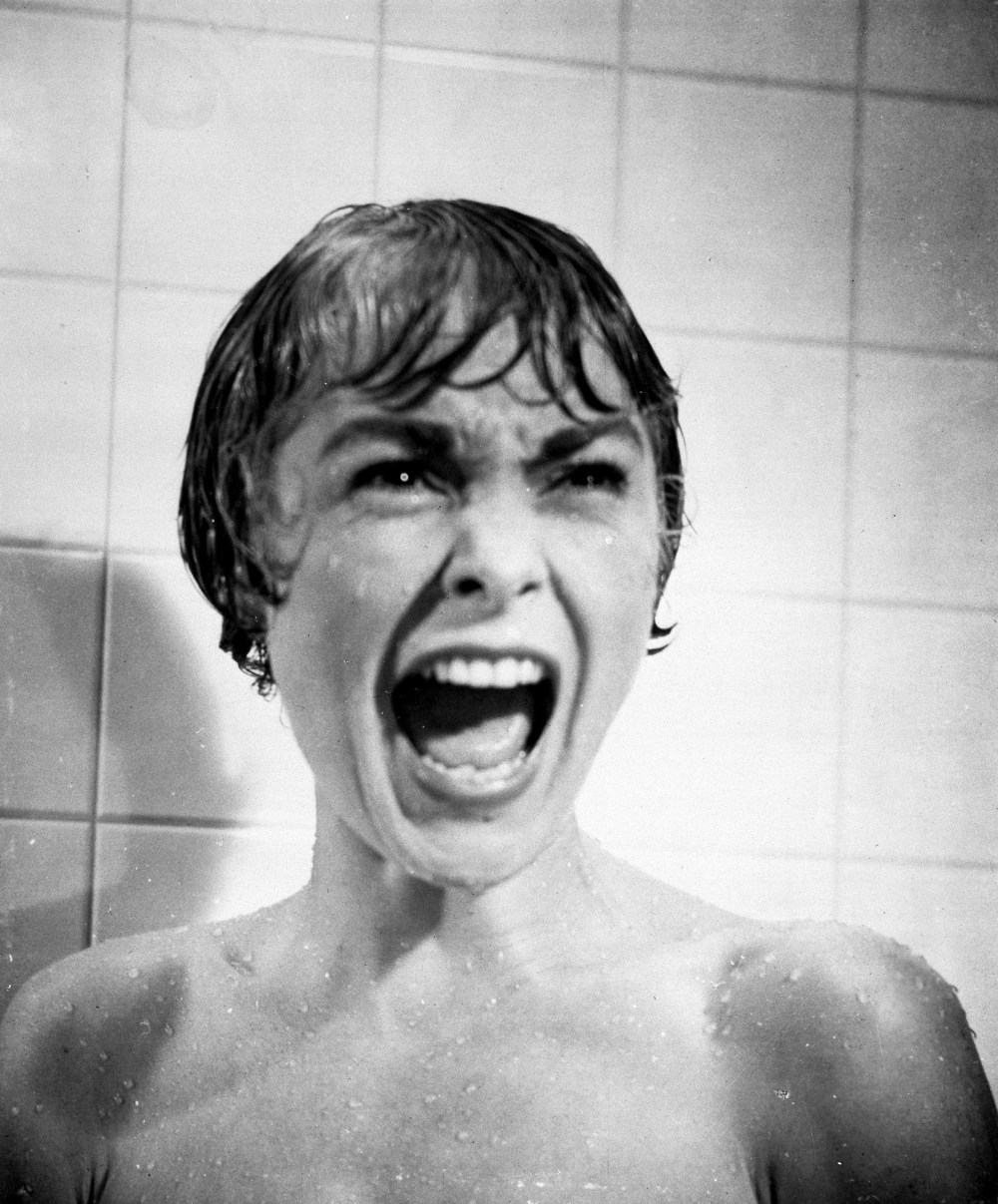
It is difficult, after all these years, to recall a single scene from Billy Wilder’s The Apartment, wherein a lonely office drudge portrayed by Jack Lemmon tries to climb the corporate ladder by letting company executives use his apartment for extramarital trysts. In contrast, the moment someone mentions Alfred Hitchcock’s psychological thriller-horror classic, your brain immediately conjures up images of the notorious shower scene wherein actress Janet Leigh’s character is stabbed to death. It is the movie’s pivotal moment and easily one of the best-known scenes in motion-picture history. Even more shocking is the fact Psycho was not even nominated for best picture. While The Apartment was a diverting entertainment, Psycho is now considered a masterpiece, Hitchcock’s most profitable picture ever. In 1992, the U.S. Library of Congress deemed the movie “culturally, historically, or aesthetically significant” and picked it for preservation in the National Film Registry. Among other honours, the American Film Institute has rated it as No. 18 on its list of the 100 best American movies, and No. 1 on its list of the top 100 suspense-thriller films. Sniffs BBC.com: “The biggest snub had to be for its star Anthony Perkins, who created an entirely original villain, with exceptional psychological complexity, in Norman Bates.” The public loved this movie, with lines stretching outside theatres around the world. The academy should have paid more attention.
4
And the Oscar went to: Oliver! (1968)
IT SHOULD HAVE GONE TO:
2001: A SPACE ODYSSEY
The snub:
Don’t get us wrong: We liked Oliver! a lot. In fact, we still find ourselves humming a few of the catchy songs — Food, Glorious Food! — from this Oscar-winning British musical based on Oliver Twist by Charles Dickens. But as any science-fiction fan will tell you, 2001 is a (bad word) classic. As the entertainment website ET Canada said: “You’d think that in 1969, the year of the moon landing, the Academy would’ve been in the mood to give the best picture award to Stanley Kubrick’s bold and visionary 2001… but you’d be wrong. 2001 wasn’t even nominated.” ET branded Oliver! “a movie which would have seemed dated had it been released in the 1940s.” Kubrick did nab his sole Oscar for best visuals for 2001, but as the website Arts.Mic noted, that’s “the Academy’s way of giving awards to science-fiction and fantasy movies without having to get their hands dirty.” Kubrick’s classic is now considered one of the most influential films of all time. Among other honours, it has been ranked as No. 6 in the top 10 films of all time by a poll of critics in Sight & Sound magazine. In 2010, it was named the greatest film of all time by the Moving Arts Film Journal. We agree with the Beer Drifter blog’s assessment: “Not even nominating the greatest science-fiction film of all time? If given a do-over, I guarantee this omission would be rectified, even by the stodgy old academy members.”
3
And the Oscar went to:
The Best Years of Our Lives (1946)
IT SHOULD HAVE GONE TO:
IT’S A WONDERFUL LIFE
The snub:
Let’s be blunt — as the popular review site Rotten Tomatoes has said, It’s a Wonderful Life is the holiday classic that defines all holiday classics. For sentimental film fans, it wouldn’t be the holidays without lying on the couch getting all misty-eyed over yet another viewing of Frank Capra’s timeless tale of a despondent George Bailey (Jimmy Stewart), who gives up his dreams to help others and whose imminent suicide on Christmas Eve brings Clarence Odbody, “angel, second class,” to his rescue. As you already know, George learns what life would have be like in Bedford Falls if he’d never been born and we learn he’s “the richest man in town” because (sniff) he has friends. The film is now rated No. 1 on AFI’s list of 100 most inspiring movies of all time. OK, now we’ll give you a minute to remember something — anything — about The Best Years of Our Lives. Give up? We thought so. The thing is, the plot of Best Years revolved around three veterans adjusting to civilian life after the Second World War, a weighty topic at the time of it’s release shortly after the end of the war. Personally, we think every time a bell rings, you know the Academy has clipped the wings of a really fabulous film. Now someone hand us a tissue.
2
And the Oscar went to:
The Greatest Show on Earth (1952)
IT SHOULD HAVE GONE TO:
HIGH NOON
The snub:
Really, Academy? Really? If the voters from that year were here right now, we would not be able to look them in the face. That’s how disgusted we are. Some film critics consider this decision to be the biggest Oscar snub in history. For instance, William Bibbiani of Crave Online Canada said: “It lost to the steaming pile that was The Greatest Show on Earth. That’s not the worst movie ever, but it’s an enormous misfire that can’t hold a candle to High Noon, my pick for the best Oscar snub ever.” According to more online reports than you can shake a six-shooter at, The Greatest Show on Earth, which focused on the dramatic lives of some trapeze artists and a mysterious clown, is the absolute worst best-picture winner of all time. On the other hand, High Noon is one of the greatest westerns ever made, if not the best. The American Film Institute rated it No. 2 on its list of top 10 westerns, and it placed No. 27 on AFI’s 2007 list of the 100 greatest American movies of all time. Acting legend Gary Cooper was unforgettable as the small town marshall forced to face a gang of outlaws by himself. Why did it lose? Probably because a lot of folks thought it was Communist propaganda about the Hollywood Black List. In a 1971 interview, Mr. Cowboy himself, John Wayne, called High Noon “the most un-American thing I’ve ever seen in my whole life.” Really, Duke? Really?
1
And the Oscar went to: How Green Was My Valley (1941)
IT SHOULD HAVE GONE TO:
CITIZEN KANE
The snub:
What we are talking about here is what the critics at American news website the Daily Beast have branded “the biggest (very rude synonym for mistake) in Oscar history.” It’s hard to disagree. How Green Was My Valley, which chronicled life for a family struggling in a Welsh mining town, was pleasant but forgettable. In the years since its release, Citizen Kane, the story of an aging press tycoon whose arrogance alienated him from everyone who loved him, has gone on to top virtually everyone’s list of the greatest films of all time, including that of the prestigious American Film Institute. Even people who don’t watch movies are aware Orson Welles’s first feature film is considered the single greatest achievement in cinema. The problem? The film’s central character, Charles Foster Kane, was an unflattering parody of American newspaper magnate William Randolph Hearst, who was not amused and began a smear campaign that pretty much ruined any chance Welles had of taking home a richly deserved Oscar for best picture. The only statuette he picked up was the one for best original screenplay. Crave Online Canada said: “Its snub has become legendary; it is the prime example people cite when they want to make an argument against the taste of the electorate.” That goes double for us, Rosebud.

The FINAL SCENE:
We have a lot more to say about these snubs, but right now we’d just like everyone to shut up, turn off their cellphones, and pass the (bad word) popcorn, because the movie is about to start.
doug.speirs@freepress.mb.ca