

Baking a holy tradition
Easter breads a rich reminder of Christ's story

Advertisement
Read this article for free:
or
Already have an account? Log in here »
To continue reading, please subscribe:
Digital Subscription
One year of digital access for only $75*
- Enjoy unlimited reading on winnipegfreepress.com
- Read the E-Edition, our digital replica newspaper
- Access News Break, our award-winning app
- Play interactive puzzles
*Billed as $5.77 plus GST every four weeks. After 52 weeks, price increases to the regular rate of $19.95 plus GST every four weeks. Offer available to new and qualified returning subscribers only. Cancel any time.
Monthly Digital Subscription
$4.99/week*
- Enjoy unlimited reading on winnipegfreepress.com
- Read the E-Edition, our digital replica newspaper
- Access News Break, our award-winning app
- Play interactive puzzles
*Billed as $19.95 plus GST every four weeks. Cancel any time.
To continue reading, please subscribe:
Add Free Press access to your Brandon Sun subscription for only an additional
$1 for the first 4 weeks*
- Enjoy unlimited reading on winnipegfreepress.com
- Read the E-Edition, our digital replica newspaper
- Access News Break, our award-winning app
- Play interactive puzzles
*Your next Brandon Sun subscription payment will increase by $1.00 and you will be charged $17.95 plus GST for four weeks. After four weeks, your payment will increase to $24.95 plus GST every four weeks.
Read unlimited articles for free today:
or
Already have an account? Log in here »
Hey there, time traveller!
This article was published 04/04/2015 (4066 days ago), so information in it may no longer be current.
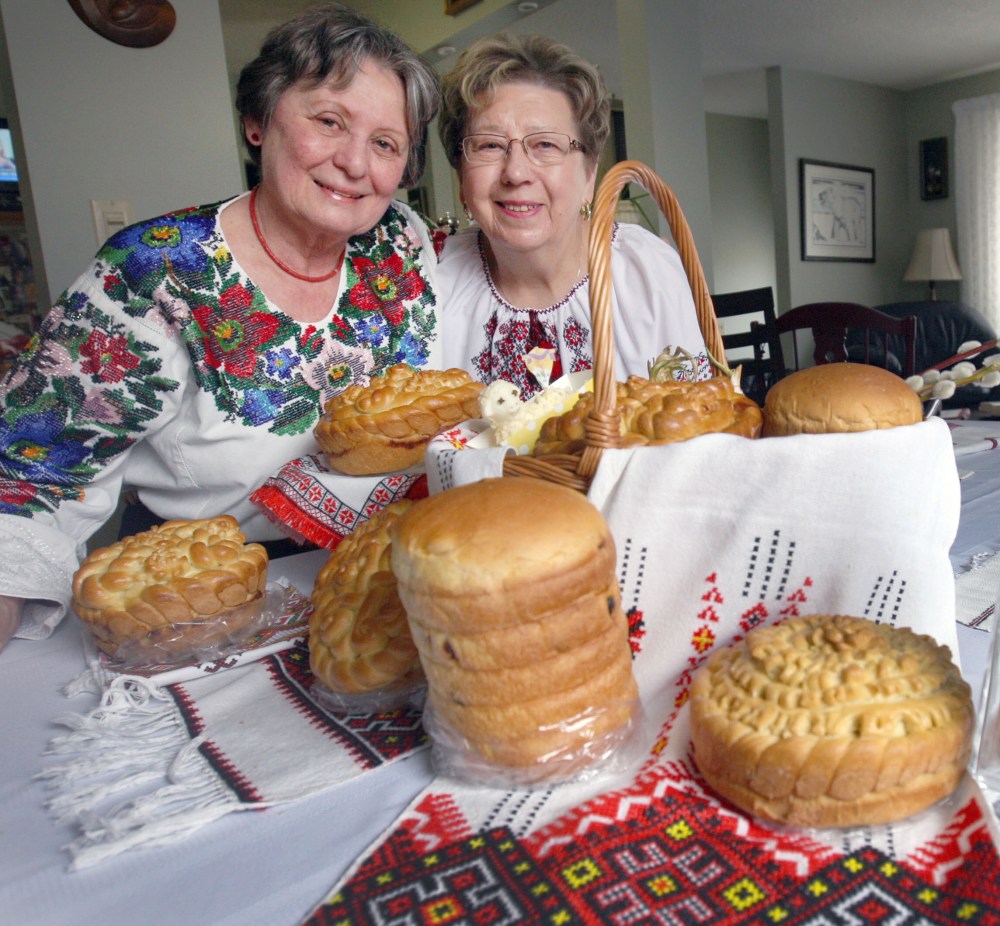
Every time Transcona resident Elsie Marykuca bakes paska, she mixes a pinch of family history and generous measure of theology into the sweet, sticky dough.
“Before we started (baking), we had to make a sign of the cross and say a prayer,” she recalls of the lessons her paternal grandmother taught her when baking the traditional Ukrainian Easter bread.
Now 74, Marykuca has baked paska every year since she was 10, when she learned the techniques — and the meaning behind the white bread flavoured with eggs and saffron.
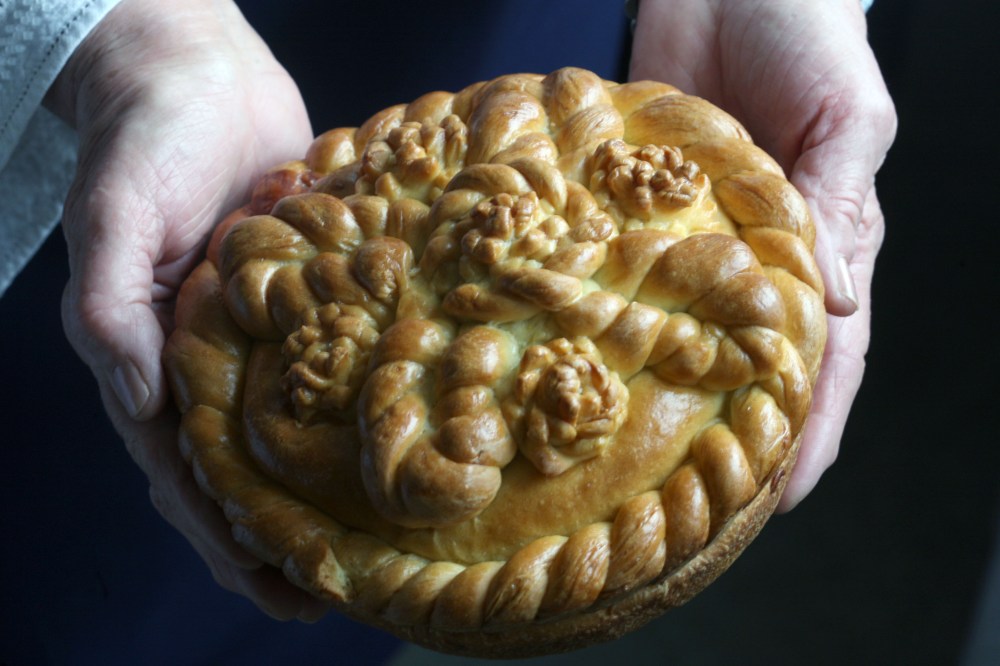
“This tells the story of Easter,” she says, referring to the dough ropes decorating the top of the round loaf.
“We have the body of Jesus, with the rope around his robe, the cross that takes the top part, the five wounds that Jesus endured, and the crown of thorns that goes around the centre wound.”
Whether Ukrainian paska, Greek Christopsomo bread, or English hot cross buns, Christians have a long tradition of baking special sweet bread at Easter, considered the holiest day in the church calendar.
Many recipes call for generous amounts of eggs, butter, cream and sugar, to celebrate the end of dietary restrictions during Lent, the six weeks before Easter.
“It feels good to eat something so rich and rewarding,” explains Tabitha Langel of Tall Grass Prairie Bread Company. Their bakeries at The Forks and in Wolseley offer hot cross buns, Easter fruit bread or Greek Christopsomo bread for Easter.
Every year, Marykuca join a dozen or so other women at St. Anne Ukrainian Catholic Church, 35 Marcie St., to bake 300 loaves of special Easter bread, which they sell for $5 each.
In addition to the paska — decorated with a cross and rope instead of Marykuca’s more elaborate design — the women also bake babka, a sweet bread flavoured with pumpkin and studded with raisins, baked in a coffee can to form a tall, cylindrical loaf.
Both of those breads, along with eggs, beets, butter, cheese and meat, go into Easter baskets to be blessed by a priest, and then consumed at home after the Easter service.
“It becomes food of healing, food of nourishment, and food of spiritual healing,” explains Rev. Mark Gnutel of St. Anne, who blesses hundreds of baskets on Holy Saturday, April 4.
“It also symbolizes bringing families together, sharing food from the same basket.”
Baking the bread also brings together family members, says church member Pauline Kowalchuk, who invites her daughters and granddaughters to a baking party every year.
“My girls come over and we do it together.”
Marykuca isn’t quite so lucky, since her three adult children all live in Yellowknife, where she taught elementary school for two decades. Her paska family tradition usually includes long-distance instructions to one child or the other on how to form the dough decorations.
“I’m piecing together the steps and pictures for my children,” she says, hoping her family will continue making her grandmother’s decorated paska.
She knows many people with Ukrainian roots no longer bake their own Easter breads, instead becoming eager customers of the loaves her group produces each year.
“They want it, they have the meaning of it, but they don’t make it,” explains Marykuca.
That’s also the trend among people with Russian Mennonite roots, who grew up with a sweeter version of paska, says Cora Loewen of Fort Garry Mennonite Fellowship, who offered two baking workshops last week to pass on the tradition of holy bread.
“It was a request by young adults who wanted to learn to make paska,” says Loewen.
And on Easter Sunday, when Marykuca finally slices into her elaborate paska, another tradition is followed: no wasting the special bread symbolizing the resurrection of Jesus Christ.
“Not a piece of bread gets thrown out,” she says.
brenda@suderman.com
The Free Press is committed to covering faith in Manitoba through our Religion in the News project. This reporting continues because readers like you step forward to fund it.
Donate now to support our reporting on religion.
Your donation is eligible for a charitable tax receipt.
BECOME A FAITH JOURNALISM SUPPORTER
Brenda Suderman has been a columnist in the Saturday paper since 2000, first writing about family entertainment, and about faith and religion since 2006.
Our newsroom depends on a growing audience of readers to power our journalism. If you are not a paid reader, please consider becoming a subscriber.
Our newsroom depends on its audience of readers to power our journalism. Thank you for your support.
The Free Press is committed to covering faith in Manitoba through our Religion in the News project. This reporting continues because readers like you step forward to fund it.
Donate now to support our reporting on religion.
Your donation is eligible for a charitable tax receipt.
BECOME A FAITH JOURNALISM SUPPORTER
Brenda Suderman has been a columnist in the Saturday paper since 2000, first writing about family entertainment, and about faith and religion since 2006.
Our newsroom depends on a growing audience of readers to power our journalism. If you are not a paid reader, please consider becoming a subscriber.
Our newsroom depends on its audience of readers to power our journalism. Thank you for your support.
Advertisement Advertise With Us
Advertisement Advertise With Us
The Free Press acknowledges the financial support it receives from members of the city’s faith community, which makes our coverage of religion possible.