Straight outta West K.
Winnipegger's role in origins of gangsta rap more prominent than movie suggests
Advertisement
Read this article for free:
or
Already have an account? Log in here »
To continue reading, please subscribe:
Digital Subscription
One year of digital access for only $1.44 a week*
- Enjoy unlimited reading on winnipegfreepress.com
- Read the E-Edition, our digital replica newspaper
- Access News Break, our award-winning app
- Play interactive puzzles
*Billed as $5.77 plus GST every four weeks. After 52 weeks, price increases to the regular rate of $19.95 plus GST every four weeks. Offer available to new and qualified returning subscribers only. Cancel any time.
To continue reading, please subscribe:
Add Free Press access to your Brandon Sun subscription for only an additional
$1 for the first 4 weeks*
- Enjoy unlimited reading on winnipegfreepress.com
- Read the E-Edition, our digital replica newspaper
- Access News Break, our award-winning app
- Play interactive puzzles
*Your next Brandon Sun subscription payment will increase by $1.00 and you will be charged $17.95 plus GST for four weeks. After four weeks, your payment will increase to $24.95 plus GST every four weeks.
Read unlimited articles for free today:
or
Already have an account? Log in here »
Hey there, time traveller!
This article was published 08/09/2015 (4063 days ago), so information in it may no longer be current.
In the film Straight Outta Compton, there’s a hilarious scene where Priority Records president Bryan Turner wins over Eazy-E, Dr. Dre and the rest of rap group N.W.A. by explaining how he sold two million albums for the California Raisins.
The basis for the scene is real. In a well-known bit of music-industry lore, L.A.’s most influential hardcore rappers got their start on the record label that hawked cover tunes sung by animated breakfast-cereal mascots.
What’s less well-known is the founder of Priority Records, which sold tens of millions of albums for N.W.A., Ice Cube, Snoop Dogg, Jay Z and other rappers, is a white, middle-class guy from Canada.
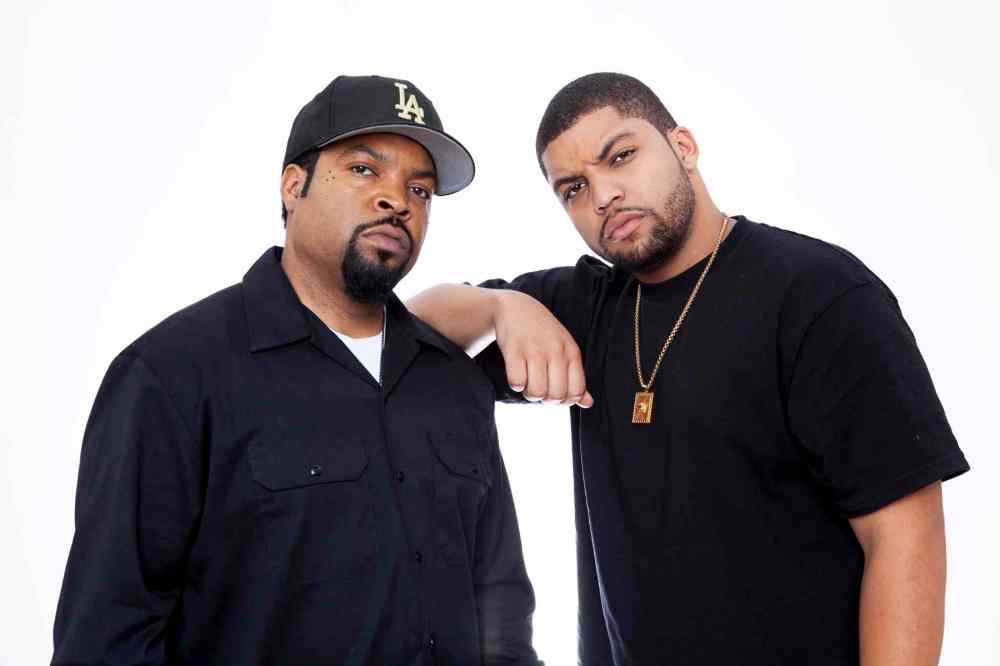
Even less well-known is Turner grew up in Winnipeg’s West Kildonan neighbourhood, worked for K-Tel International in Los Angeles and started Priority with financial help from a now-defunct Winnipeg company called R-Tek.
Despite the small role played in Straight Outta Compton by the screen version of Turner, who appears in only three of the 147-minute movie’s scenes, the real-life Winnipeg expat helped foster the careers of most of the first generation of U.S. gangsta rappers.
It was Turner who signed Ice Cube after he quit N.W.A. It was Turner who shuttled back and forth between Louisiana and Suge Knight’s California prison cell to get Snoop Dogg out of his deal with Death Row Records. It was Turner who signed Ice T after Warner Music dropped the rapper over his song Cop Killer.
Turner was “The Secret Power in Big Rap,” according to a 1998 New York Times headline, working with artists almost entirely behind the scenes. The former Winnipegger says his Manitoba upbringing allowed him to make those connections.
“I am so grateful for being born and raised in Winnipeg and I took all those values with me. I think that’s one of the things that endeared me to all the rappers. To them, I almost had a sort of sweet innocence,” Turner says in a telephone interview from Los Angeles, where he now runs Melee Entertainment.
“I do what I say I’m going to do and because of that I was a hero in the rap business. That’s why I survived for 20 years.”
Turner forged his relationship with rap in the early 1980s, when he licensed music for K-Tel International compilations. When K-Tel went into bankruptcy, Turner wound up being the only remaining L.A. employee with any connections to the music business. He soon found himself flying back and forth between New York City and L.A. to deal with the bankruptcy.
During one of those New York trips, Turner had his moment of inspiration.
“I had this light-bulb moment in a bar. Every time they played a beat record — not even music, just a beatbox and rapping — the dance floor would be packed. Disco didn’t do anything,” he recalls.
“I was looking at that, going, ‘There’s definitely something going on, appealing to this generation.’ Something clearly parents wouldn’t understand or really like. Their own music, not rock ‘n’ roll.”
Turner left K-Tel in 1985 and took colleagues Mark Cerami and Steve Drath with him. They founded Priority, with seed money from R-Tek, a company run by a pair of former K-Tel executives: my uncle Raymond Kives and my late father, Harold.
Priority put together some rap compilations, cutting licensing deals without having to pay in advance.
“I already had the relationships with the record companies,” Turner says. “This put us on the map.”
Within two years, Turner paid out the Kives brothers. He then turned the California Raisins into a hit, bypassing radio play by using TV advertising and supermarket displays to reach consumers directly.
“We sold millions of those stupid things,” says Turner, describing the Raisins as “an old-school, K-Tel kind of record.”
Flush with money and blessed with a strong sales track record, Priority was deluged with pitches from managers hoping to sign a deal with an independent record label that had major-league distribution.
“I had a lot of people coming to me with cassettes and N.W.A. was one of them,” Turner says. “I knew there was something there, but there’s no way anyone could predict what would happen.”
Turner said he had never heard anything like N.W.A., who rapped about gangs, drugs, police brutality and racial profiling.
“I couldn’t relate to it. Being from Winnipeg, how could I possibly? It was frightening to me. I knew it would scare the shit out of a lot of people,” he says.
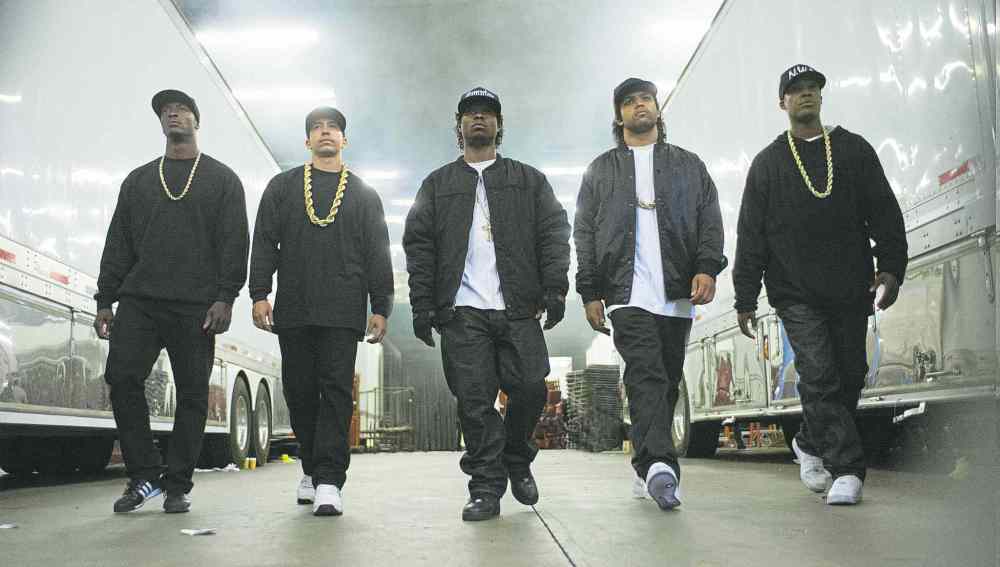
Turner says N.W.A. were “street reporters, rapping about what they knew.” Their world view — which grew out of the systemic harassment of young African-American men by the police — wound up getting validated by the Rodney King beating in 1991 and the subsequent 1992 L.A. riots set off when the police officers accused in King’s beating were acquitted.
“These guys weren’t poster boys. There were a lot of negative things around them, but for the most part, what they were saying for kids, people wanted to hear,” Turner says.
Nonetheless, Priority wound up fighting a freedom-of-speech battle on behalf of N.W.A.
“I’m the one who received that FBI letter,” Turner says, referring to a cease-and-desist letter regardling particularly inflammatory lyrics that advocated violence against the police, which the N.W.A. biopic places in the hands of manager Jerry Heller. “There’s a lot of discrepancies in the film in terms of the facts.”
For example, Turner points to the a scene where Ice Cube smashes up his office over an argument about payment over the rapper’s first solo album.
“The baseball-bat scene was accurate, but at a much less violent and aggressive level. There was no broken glass and no flying things,” Turner says. “And it had nothing to do with me paying him. That was just his character arc in the movie.”
The real argument? Turner says they were renegotiating Cube’s contract in light of his solo album’s success.
“We were young guys who didn’t understand how each other was negotiating,” Turner insists.
He says he spoke to Ice Cube about the scene and the rapper just “hemmed and hawed” at first. Later, Ice Cube told Turner a subsequent scene where the two were back in Turner’s office was intended to show how they continued working together.
“Cube grabbed me at the première and he hugged me. He said, ‘If not for you, I’m not standing here and there’s no Snoop and there’s no Eminem,’ ” Turner says. “That was chilling to me.”
Turner says the success of the film Straight Outta Compton, which has grossed more than $144 million worldwide, has brought back many memories about the birth of hardcore rap and Priority Records, which was sold to EMI in 1998.
The death of Turner’s mother earlier this year added to the nostalgia. Turner’s parents lived in Vancouver, where their son sent copies of his gold and platinum albums during Priority’s heyday.
After she died, a nephew discovered a trove of those glass-encased plaques in Turner’s parents’ basement, where they had been stored and forgotten following a renovation. The gold and platinum albums were sold in August at an N.W.A. pop-up party in Vancouver, raising $30,000 for the YMCA.
“The best visual is my elderly Jewish parents, surrounded in their den by these gangsta-rap plaques,” he says. “What are the odds?”
bartley.kives@freepress.mb.ca
History
Updated on Tuesday, September 8, 2015 9:08 AM CDT: Replaces photo