Wab Kinew melds memoir, confession and healing in powerful debut
Advertisement
Read this article for free:
or
Already have an account? Log in here »
To continue reading, please subscribe:

Digital Subscription
One year of digital access for only $205*
- Enjoy unlimited reading on winnipegfreepress.com
- Read the E-Edition, our digital replica newspaper
- Access News Break, our award-winning app
- Play interactive puzzles
*First annual payment billed as $205.00 + GST for one year. This annual subscription will automatically renew at $233.00 + GST every 52 weeks (10% off the regular annual price of $259.35). Offer available to new and qualified returning subscribers only. Cancel any time.
To continue reading, please subscribe:
Add Free Press access to your Brandon Sun subscription for only an additional
$1 for the first 4 weeks*
- Enjoy unlimited reading on winnipegfreepress.com
- Read the E-Edition, our digital replica newspaper
- Access News Break, our award-winning app
- Play interactive puzzles
*Your next Brandon Sun subscription payment will increase by $1.00 and you will be charged $17.95 plus GST for four weeks. After four weeks, your payment will increase to $24.95 plus GST every four weeks.
Read unlimited articles for free today:
or
Already have an account? Log in here »
Hey there, time traveller!
This article was published 03/10/2015 (3995 days ago), so information in it may no longer be current.
Alternating through the raw beat and pulse of its open heart, Wab Kinew’s first book — part confession, part memoir, part spiritual autobiography — sings out the antiphonal rhythms of a son’s progress toward integrating two forces in his life: his charged relationship with his father and his equally charged relationship with his indigenous and spiritual roots.
This poignant version of the age-old drama of fathers and sons is distinctively inflected with the keenly felt story of encounters by Kinew’s family with racist Canadian culture as it has shadowed several generations’ local indigenous experience — be it in northwestern Ontario or on contemporary Winnipeg streets, schools, neighbourhoods and workplaces.
The Reason You Walk is organized into three chronological sections, each following a phase in the lives of the son and the father and each, fittingly, titled in Ojibwe, followed by a translation: Oshkaadizid (Youth); Kiizhewaadizid (Living a Life of Love, Kindness, Sharing and Respect); and Giiwekwaadizid (The End of Life).
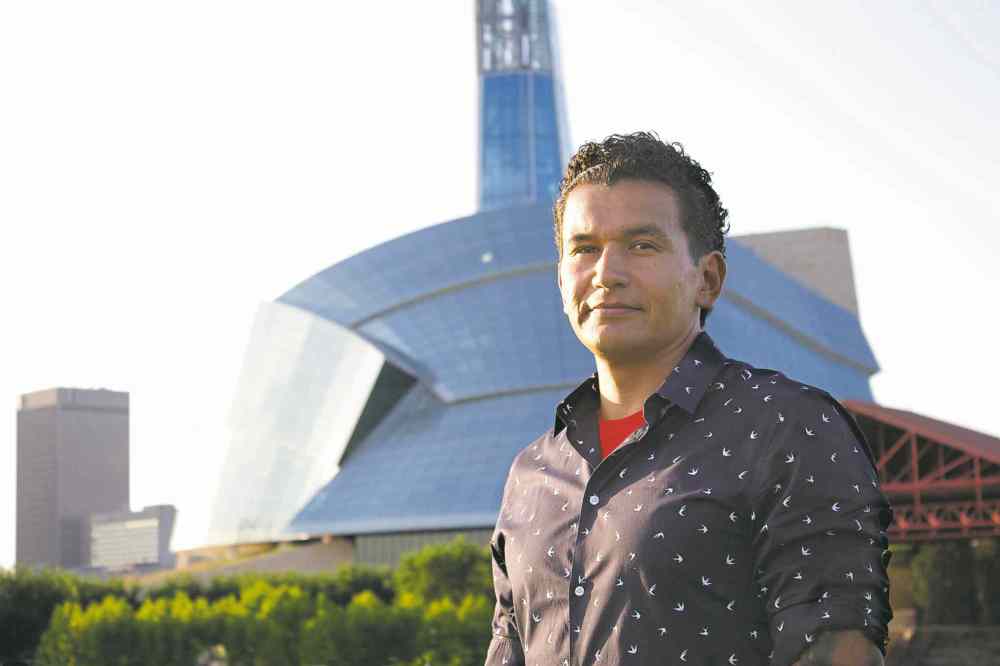
Kinew’s attractively frank, first-person narration — although the voice can occasionally falter into discontinuity and naiveté — first takes his readers through his father’s scarring experience as a young boy in the residential-school system. Kinew makes that all-too-familiar story painfully real and vivid, and shows how deeply the experience affected his father, Tobasonakwut (which means “low-flying cloud” in Ojibwe), whose relationship with his family and with Wab was long marred by suppressed anger.
One long sinew in the book’s taut musculature follows the evolution of Kinew’s relationship with this iconic figure, Ndede (dad in Objibwe). As we follow the unpredictable steps and missteps along the son’s path toward their eventual reconciliation, the narration moves from the private sphere of family out into the wider public world, where father and son make their separate but increasingly significant entrances — Tobasonakwut as the influential educator and public figure, a spiritual seeker in search of ever-wider arcs of reconciliation among cultures, and Wab as the kid who at first abandons his roots for the hard-fisted, hip-hop party life of street brawls, drinking, and bleary-eyed one-night stands.
The other major narrative sinew is signalled by the book’s title. “The reason you walk” is the phrase uttered by the Creator in the traditional Anishinaabe travelling song Wab learned and has sung since he was a child. As Kinew returns to his family, and through them to his origins and to the spiritual traditions that have sustained indigenous culture for generations, he also re-enters the wise embrace of his father.
In some of the most moving passages in The Reason You Walk, Kinew invites his readers into the heart of the Sundance and its rituals, including pungent depictions of the ceremonial cuttings of participants’ flesh before they run, pulling increasingly heavy cargoes of buffalo skulls around the circle until the pegs embedded in their skin are sprung free.

A vital element in Kinew’s return to his origins — signalled everywhere in this memoir — is the return to language; both father and son perceive the preservation of Ojibwe and other indigenous languages as critical, and both teach the language and work hard to spread its uses in the community, beginning with their own wide family.
The moving spiritual element in Kinew’s confession widens and deepens as the narration brings father and son and their related indigenous life-work forward into the contemporary scene, buoyed on the swelling current of reconciliation and forgiveness. This leads to the possibility of love that increasingly attends Ndede’s mission, and that Wab learns from his father. Finally, Tobasonakwut’s long and defiant battle against the cancer that eventually claims him teaches his son an indelible lesson about persistence, endurance and grace.
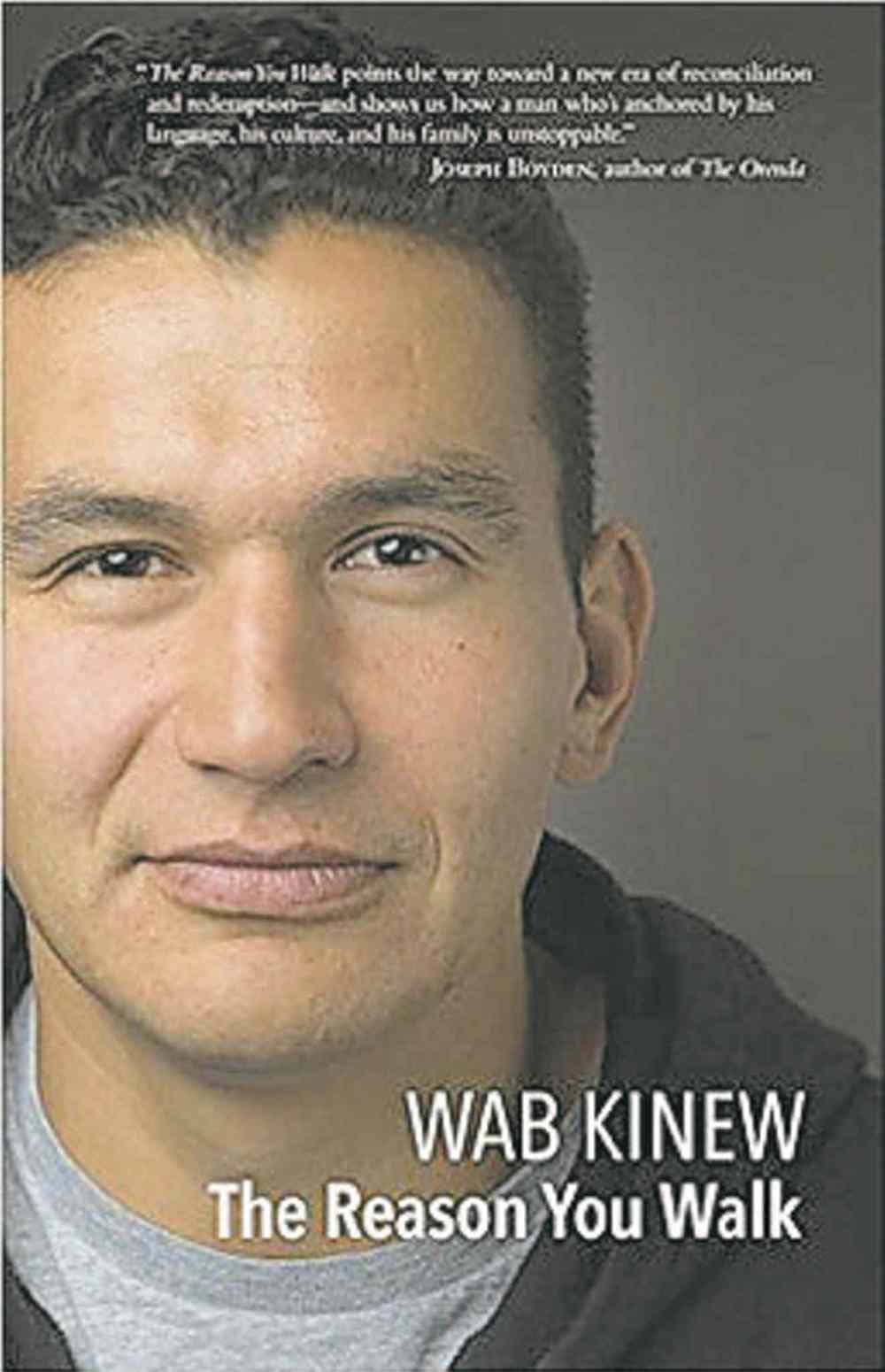
Readers might well hope that in time, The Reason You Walk will come to be apprehended as it should be — as the prophetic declaration of a new beginning, not only for Kinew and the family, culture and tradition he speaks for so eloquently, but for all Canadians.
Thanks to Wab Kinew and to this book, that’s becoming less of a dream than a simple, sweeping imperative.
Canadian literature scholar Neil Besner is provost and vice-president, academic at the University of Winnipeg.
History
Updated on Saturday, October 3, 2015 8:48 AM CDT: Formatting.