

Czech, please!
Charming land-locked nation rich with history and intrigue
Advertisement
Read this article for free:
or
Already have an account? Log in here »
To continue reading, please subscribe:
Digital Subscription
One year of digital access for only $1.44 a week*
- Enjoy unlimited reading on winnipegfreepress.com
- Read the E-Edition, our digital replica newspaper
- Access News Break, our award-winning app
- Play interactive puzzles
*Billed as $5.77 plus GST every four weeks. After 52 weeks, price increases to the regular rate of $19.95 plus GST every four weeks. Offer available to new and qualified returning subscribers only. Cancel any time.
To continue reading, please subscribe:
Add Free Press access to your Brandon Sun subscription for only an additional
$1 for the first 4 weeks*
- Enjoy unlimited reading on winnipegfreepress.com
- Read the E-Edition, our digital replica newspaper
- Access News Break, our award-winning app
- Play interactive puzzles
*Your next Brandon Sun subscription payment will increase by $1.00 and you will be charged $17.95 plus GST for four weeks. After four weeks, your payment will increase to $24.95 plus GST every four weeks.
Read unlimited articles for free today:
or
Already have an account? Log in here »
Hey there, time traveller!
This article was published 17/10/2015 (3887 days ago), so information in it may no longer be current.
When speaking with anyone who’s gone to Prague, they would often tell me there is no other place like it on Earth and then proceed to rave about the Czech experience.
When we finally visited, I went with exceedingly high expectations and a tinge of concern they might not be met.
So, did it live up to the hype? Read on.
The story of the Czech Republic, especially over the last century, has been turbulent, emotional, and at the end, a triumph of the human spirit. It is a land-locked country that has often been victimized at the hands of its neighbours and conquerors.
Germany overran it in 1938. Under the Soviet occupation, its citizens were forced to submit to communist doctrine and an educational system that twisted the realities of history beyond recognition. Ronald Reagan is still a hero to the people who credit his “Tear down this wall,” as one of the launching points for the future that would see them gain freedom.
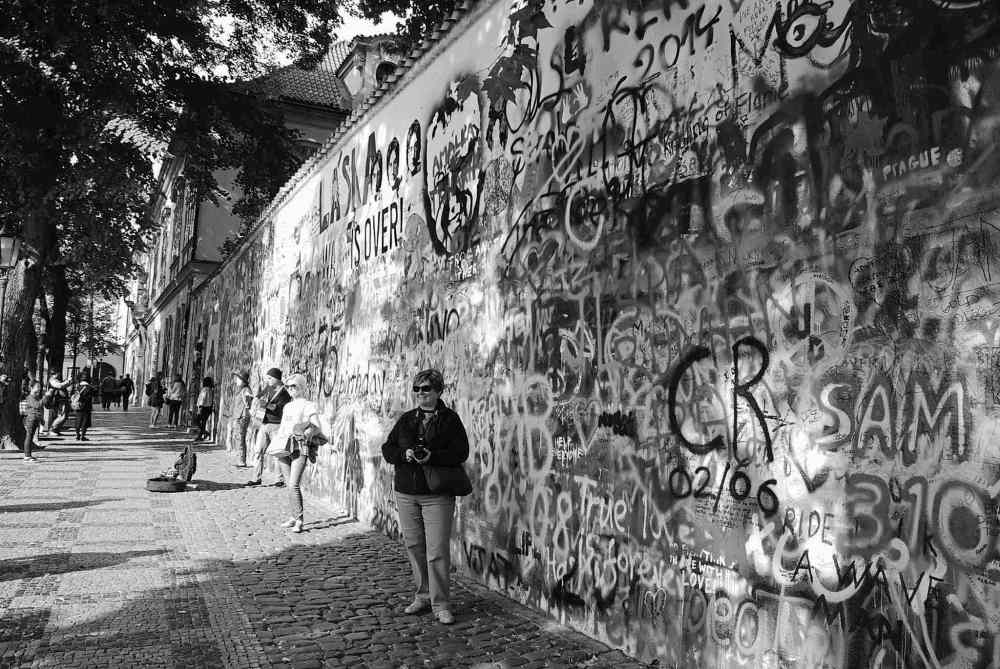
A wall of a different kind, known as the John Lennon Wall, is inscribed with graffiti from words of his songs. The communist authorities kept painting it over, but it would be filled again shortly after and became known as the Lennonism wall, as a sign of protest against the regime.
What makes the Prague history particularly interesting is that while the German armies controlled the city and country, it was not bombed heavily by the allies during the Second World War. As a result it emerged from the war, and the subsequent Russian occupation, relatively unscathed as far as building and infrastructure damages are concerned.
What was left behind were emotional scars. A number of our guides spoke of this horrible period in history. One in particular, outlined how the Russian dictatorship reacted when her brother escaped to Denmark. Her parents, both professionals, almost immediately lost their jobs. She was long denied an education.
Free elections today are well supported because they understand the fragility of democracy. The Czech Republic is part of the European Union, but has chosen to keep its own currency, although most places readily accept Euros for payment.
While the Prague Castle is a must see and occupies more land space than any other castle in the world, it is the unique character of the city that has visitors extolling its virtues. It is like a city that has emerged from the Middle Ages largely intact, with streets and buildings that make much of the city a living museum. It is an architect’s dream visit, with fully preserved buildings from the Romanesque, Gothic, Baroque and Modern eras.
Whether one understands these differences or not, the impact they leave on visitors expresses an appreciation for why this city’s Old Town was declared a World Heritage Site by UNESCO.
The city dates back to around 1338.
Its Gothic tower and Astronomical Clock attract thousands who gather under it during the prime hours. From 9 a.m. until 11 p.m., on the hour, 12 apostles emerge to the cheers of the crowd, punctuated only by the entertainment that seems to take place nonstop on the square.
A short walk away is Charles Bridge, which began construction around the same time, in 1357. Completed in 1402, it features 30 statues of saints which were added over the subsequent centuries, with the most famous being St. John of Nepomuk.,
Originally called Jesuit Street, Charles Street from the bridge to Old Town Square was the royal route that connected to what is today, the prime shopping and restaurant area of the city. For those who pursue luxury, appropriately named Paris Street is where you will find the same international brand names as on the Champs-âlysées in Paris or the Via Condotti, in Rome.
This is not the only area attracting visitors. Our hotel was situated near Wenceslas Square, where there were a significant number of lower-priced retail options, along with the usual souvenir shops one expects to find around popular shopping areas.
It was an interesting bonus to accidentally choose a restaurant near it, the Café Svateho Vaclava, which happens to be a popular hangout for Czech and visiting hockey players, including Winnipeg Jets goalie Ondrej Pavelec. Its table placemats feature in-restaurant photos of Pavelec along with Jaromir Jagr and even Russian player Alex Ovechkin.
Dining is a different experience from what you will find in any other country. It seems like there is no such thing as a small meal. And if you like gravy with your meat and potatoes, you will find a happy home here. Pig knuckles, goulashes and schnitzels, along with generous helpings of sauerkraut and bread dumplings, are common menu features for lunch and dinner. From restaurant to restaurant we found quality and friendly service to be consistent. While a variety of wines is available, it is largely a beer-drinking nation, which is proud of its tradition of making these fine brews.
A visit to the Jewish Quarter in many ways illuminates the pattern of prejudice that occurred in much of Europe before and during the Nazi era. It is also the area where blends of architectural eras are evident, with buildings from the Renaissance, Baroque and Gothic periods. The Jewish Cemetery is one of Europe’s oldest-surviving Jewish cemeteries, and is connected to Pinkas Synagogue that today serves as a memorial to the more than 77,000 Czech Jews who were victims of the Nazis. Every known name is inscribed on its walls, along with a collection of artifacts and drawings by children taken from the Second World War Terezin concentration camp.
It is difficult to consider leaving Prague for even a short time when there is enough to see and do there for weeks, let alone days. But everything we had read about Cesky Krumlov, a couple of hours from Prague, convinced us we had to go there. Like Prague’s Old Town, it too is a UNESCO World Heritage Site, with more than 300 protected buildings. Named after its founder the Lord of Krumlov, it was created in 1253 around his castle. Although not as big as the Prague Castle, it is still the second-largest in the country.
With fewer than 15,000 residents, it is clear by the number of small hotels, cafés and shopping outlets its economy is driven by tourism. It is also the second most visited area of the Czech Republic.
Rolling hills, small farm villages, and preserved architectural treasures along the way make the trip well worth the time, with an even greater reward upon arrival in Cesky Krumlov.
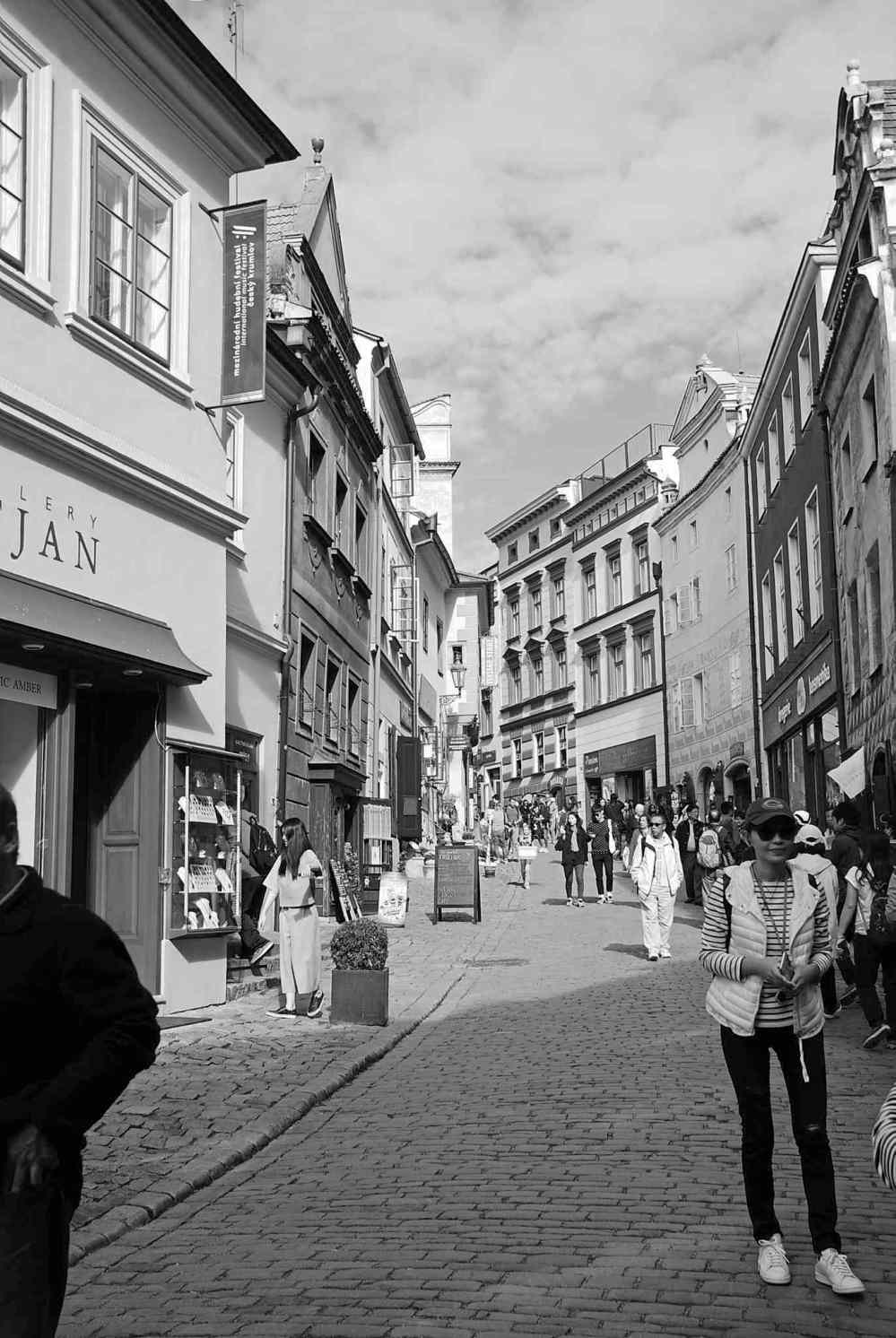
Back in Prague we would end our stay with long walks along the narrow cobblestone streets, admiring the still functional historic buildings and pointed spires that seem to crop up at every turn. Apparently, there are more than 1,000 spires and towers throughout the city.
We would stop when we were tired for a cup of great coffee, and watch the never-ending sea of humanity from all over the world pass us by.
Because of the enthusiasm of those who spoke about their visits to Prague and the Czech Republic, I indeed did approach our visit with expectations I felt might not be met.
I can now report I was wrong. We would go back again any time, stay longer and explore other regions of this beautiful and historic country.
There really is no other place quite like it.
pradinukr@shaw.ca
History
Updated on Tuesday, October 20, 2015 10:18 AM CDT: Clarifies the Jewish Cemetery is among Europe's oldest-surviving Jewish cemeteries.