

Selinger gives poor answer to bad report card on poverty
Advertisement
Read this article for free:
or
Already have an account? Log in here »
To continue reading, please subscribe:

Digital Subscription
One year of digital access for only $205*
- Enjoy unlimited reading on winnipegfreepress.com
- Read the E-Edition, our digital replica newspaper
- Access News Break, our award-winning app
- Play interactive puzzles
*First annual payment billed as $205.00 + GST for one year. This annual subscription will automatically renew at $233.00 + GST every 52 weeks (10% off the regular annual price of $259.35). Offer available to new and qualified returning subscribers only. Cancel any time.
To continue reading, please subscribe:
Add Free Press access to your Brandon Sun subscription for only an additional
$1 for the first 4 weeks*
- Enjoy unlimited reading on winnipegfreepress.com
- Read the E-Edition, our digital replica newspaper
- Access News Break, our award-winning app
- Play interactive puzzles
*Your next Brandon Sun subscription payment will increase by $1.00 and you will be charged $17.95 plus GST for four weeks. After four weeks, your payment will increase to $24.95 plus GST every four weeks.
Read unlimited articles for free today:
or
Already have an account? Log in here »
Hey there, time traveller!
This article was published 25/11/2015 (3926 days ago), so information in it may no longer be current.
Poor answer to bad report card
To hear Premier Greg Selinger tell it, there’s a chicken in every pot and a car in every garage — Manitoba’s economy is growing faster than most in Canada, and the jobless rate is among the country’s lowest. Good times.
Mr. Selinger hits on these economic sign posts to justify running deficits for seven years and counting. It’s not time, he stresses, to lift the foot off the pedal. Well, some Manitobans are not only getting left off the bus, they’re being thrown under the wheels.
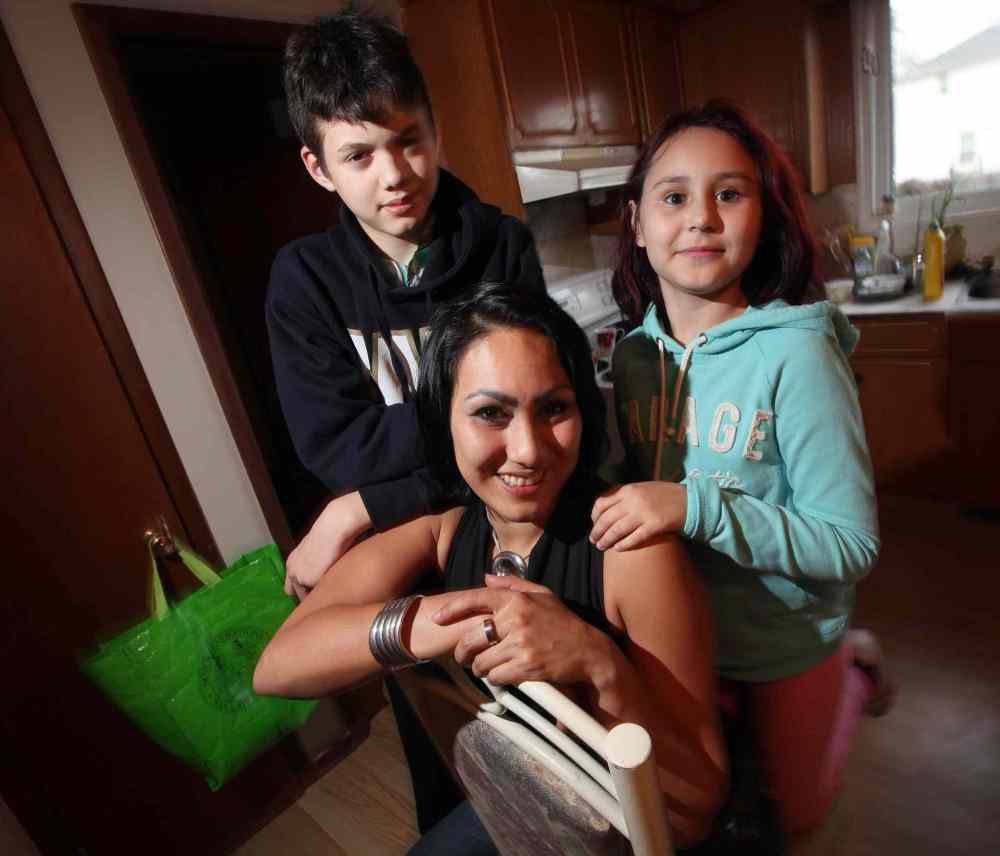
New child-poverty numbers out this week make it clear the NDP’s fiscal plan is keeping only the noses of the better off above water. This is the child-poverty capital of Canada, again — 29 per cent of kids here are impoverished. The more damning indictment comes in the analysis of why.
Some 18.4 per cent of two-parent families with kids fell under the after-tax, low-income measure in 2013, which Statistics Canada said was $34,742. Only Nunavut was worse. For families led by a single parent — overwhelmingly mothers — the statistics are bleaker: Sixty two per cent of them in Manitoba were impoverished, Canada’s worst rate. That’s 16 percentage points above the national average.
The report, issued locally by social work Prof. Sid Frankel and Winnipeg Harvest’s David Northcott as part of the national Campaign 2000’s poverty report card, said the numbers show Manitoba falls down in both the job market and in government support for low-income families.
Manitoba has too many part-time, low-paying jobs. “In Manitoba, much child poverty is produced in the labour market. Manitoba ranked 10th among provinces and territories in average hourly earnings from all industries in 2013.” Puts a whole different sheen on those unemployment statistics, doesn’t it?
There will always be the working poor and the jobless, which is why government steps in to improve livelihoods through the redistribution of wealth. One would think a long-serving NDP government would know how to do this.
Yet, in Manitoba, provincial transfers lift fewer children out of poverty than anywhere else in Canada.
Poverty campaigns focus on kids because those born or raised in poverty face stiff odds for succeeding in school, in health and, eventually, in the job market. But for every child, there’s a parent, typically a woman, impoverished, too. If parents fail, children do too, explaining why Manitoba has such a high rate of kids in care.

So what’s a premier to do? Mr. Selinger deflected criticism with the time-worn observation it’s cheaper to live here than other provinces. That’s a poor answer. But opposition leaders offered no substantial fixes, either.
The Selinger government has become adept at spending money, shipping tax dollars to a variety of community groups and organizations and dedicating cash to infrastructure projects that are not even on a municipality’s to-do list. Money is being spent on political goals, which means less for pressing public policy works. It’s about priorities.
To that point, the authors found Manitoba spends less on supplements and income assistance to the poor than other provinces. Quebec’s maximum annual payment for one child in its income-tested subsidy is $2,366; Ontario’s is $1,355.96. In Manitoba, it is $420. Raise it and index it, they suggest.
Further, the province is moving the welfare rent allowance to 75 per cent of the market median, yet it gives a single parent with one child just $376 for basic living expenses.
The key to making poverty reduction a priority driven by taxpayer support starts with a simple question for us all: could you live on that?
Related Articles
Nearly 1 in 3 children below poverty line in Manitoba: report
Advertisement Advertise With Us
Advertisement Advertise With Us
History
Updated on Wednesday, November 25, 2015 4:42 PM CST: Typo fixed.