Bowie’s Blackstar the perfect sendoff

Advertisement
Read this article for free:
or
Already have an account? Log in here »
To continue reading, please subscribe:

Digital Subscription
One year of digital access for only $205*
- Enjoy unlimited reading on winnipegfreepress.com
- Read the E-Edition, our digital replica newspaper
- Access News Break, our award-winning app
- Play interactive puzzles
*First annual payment billed as $205.00 + GST for one year. This annual subscription will automatically renew at $233.00 + GST every 52 weeks (10% off the regular annual price of $259.35). Offer available to new and qualified returning subscribers only. Cancel any time.
To continue reading, please subscribe:
Add Free Press access to your Brandon Sun subscription for only an additional
$1 for the first 4 weeks*
- Enjoy unlimited reading on winnipegfreepress.com
- Read the E-Edition, our digital replica newspaper
- Access News Break, our award-winning app
- Play interactive puzzles
*Your next Brandon Sun subscription payment will increase by $1.00 and you will be charged $17.95 plus GST for four weeks. After four weeks, your payment will increase to $24.95 plus GST every four weeks.
Read unlimited articles for free today:
or
Already have an account? Log in here »
Hey there, time traveller!
This article was published 11/01/2016 (3889 days ago), so information in it may no longer be current.
It’s unfair, in a way, to review David Bowie’s final album, Blackstar, after his death, as the once cryptic lyrics have since taken an obviously eulogistic turn.
“Look up here! I’m in heaven,” he sings on Lazarus, in lines that now hit a little too close to home. “Oh, I’ll be free / Just like that bluebird / Oh, I’ll be free / Ain’t that just like me?”
But his final work is a credit to his catalogue, regardless of what meaning is pulled from each song. With Bowie, you never really know for sure, anyway.
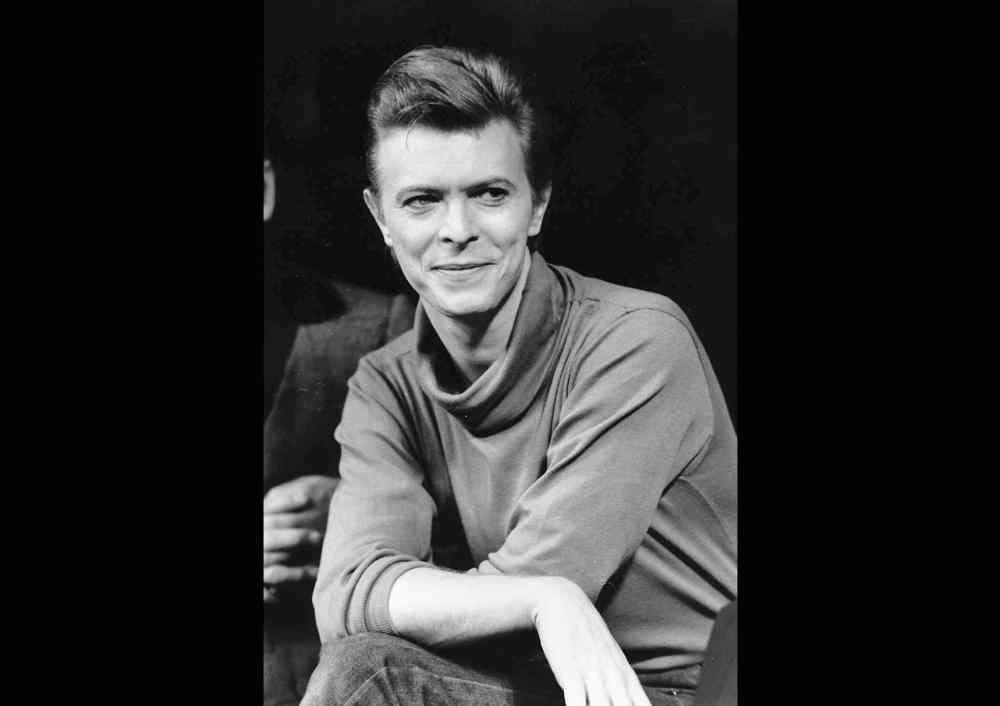
The only thing that is relatively clear is the album, released Jan. 8, on Bowie’s 69th birthday, was deemed a “parting gift to his fans” by the producer of the record, Tony Visconti, who made a statement on his Facebook page early Monday morning.
“He always did what he wanted to do. And he wanted to do it his way and he wanted to do it the best way. His death was no different from his life — a work of Art,” Visconti wrote. “He made Blackstar for us, his parting gift. I knew for a year this was the way it would be.”
In true Bowie fashion, Blackstar is a dense piece of work. It’s swathed in modern beats and wide-ranging influences from jazz to hip hop, but is also clouded with a melancholy, not just in the sometimes lethargic pace and ominous tone of many of the songs, but also lyrically, as Bowie dissects themes of death, destruction and finality.
In that way, Blackstar provides the perfect mirror for Bowie’s dichotomous career — it is both innovative and classic, both exhilarating and heart breaking.
The album’s final track, I Can’t Give Everything Away, feels the most weighty despite airy synths, bright saxophone and swooning harmonica that dot the melody. “I know something’s very wrong,” Bowie hums in the first line of the song. “The pulse returns for prodigal sons/The blackout’s hearts with flowered news, with skull designs upon my shoes.”
The song is a beautiful farewell to fans, still hanging onto the mystery that surrounded Bowie throughout his entire career, right up until the day he died.
“I can’t give everything away,” he sings in the final lines.
No, he can’t, and we wouldn’t have wanted him to.
erin.lebar@freepress.mb.ca
Our newsroom depends on a growing audience of readers to power our journalism. If you are not a paid reader, please consider becoming a subscriber.
Our newsroom depends on its audience of readers to power our journalism. Thank you for your support.
Our newsroom depends on a growing audience of readers to power our journalism. If you are not a paid reader, please consider becoming a subscriber.
Our newsroom depends on its audience of readers to power our journalism. Thank you for your support.
Related Articles
Death cartoons and David Bowie
Advertisement Advertise With Us
History
Updated on Monday, January 11, 2016 10:38 PM CST: Added video.