Plantar fasciitis pain alleviated with proper footwear

Advertisement

Advertise with us

If you find your first steps in the morning feel like a hot poker in the bottom of your heel, you may be suffering from plantar fasciitis.

Read this article for free:

or

Already have an account? Log in here »

To continue reading, please subscribe:

Subscribe and receive a limited-edition Free Press branded hat or tote.

Digital Subscription

One year of digital access for only $205*

  • Enjoy unlimited reading on winnipegfreepress.com
  • Read the E-Edition, our digital replica newspaper
  • Access News Break, our award-winning app
  • Play interactive puzzles

*First annual payment billed as $205.00 + GST for one year. This annual subscription will automatically renew at $233.00 + GST every 52 weeks (10% off the regular annual price of $259.35). Offer available to new and qualified returning subscribers only. Cancel any time.

To continue reading, please subscribe:

Add Free Press access to your Brandon Sun subscription for only an additional

$1 for the first 4 weeks*

  • Enjoy unlimited reading on winnipegfreepress.com
  • Read the E-Edition, our digital replica newspaper
  • Access News Break, our award-winning app
  • Play interactive puzzles
Start now

*Your next Brandon Sun subscription payment will increase by $1.00 and you will be charged $17.95 plus GST for four weeks. After four weeks, your payment will increase to $24.95 plus GST every four weeks.

Hey there, time traveller!
This article was published 15/01/2016 (3855 days ago), so information in it may no longer be current.

If you find your first steps in the morning feel like a hot poker in the bottom of your heel, you may be suffering from plantar fasciitis.

This overuse condition affects many people and is not usually related to a specific injury or trauma to the foot. More often, it comes on gradually and is related to a change in activity pattern.

The plantar fascia is a connective tissue on the bottom of the foot that gives structural support to the arch. Though your plantar fascia can adapt to new loads and activities, too much of something new too fast can create irritation as the tissue reacts to abrupt change.

Changing your exercise habits, with more distance running or walking, is a common culprit. Sometimes the trigger is more subtle, such as a change in footwear or a new job with more time on your feet on a hard surface.

Those dealing with plantar fasciitis will complain of pain on the bottom of their heel in the morning with their first steps out of bed. The pain often eases with a little bit of walking, but worsens with extended periods on their feet. The heel pain often appears after getting up from sitting for a while.

In response to these symptoms, people often try to wear shoes that are soft and flexible. That’s not always a good idea. The load that leads to pain and injury of the plantar fascia is a repetitive stretching or tension on the tissue where it attaches to the heel bone. Flexible shoes can often increase this load by allowing your feet too much movement.

The key is to provide the tissues of your arch more support as well as some gentle cushion for your heel for comfort.

This support can be accomplished a number of ways, but one of the most practical solutions is to change your footwear with a focus on better structure. The most supportive footwear is often active and athletic. A good running or walking shoe offers a blend of support and cushion that can make it easier to be on your feet longer and help your symptoms settle.

Not all running shoes are created equal. Some are built with the intention of more support for the joints and soft tissues of the foot, while others are built to encourage movement and mimic walking or running in bare feet. There are arguments for both designs. If you have a foot that is already sore, a more supportive shoe is appropriate, at least in the short term until symptoms have resolved.

What makes a running or active shoe more supportive? Looking underneath at the sole of the shoe, a more supportive model is usually a little straighter in shape. It is also is stiffer and not easily bent or twisted. The back of the shoe is re-enforced with a component called a heel counter that limits rock and roll movements of the heel. Testing the shoe with a twist and bend of the sole and a squeeze of the back of the heel are quick ways to compare footwear.

Shoes that have laces and an upper (the fabric top portion of the shoe) that is not overly soft and stretchy are going to provide additional control. Shoes with removable insoles provide more room and the option of using an over-the-counter insert or a custom foot orthotic to add more support. No one single shoe is best for everybody. When looking for the correct fit, a knowledgeable salesperson is essential.

Remember, a good shoe is only helpful if you are wearing it. You can think of supportive footwear in a similar way to a cast or brace used after a fracture or sprain. Using them for a period of time gives the plantar fascia some rest and a chance to heal.

Avoiding bare feet in the house can make a big difference in your heel pain. The first option is to wear active footwear in the house. For those who like their feet to breathe a bit, an alternative in the house can be a supportive sandal rather than a flexible slipper.

There are many other options to treat heel pain. These include but are not limited to: stretching, ice, physiotherapy, night splints, medication and custom or over-the-counter orthotics.

If you are having heel pain, start by treating your feet to more supportive footwear.

Consult your doctor, physiotherapist or other health-care practitioner for assessment and treatment guidance. Remember to bring in the shoes you wear to have them evaluated as well.


Mark Beatty is a physiotherapist practising at Foundation Rehabilitation Services at the Pan Am Clinic.
Report Error Submit a Tip

More Stories

Concordia doctor denies responsibility for Calgary man’s permanent disability

Erik Pindera 3 minute read Preview

Concordia doctor denies responsibility for Calgary man’s permanent disability

Erik Pindera 3 minute read 3:52 PM CDT

A Concordia Hospital doctor accused in a negligence lawsuit after a Calgary man was left permanently disabled when he was given a massive overdose of a powerful sedative has denied she ordered he be given the drug.

Zachary Hoogerdyk’s father, Edward Hoogerdyk, and the Alberta government filed their statement of claim earlier this year in Court of King’s Bench naming the Winnipeg Regional Health Authority, provincial health agency Shared Health, Concordia Hospital, Dr. Anna Ziomek and two other hospital staff as defendants.

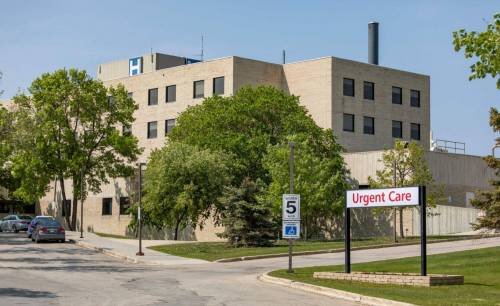
Hoogerdyk, who was 23 at the time, went to Concordia’s urgent-care centre with flu-like symptoms and worsening breathing difficulties on March 25, 2024 while he was in Winnipeg on business and to visit family, the lawsuit says.

The claim alleges Ziomek diagnosed Hoogerdyk with low levels of oxygen in his blood and a strain of the flu, before ordering him to be intubated.

Read
3:52 PM CDT

Giant Tiger decision creates giant void for desperate population

Niigaan Sinclair 5 minute read Preview

Giant Tiger decision creates giant void for desperate population

Niigaan Sinclair 5 minute read Friday, Jul. 31, 2026

A lot of Winnipeggers may shrug, but the end of Giant Tiger’s downtown store is a giant problem for many of the people living in the centre of the city.

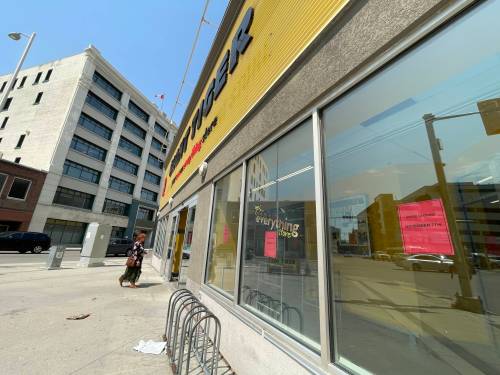
It would have been difficult for anyone going into or passing by the Canadian discount chain’s Donald Street and Ellice Avenue location Thursday to miss the red notices posted on the store’s windows advising it will close on Nov. 7.

According to a 2024 Downtown Winnipeg BIZ report, about 18,000 people live in Winnipeg’s downtown.

More than 60,000 people work there, and some days — when there’s a big concert or the Jets play at Canada Life Centre, for example — the number of people spending time in the area increases significantly.

Read
Friday, Jul. 31, 2026

Hydro CEO needs to reckon with winds of change

Dan Lett 5 minute read Preview

Hydro CEO needs to reckon with winds of change

Dan Lett 5 minute read Yesterday at 3:28 PM CDT

Methinks Hydro CEO Allan Danroth protests too much.

At a recent hearing in front of the Public Utilities Board, Danroth suggested Hydro’s plan to build a $3-billion natural-gas-powered generating plant near Brandon was being subjected to unfair criticism. The gas turbines are meant to bolster Hydro’s grid in the event that drought lowers output from hydro-generating stations.

After hearing submissions from interveners concerned about the gas-turbine plan, Danroth lashed out at the “constant, uninformed criticism” that has not only shaken trust in Hydro but also triggered threatening responses from the public.

Danroth said Hydro is monitoring “eight credible threats” against employees, five of which targeted the CEO himself. Although Danroth cited some specific incidents — employees being threatened with guns, and one where a homeowner set his dogs on a meter reader — he refused to elaborate on the circumstances.

Read
Yesterday at 3:28 PM CDT

Accused in amateur soccer star’s fatal 2024 Winnipeg shooting arrested in B.C.

Erik Pindera 2 minute read Preview

Accused in amateur soccer star’s fatal 2024 Winnipeg shooting arrested in B.C.

Erik Pindera 2 minute read 12:50 PM CDT

A man who’s been on the lam since he was accused in a brazen Winnipeg shooting in July 2024, in which an amateur soccer star was slain, has been arrested in British Columbia.

Tresor Horimbere, 24, was found and arrested in Langley, B.C., a city just east of Vancouver, on July 30.

Manitoba police officers travelled to B.C. on Monday to arrest him and bring him back to Winnipeg.

He’s been charged with first-degree murder in the July 13, 2024 slaying of Mohamed Yusuf Abdullahi, 22, in the parking lot of the Ralph Cantafio Soccer Complex on Waverley Street.

Read
12:50 PM CDT

Bell sheds 19 more Manitoba employees

Gabrielle Piché 3 minute read Preview

Bell sheds 19 more Manitoba employees

Gabrielle Piché 3 minute read 6:30 PM CDT

At least 19 Manitoba jobs were lost recently during Bell Canada’s ongoing restructuring.

Parent company BCE Inc. confirmed in June it’d axe nearly 700 jobs through organizational changes. Those changes began last year.

A dozen Manitoba staff were laid off on July 30, according to Team-IFPTE Local 161, the union representing the workers.

Another seven union members left voluntarily though a departure program, the union reported Tuesday.

Read
6:30 PM CDT

Once hailed as sign of strong bond, U.S. consulate in Winnipeg to close

Tyler Searle 6 minute read Preview

Once hailed as sign of strong bond, U.S. consulate in Winnipeg to close

Tyler Searle 6 minute read 6:21 PM CDT

There was much fanfare when the U.S. government re-established a permanent presence in Winnipeg in April 2001 as it unveiled its consulate and hailed it as a major achievement between two friendly nations.

“It is testimony not only to the importance the U.S. government attaches to our bilateral relationship with Canada but also to the increasing prominence of Winnipeg, Manitoba and the western region of the country in bilateral and multilateral affairs,” said U.S. Ambassador to Canada Gordon Giffin at a ceremony with then-premier Gary Doer.

Fast-forward to this week when it was learned the office at Portage and Main is set to close, meaning the U.S. will lose its primary advocate for American business and trade interests in Manitoba.

Dwight MacAulay was chief of protocol for the Manitoba government in 2001, calling it a time of celebration and strength between the countries.

Read
6:21 PM CDT