

Hydro subsidiary raises Nigeria’s ire
Practices 'unwholesome,' African nation accuses
Advertisement
Read this article for free:
or
Already have an account? Log in here »
To continue reading, please subscribe:
Monthly Digital Subscription
$1 per week for 24 weeks*
- Enjoy unlimited reading on winnipegfreepress.com
- Read the E-Edition, our digital replica newspaper
- Access News Break, our award-winning app
- Play interactive puzzles
*Billed as $4.00 plus GST every four weeks. After 24 weeks, price increases to the regular rate of $19.95 plus GST every four weeks. Offer available to new and qualified returning subscribers only. Cancel any time.
Monthly Digital Subscription
$4.99/week*
- Enjoy unlimited reading on winnipegfreepress.com
- Read the E-Edition, our digital replica newspaper
- Access News Break, our award-winning app
- Play interactive puzzles
*Billed as $19.95 plus GST every four weeks. Cancel any time.
To continue reading, please subscribe:
Add Free Press access to your Brandon Sun subscription for only an additional
$1 for the first 4 weeks*
*Your next subscription payment will increase by $1.00 and you will be charged $16.99 plus GST for four weeks. After four weeks, your payment will increase to $23.99 plus GST every four weeks.
Read unlimited articles for free today:
or
Already have an account? Log in here »
Hey there, time traveller!
This article was published 18/02/2016 (3691 days ago), so information in it may no longer be current.
A subsidiary of the “crown jewel” of Manitoba has found itself in hot water with the government of Nigeria over supposed “unwholesome” practices regarding its contract with the country.
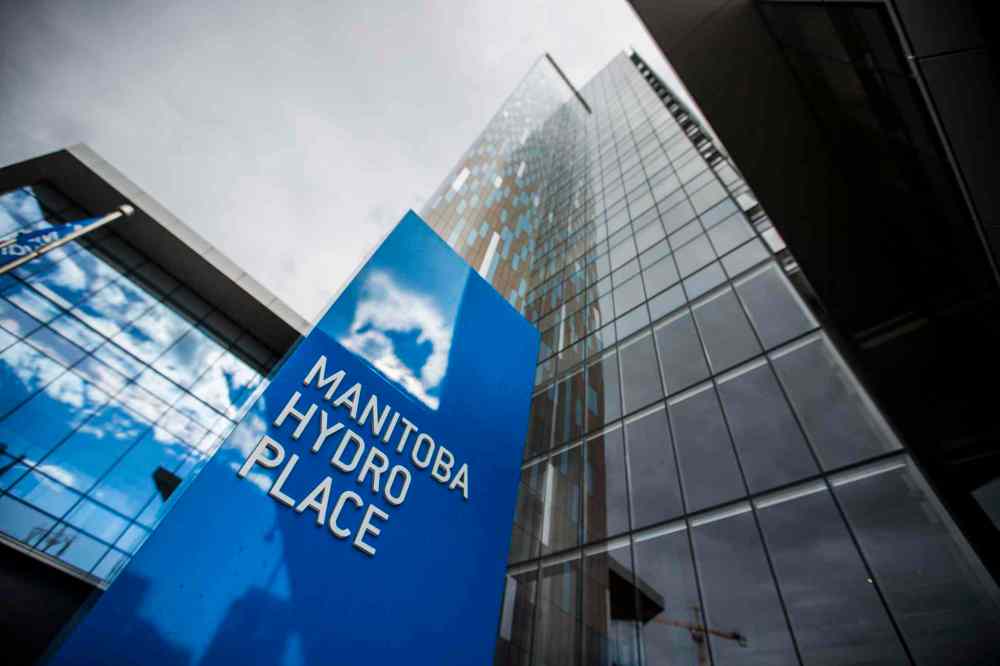
Manitoba Hydro International, a subsidiary of Manitoba Hydro, is nearing the end of a three-year, $24-million contract to manage the Transmission Co. of Nigeria, the state-owned power utility.
Late last month, the Senate of Nigeria, one of two chambers that make up Nigeria’s National Assembly, passed a motion titled Unwholesome Practices by Manitoba Hydro International Nigeria Limited, under the direction and control of the Bureau of Public Enterprises.
At the centre of the complaint is the accusation the company isn’t being paid in the country’s national currency, the naira, which is a criminal offence.
“The Senate is convinced that the management-services contract prepared by BPE for the management of TCN is fraught with apparent illegalities and total violation of laws of Nigeria,” read part of the notice posted on Nigeria’s National Assembly website.
It’s a charge Manitoba Hydro International’s senior managing director unequivocally denies.
“We do get paid in naira, so that is totally untrue,” said Winnipeg-based Shawna Pachal. She said they switched over to being paid in the naira as opposed to U.S dollars in 2015. “It has been a huge challenge for us to try and get the money converted and back to Canada.”
The Senate directed its committee on power and committee on privatization to look into the matter and report back in four weeks with recommendations concerning its findings. A request for comment from the Nigerian Senate was not returned.
The contract with the Transmission Co. of Nigeria was first signed in 2012 for $23.7 million, with the intention MHI would assume the management responsibility and control of TCN’s operations. Pachal chalks up the criticism to certain government officials and media attempting to discredit the company because they are opposed to a foreign entity operating in Nigeria.
“There is definitely a group of people in Nigeria who are opposed to foreigners being brought in to run their company,” she said. “Given that we are just starting to discuss an extension to our contract, those opposed to MHI in Nigeria are once again working every angle to discredit us.”
The company has come under frequent attack by the media in Nigeria for the sale of 10 national integrated power projects in 2014. Nigerian media say the government invested more than $8.2 billion and later sold the projects for $5.8 billion.
The government has privatized the generation and distribution aspects of its utilities, but the transmission aspect remains government-owned.
“If the government at some future date decides to privatize it, so be it. That’s been an on and off discussion for all the years we’ve been there. That’s not in our contract,” Pachal said.
A key objective was for MHI to make the Transmission Co. of Nigeria profitable, which media in Nigeria have seen as a move toward full privatization — which is feared by workers in the public sector, said Paul Sullivan, an energy expert at Georgetown University in Washington D.C.
Sullivan has written extensively on issues pertaining to the political economy of oil, gas and other resources for a variety of international publications.
Sullivan said it will likely take a long time for the country to fully privatize its utilities and noted the public-sector utilities have on average more managers and workers; numbers that would likely be cut if the utility went public.
“Privatization is a huge political issue in Nigeria and in developing countries as a whole. Nigeria has faced blackouts, brownouts, unreliable electricity in general and more troubles in its electricity networks,” Sullivan said in an email. “Some of the biggest fears are from the workers who may lose their jobs and the electricity consumers who will see higher electric bills.”

kristin.annable@freepress.mb.ca
History
Updated on Friday, February 19, 2016 7:31 AM CST: Adds photo