

Manitoba Dene call for limit on caribou hunting
Northern herd at risk of 'complete annihilation'
Advertisement
Read this article for free:
or
Already have an account? Log in here »
To continue reading, please subscribe:

Digital Subscription
One year of digital access for only $205*
- Enjoy unlimited reading on winnipegfreepress.com
- Read the E-Edition, our digital replica newspaper
- Access News Break, our award-winning app
- Play interactive puzzles
*First annual payment billed as $205.00 + GST for one year. This annual subscription will automatically renew at $233.00 + GST every 52 weeks (10% off the regular annual price of $259.35). Offer available to new and qualified returning subscribers only. Cancel any time.
To continue reading, please subscribe:
Add Free Press access to your Brandon Sun subscription for only an additional
$1 for the first 4 weeks*
- Enjoy unlimited reading on winnipegfreepress.com
- Read the E-Edition, our digital replica newspaper
- Access News Break, our award-winning app
- Play interactive puzzles
*Your next Brandon Sun subscription payment will increase by $1.00 and you will be charged $17.95 plus GST for four weeks. After four weeks, your payment will increase to $24.95 plus GST every four weeks.
Read unlimited articles for free today:
or
Already have an account? Log in here »
Hey there, time traveller!
This article was published 14/03/2016 (3788 days ago), so information in it may no longer be current.
The Dene in northern Manitoba are calling on their own people to limit caribou hunting after watching in horror as an annual harvest turned into a virtual slaughter this winter at Tadoule Lake.
Hunters from Saskatchewan Dene First Nations, who would ordinarily hunt in their traditional territories, followed the caribou to Manitoba this winter, mounting a massive hunt that put the remote community within earshot of continual gunfire for months, the chief of the Sayisi Dene in Tadoule Lake said.
The Qamanirjuaq caribou herd, one of the healthiest in Canada, but also on the decline, inexplicably came together in massive numbers at the Dene’s doorstep on Tadoule Lake. The animals normally winter in smaller numbers scattered across northern Saskatchewan and Manitoba and southern Nunavut.
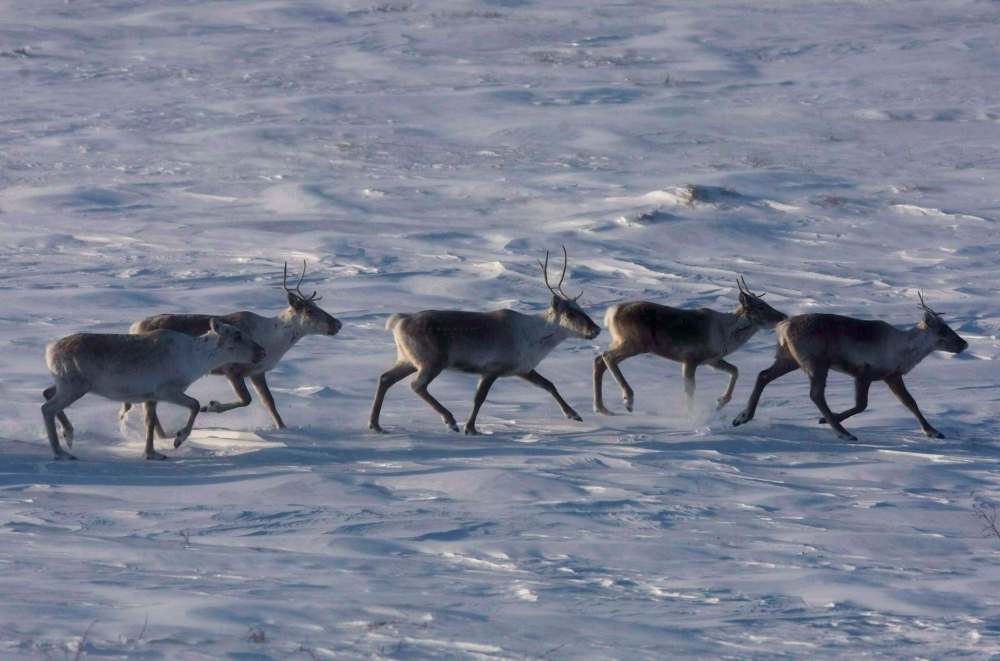
“It’s been relentless,” said Sayisi Dene Chief Ernie Bussidor. “Gas is cheap, the caribou are fat and our neighbours are poor and they’re hungry. We’ve seen hunters coming into the community since early November and slaughter huge amounts of caribou. All the ingredients are there for a complete annihilation of the caribou,” the chief said.
This year, there are virtually no caribou to hunt in Saskatchewan, First Nations and provincial officials said.
Last week, Manitoba Dene angrily tried to turn back a Saskatchewan-bound semi-trailer, which was loaded with caribou.
“We can’t put a limit on people hunting in the Dene Sayisi territory. We can’t stop them, but we have to put limits on hunting when they’re bringing up semi-trailers and flying in Twin Otters to haul away animals,” Bussidor said.
Estimating this year’s treaty-hunting harvest is a moving target, with Dene saying it is at least 5,000 animals and the province putting it closer to 2,000.
Senior Manitoba Conservation officials will fly into Tadoule Lake this week to consult with residents, elders and elected leaders, said Daryll Hedman, the regional wildlife manager for Manitoba Conservation.
“Treaty people in Manitoba and Saskatchewan have the right to access caribou for their own use,” Hedman said, adding one of his wildlife inspectors saw the tractor trailer that has upset hunters in Tadoule Lake. It had an estimated 90 caribou carcasses inside. “And there are planes coming in to harvest caribou from north of Tadoule,” the wildlife officer said.
This year, the caribou inexplicably came together at Tadoule Lake, 960 kilometres north of Winnipeg.
“The herd has been in a real tight area around Tadoule Lake and that’s where the harvest is happening this year,” Hedman said. “This hasn’t happened ever in the past.
“With a mainland migratory herd like this… this year for whatever reason, and I don’t know if anyone will ever understand what caribou do, but this year they stopped in Tadoule Lake,” Hedman said.
“Keep in mind this harvest with the Qamanirjuaq herd, it happens every year. It would go on through northern Manitoba, around Tadoule Lake, down to Lac Brochet, down into South Indian Lake and into Saskatchewan or into the Northwest Territories. The Beverly herd, which is adjacent to the Qamanirjuaq herd didn’t come down to the tree line this year. It stayed up straight north of Saskatchewan near the Queen Maud Gulf.”
The two herds are monitored by a management board made up of provincial, territorial and indigenous officials. Based on a combined 250,000 animals counted in the last estimate, the two herds are among the healthiest in Canada.
But the herds are half the size they were in the 1990s; while the management board does not set hunting limits, the need for restraint has been an issue with elders for years.
‘They’re bringing up semi-trailers and flying in Twin Otters to haul away animals’
“What Manitoba Conservation wants to do is get everybody to the table and once the harvest is completed, and get the Athabasca Dene together with the Manitoba Dene and the Qamanirjuq board together and sit down with us. And see what we can do to prevent this. If it happens again, is there harvest protocols they can work out themselves for the well-being of the herd and respect of the herd.”
Manitoba’s First Nations grand chief is calling for a hunting moratorium until the Dene can sort things out.
“There should be absolutely no sport hunting allowed in the provinces of Alberta, Saskatchewan and Manitoba going foreword until we can figure out whether we are willing to save the great herds of the four-leggeds from ourselves,” Assembly of Manitoba Chiefs Grand Chief Derek Nepinak said in an email Friday.
This year’s alarming hunt comes at a time when game, including caribou, which traditionally sustained northern First Nations, is under more stress than anytime in the past. The twin pressures of climate change and industrial development are issues on which First Nations are actively lobbying governments, and in the meantime, they have to save the herds if they can, Nepinak said.

“We have agreed to do what we can about helping out but from down here in Winnipeg. I have also asked Dene National Chief Bill Erasmus to become significantly involved in this process considering the Dene nation is spread all across the North,” Nepinak said.
An environmental group is backing the Dene.
“If Chief Bussidor is raising this level of concern, immediate attention by all involved is required. We are hopeful that affected indigenous communities, the province, and stakeholders can find a quick solution. CPAWS is presently reaching out to these groups to see how we can help,” added Ron Thiessen, executive director of the Canadian Parks and Wilderness Society, a leading voice for the environment in Manitoba.
“The issue of whether one First Nation should have access to another First Nation’s territory for hunting is an issue the First Nations ought to be taking a lead on. That’s not up to us to tell them,” said Paul Turenne, executive director for Manitoba Lodges and Outfitters Association, a group that represents licensed and commercial hunters.
alexandra.paul@freepress.mb.ca