Road show

Mosaic artist has the (pot)hole world in his hands

Advertisement

Advertise with us

CHICAGO — The mosaic artist who patches up Chicago potholes with glass and marble is getting ready to hit the road again.

Read this article for free:

or

Already have an account? Log in here »

To continue reading, please subscribe:

Subscribe and receive a limited-edition Free Press branded hat or tote.

Digital Subscription

One year of digital access for only $205*

  • Enjoy unlimited reading on winnipegfreepress.com
  • Read the E-Edition, our digital replica newspaper
  • Access News Break, our award-winning app
  • Play interactive puzzles

*First annual payment billed as $205.00 + GST for one year. This annual subscription will automatically renew at $233.00 + GST every 52 weeks (10% off the regular annual price of $259.35). Offer available to new and qualified returning subscribers only. Cancel any time.

To continue reading, please subscribe:

Add Free Press access to your Brandon Sun subscription for only an additional

$1 for the first 4 weeks*

  • Enjoy unlimited reading on winnipegfreepress.com
  • Read the E-Edition, our digital replica newspaper
  • Access News Break, our award-winning app
  • Play interactive puzzles
Start now

*Your next Brandon Sun subscription payment will increase by $1.00 and you will be charged $17.95 plus GST for four weeks. After four weeks, your payment will increase to $24.95 plus GST every four weeks.

Hey there, time traveller!
This article was published 14/03/2016 (3798 days ago), so information in it may no longer be current.

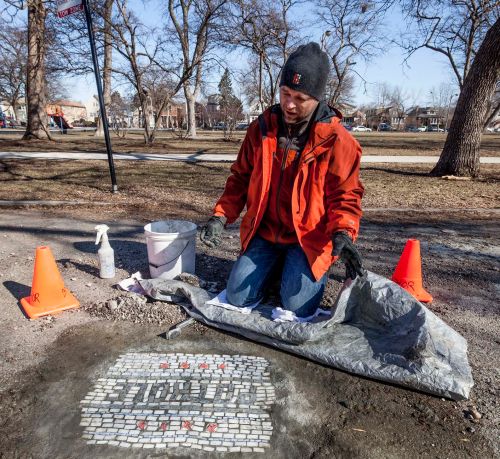
CHICAGO — The mosaic artist who patches up Chicago potholes with glass and marble is getting ready to hit the road again.

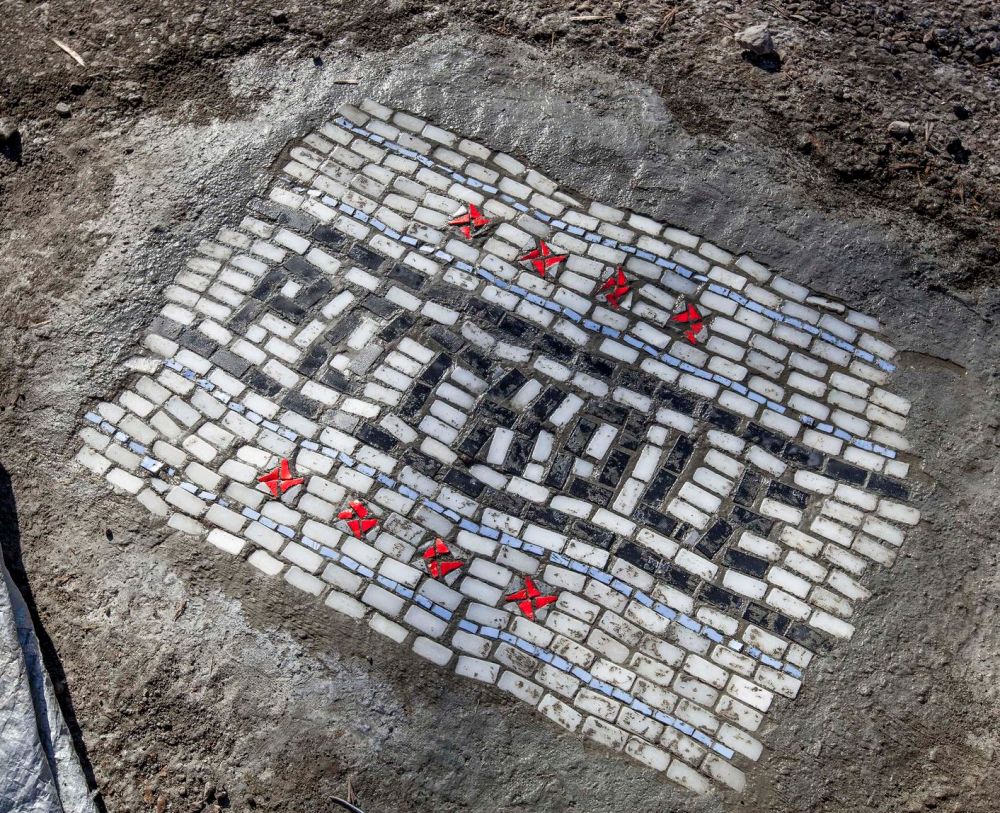
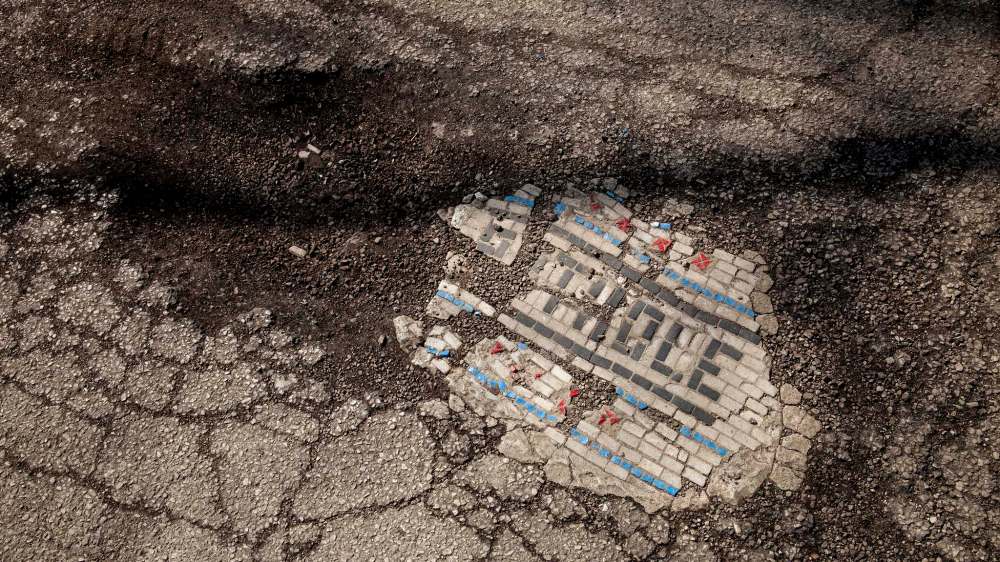
In two days earlier this month, Jim Bachor raised more than US$2,300 — more than double his goal — in a Kickstarter fundraiser for a new instalment of his pothole mosaics that have ranged from as simple as the word “pothole” with the city flag to colourful frozen treats to high-end designer Gucci and Burberry patterns.

He has created more than 30 pieces of pothole art since 2013, when he first patched up a pothole in front of his home.
Photos by Bill Hogan/Chicago Tribune/TNS
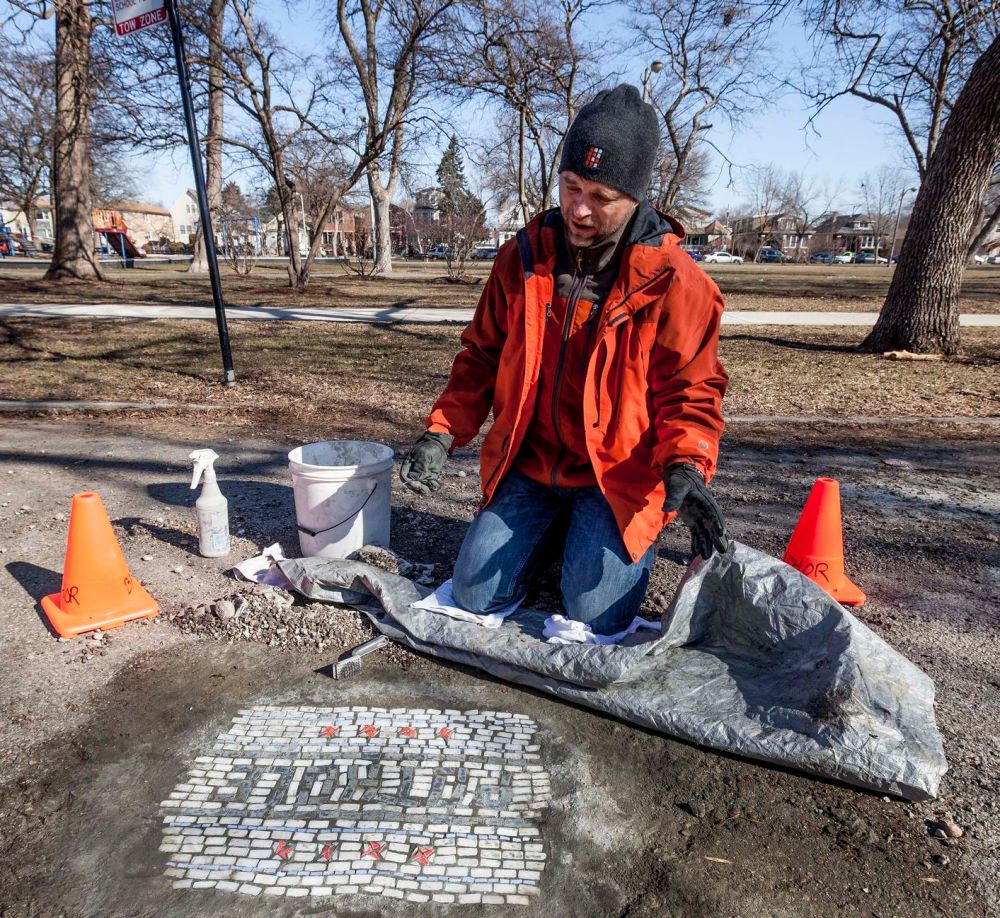
It takes Jim Bachor 21/2 hours over two days to transform a hole into ‘holy...!’
Photos by Bill Hogan/Chicago Tribune/TNS It takes Jim Bachor 21/2 hours over two days to transform a hole into ‘holy...!’

He’s going for the unexpected grin.

“You’re going through your day and doing your thing and crossing the street and unexpectedly you see a Bomb Pop (red, white and blue ice pop) where a pothole should be, and I just think that’s kind of funny,” said Bachor, 51.

He wouldn’t reveal the theme for this year’s new batch of about two dozen pothole mosaics, but said installation would begin in late March at the earliest, depending on the weather. He’s also looking to spread his dry sense of humour to other American cities, such as San Antonio and Los Angeles.

The potholes can’t be too big, small, deep or shallow. They can’t be in the centre of the street or on a street that is too beat up, because at some point that street will be repaved. The potholes have to be roughly 45 centimetres by 60 centimetres surrounded by stable asphalt, he said. Though the mosaics are durable and don’t fade, some have been paved over, he said.

He enlists his 7,000 Instagram followers for suggestions on which potholes to fill. When he finishes an installation, he posts a picture on social media, hints where it is located and leaves a goody bag nearby.
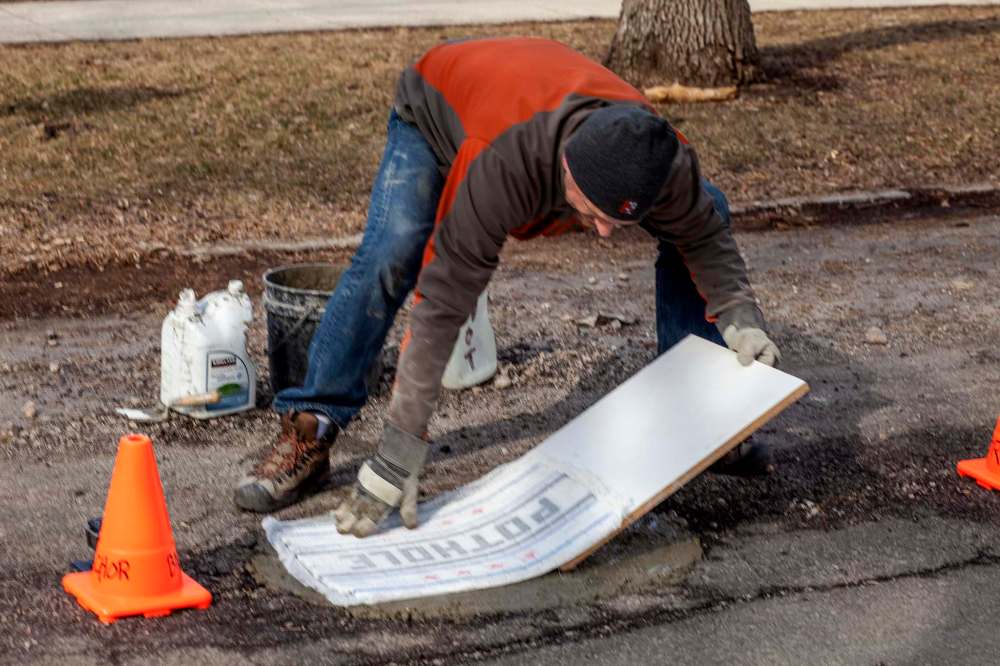
Jim Bachor slides the tile artwork from the supporting backing board and places it in its new home in the mortar filled pothole.

No, he hasn’t asked the city for permission. “If I asked at the beginning about doing this, it never would have happened,” Bachor said.

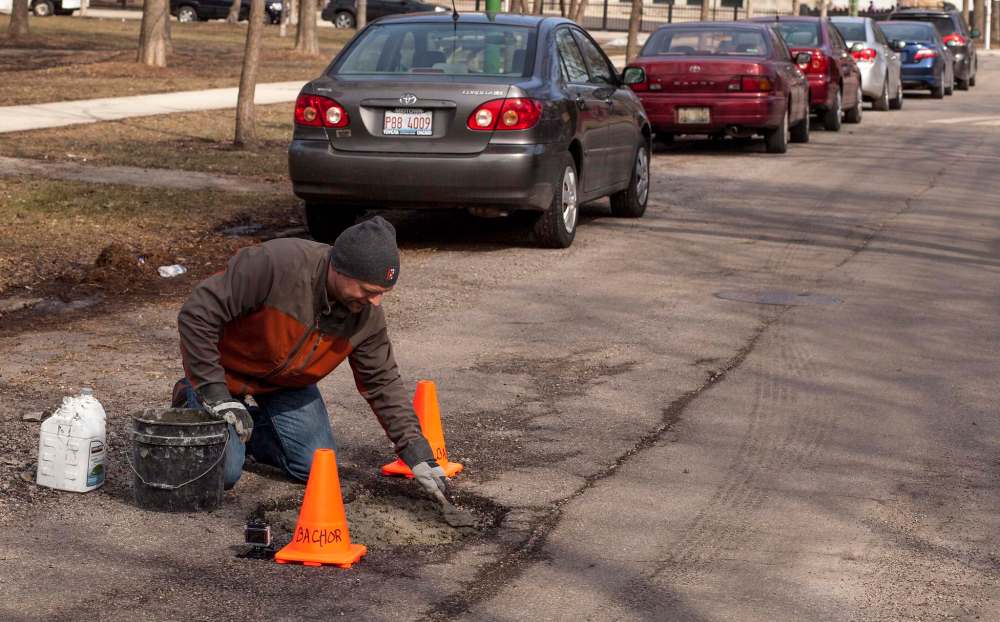
Ideally, Bachor would like it to be 15 C for two days in a row before an installation. If it’s too cold, the concrete takes too long to set. If it’s too hot, the concrete dries too quickly and cracks. When he gets to the site, it takes two hours to mix the concrete, fill the pothole and install the artwork, he said. He comes back the following day and spends half an hour scrubbing it to clean it up.

It costs about $100 for materials for each pothole and eight hours to make the mosaic in his studio, Bachor said.

His street art has given him exposure for his other artwork and led to getting commissioned for mosaic projects elsewhere, including at the Chicago Transit Authority’s Red Line Thorndale station and Nike Chicago on Michigan Avenue, he said. He plans to install a piece in the next couple of weeks at Pork and Mindy’s, a new Chicago restaurant from Food Network star Jeff Mauro, and in a couple of months in the sidewalk of a walkway leading to a Logan Square greystone.

He doesn’t know when he’ll stop creating the pothole mosaics. For now, he still finds humour in the juxtaposition of pairing a pothole with flowers or ice cream sandwiches or other things people generally love.
Bill Hogan / Chicago Tribune / TNS
A view of the finished pothole transformed into a mosaic work of art by Jim Bachor.
Bill Hogan / Chicago Tribune / TNS A view of the finished pothole transformed into a mosaic work of art by Jim Bachor.

“Potholes are everywhere. It’s a universal hate,” Bachor said.

— Chicago Tribune
View of the past and present pothole in front of Jim Bachor’s home.
Jim Bachor fills his chosen pothole at 5223 W. Argyle St. in Chicago with mortar, which is three equal parts of concrete, white lime and river sand.
Bill Hogan / Chicago Tribune / TNS
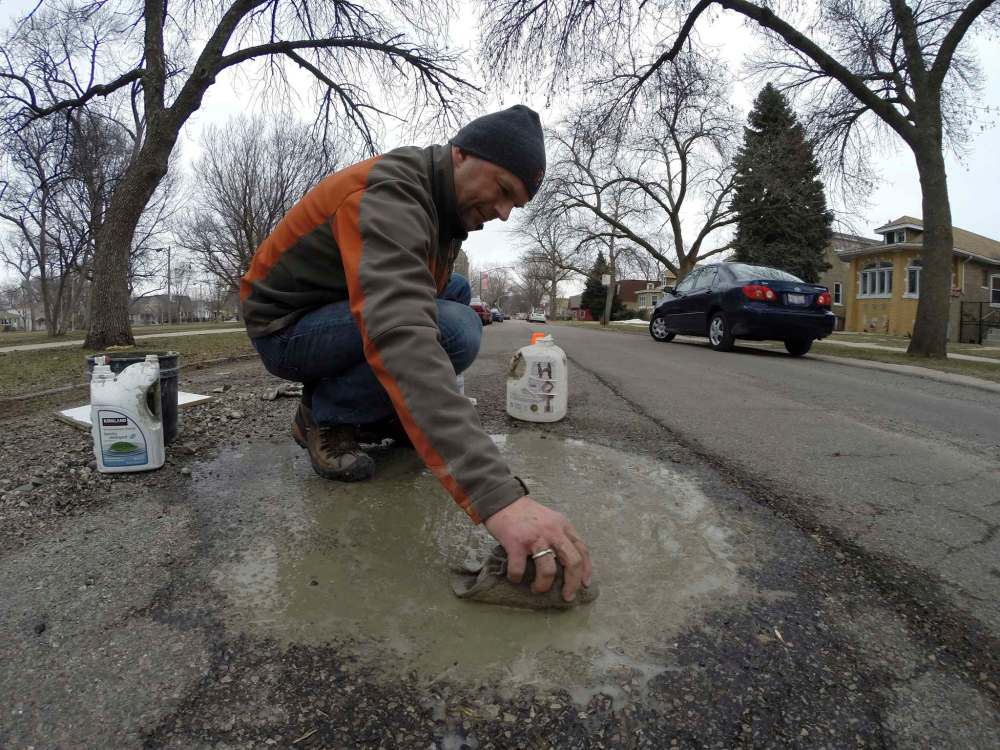
While working on a pothole in 2014, Jim Bachor attempts to wipe up the excess water while at the same time pushing the tiles pieces into the mortar so they will form a permanent bond.
Bill Hogan / Chicago Tribune / TNS While working on a pothole in 2014, Jim Bachor attempts to wipe up the excess water while at the same time pushing the tiles pieces into the mortar so they will form a permanent bond.
Report Error Submit a Tip

More Stories

Letters, Aug. 7

7 minute read 2:01 AM CDT

Clarification

A letter to the editor in the Aug. 6 edition of the Free Press, headlined Defining context, indicated that the federal auditor-general criticized the Canadian Museum for Human Rights for having had deficiencies in managing its exhibitions, saying, “without rigorous systems and practices to ensure accuracy and balance … errors and bias could be introduced to exhibits which could adversely affect the corporation’s reputation and be costly to correct after the fact.” The report in question was done in 2017 and released publicly in 2018. At the time, the museum agreed with the findings and listed a series of steps it would take to address the issue.

ERs should be used as intended

Re: Steinbach ER under siege by frustrated Winnipeggers (Aug. 5)

Walk on Portage Avenue reveals difficult present, some cause for optimism

Dan Lett 5 minute read Preview

Walk on Portage Avenue reveals difficult present, some cause for optimism

Dan Lett 5 minute read Updated: Yesterday at 3:23 PM CDT

On a recent visit back to Winnipeg, I got to witness the multitudes of Portage Avenue.

From my Airbnb on Hargrave Street, I had the opportunity to do quite a bit of walking on Portage Avenue, from Portage and Memorial all the way down to the recently opened intersection at Portage and Main.

Along the way, I saw it all: huge and dynamic construction projects, persistent urban decay and the occasional oasis of revitalization.

All in the space of 10 blocks.

Read
Updated: Yesterday at 3:23 PM CDT

U of M researchers studying ‘digital legacy planning’ before death

Maggie Macintosh 6 minute read Preview

U of M researchers studying ‘digital legacy planning’ before death

Maggie Macintosh 6 minute read Wednesday, Aug. 5, 2026

A team of researchers at the University of Manitoba wants adults to take the cloud they leave behind into special consideration when they envision heaven and their afterlife.

Read
Wednesday, Aug. 5, 2026

Leon’s Getting Larger and their tours are getting longer

Tiago Resko 4 minute read Preview

Leon’s Getting Larger and their tours are getting longer

Tiago Resko 4 minute read 3:00 AM CDT

Emo music was never just a phase for Nikola Boticki.

“It was people just saying the things I was feeling,” says the 26-year-old vocalist and guitarist. “Growing up, it’s kind of like, ‘I feel that way but I’m not going to say that out loud,’ so it was nice to hear someone say it.”

Boticki got into the punk subgenre near the end of his angsty high school years and his appreciation only grew while in isolation during the COVID-19 pandemic.

The music inspired him to form his own emo band, Leon’s Getting Larger, with friends Luke Penner (vocals/drums) and Noah St Hilaire (bass).

Read
3:00 AM CDT

Emergency rooms need help — now

Editorial 4 minute read Preview

Emergency rooms need help — now

Editorial 4 minute read 2:00 AM CDT

Triage. It’s an interesting, necessary, and bluntly pragmatic concept, but it’s not for the faint of heart.

It’s a method of determining how and when to treat the injured and the sick, and it has a long (and disputed) history. Many historians credit French army surgeon Dominique-Jean Larrey, who, in Napoleonic France, came up with a classification system to help evacuate and treat injured soldiers by quickly dividing their injuries into three different classifications.

“In the Battle of Jena in 1806, the French army used the triage system developed by Larrey. The system involved categorization into three grades based on the severity of the wounds irrespective of the soldier’s rank: dangerously wounded, less dangerously wounded, and slightly wounded,” wrote researchers Hiroyuki Nakao, Isao Ukai and Joji Kotani in the medical journal Acute Medicine and Surgery.

Triage, in fact, means “breaking into threes,” and there’s a dispute over whether it was originally used to classify coffee beans or wool — but we’re not going any further down that particular rabbit hole today.

Read
2:00 AM CDT

Mosaic artist has the (pot)hole world in his hands

By Leonor Vivanco 4 minute read Preview

Mosaic artist has the (pot)hole world in his hands

By Leonor Vivanco 4 minute read Monday, Mar. 14, 2016

CHICAGO — The mosaic artist who patches up Chicago potholes with glass and marble is getting ready to hit the road again.

In two days earlier this month, Jim Bachor raised more than US$2,300 — more than double his goal — in a Kickstarter fundraiser for a new instalment of his pothole mosaics that have ranged from as simple as the word “pothole” with the city flag to colourful frozen treats to high-end designer Gucci and Burberry patterns.

He has created more than 30 pieces of pothole art since 2013, when he first patched up a pothole in front of his home.

He’s going for the unexpected grin.

Read
Monday, Mar. 14, 2016