

PBS filmmaker Ken Burns delivers hall of fame-quality Jackie Robinson documentary
PBS filmmaker Ken Burns delivers hall of fame-quality Jackie Robinson documentary

Advertisement
Read this article for free:
or
Already have an account? Log in here »
To continue reading, please subscribe:
Monthly Digital Subscription
$0 for the first 4 weeks*
- Enjoy unlimited reading on winnipegfreepress.com
- Read the E-Edition, our digital replica newspaper
- Access News Break, our award-winning app
- Play interactive puzzles
*No charge for 4 weeks then price increases to the regular rate of $19.00 plus GST every four weeks. Offer available to new and qualified returning subscribers only. Cancel any time.
Monthly Digital Subscription
$4.75/week*
- Enjoy unlimited reading on winnipegfreepress.com
- Read the E-Edition, our digital replica newspaper
- Access News Break, our award-winning app
- Play interactive puzzles
*Billed as $19 plus GST every four weeks. Cancel any time.
To continue reading, please subscribe:
Add Free Press access to your Brandon Sun subscription for only an additional
$1 for the first 4 weeks*
*Your next subscription payment will increase by $1.00 and you will be charged $16.99 plus GST for four weeks. After four weeks, your payment will increase to $23.99 plus GST every four weeks.
Read unlimited articles for free today:
or
Already have an account? Log in here »
Hey there, time traveller!
This article was published 09/04/2016 (3530 days ago), so information in it may no longer be current.
It’s history.
It’s America.
It’s baseball.

How could anyone doubt that the combination of these three topics, when handled with expert care by PBS’s in-house documentarian, Ken Burns, would result in a program that is, at once, beautiful and formidable and essential?
Jackie Robinson, a two-part, four-hour documentary profile that airs Monday and Tuesday at 8 p.m. on PBS, is all of that and more. It’s a great sports story and an important reflection of the American condition that makes full use of all the Burns-inspired film-making techniques that have placed such earlier projects as The Civil War, Baseball, Jazz and The Roosevelts among the best programming ever offered by the U.S. public broadcaster.
With Jackie Robinson, Burns — who produced and directed this richly detailed offering in partnership with daughter Sarah Burns and her husband, David McMahon — has the luxury of spending a long time focused on a single subject. He examines the legendary baseball player and racial-barrier breaker’s life from start to finish, putting each chapter of Robinson’s remarkable journey into a broader historical context.
Jack Roosevelt Robinson was born in 1919, the son of tenant farmers living in deeply segregated rural Georgia; after his parents’ marriage failed, however, his mother packed up her children and moved to Pasadena, Calif., searching for a chance at a better future. Racism was still a fact of life in 20th-century California, but Robinson and his siblings were able to grow up with a sense that they had a right to be treated with fairness and dignity.
Early on, Jackie Robinson was a gifted athlete who was not afraid to speak his mind and stand up for what he believed. As a teenager, he demanded service at a department store lunch counter and defiantly sat in the lower level of a local movie theatre, refusing to be relegated to the blacks-only balcony. While in the U.S. Army during the Second World War, he was arrested and tried after defying a civilian bus driver’s order to sit at the back of the bus (he was acquitted on all charges).
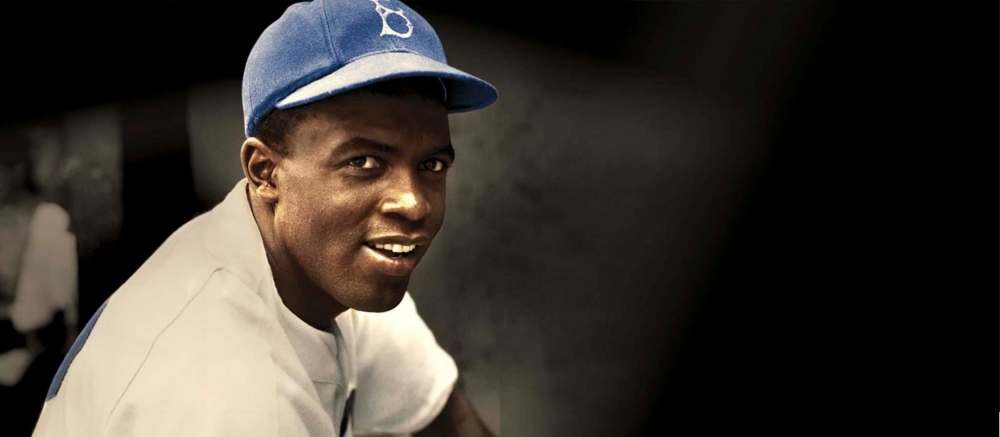
And when he began his baseball career, he routinely fought against the restrictions that had been viewed as business-as-usual aspects of black players’ working lives (one memorable passage recalls how Robinson, outraged that his teammates were banned from using the restrooms at the service stations where the team bus bought gas, suggested the team refuse to purchase fuel until after they’d used the facilities).
Despite his outspoken nature, however, Robinson was identified by Brooklyn Dodgers owner Branch Rickey as a perfect candidate for his determined effort to break down Major League Baseball’s long-enforced colour barrier. The offer of a big-league career came with a catch, however — if Robinson accepted the challenge, he had to promise never to confront or react to the inevitable threats and abuse that would accompany his move to the majors.
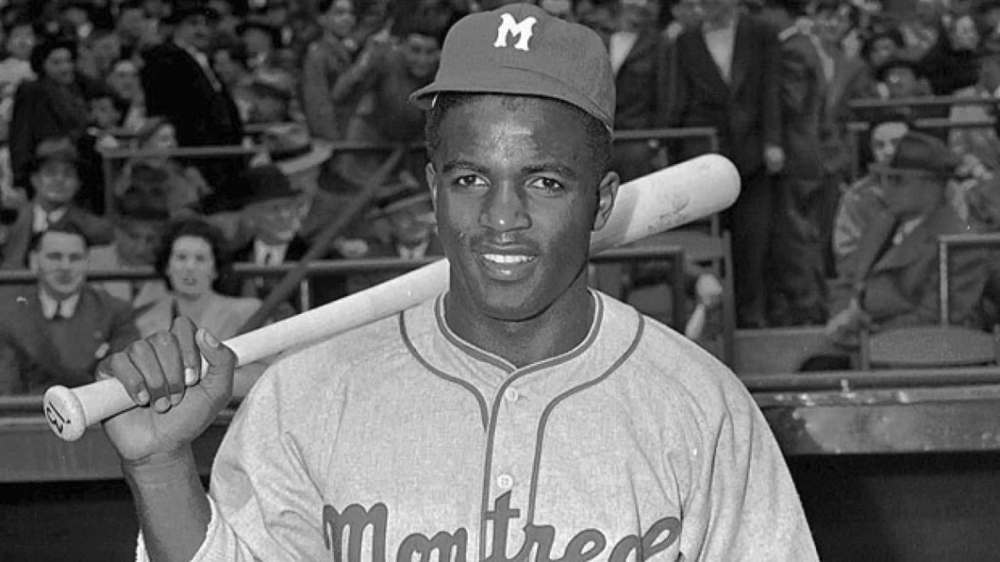
Set against this backdrop of racial intolerance and outright hatred faced by Robinson, the segment of the film that focuses on his single-season assignment to the Dodgers’ minor-league affiliate in Montreal will be particularly interesting to viewers on this side of the border. Robinson and his wife, Rachel, arrived in Montreal expecting the same sort of treatment they had received in American cities; instead, they were welcomed with open arms.
In one of many interview clips she contributes to the film, Rachel Robinson recalls arriving at a room-for-rent location in Montreal and knocking on the door, anticipating it would quickly be slammed in her face: “The woman came to the door, and she smiled at me, and she told me to come in, and she showed me around the apartment, and then she made tea, and had me sit for tea, and said, ‘I want you to be sure to use my linens and my china, and I want you to be happy here.’ And that introduction just set up Montreal for us. It was fabulous.”
The Montreal Royals won the minor-league version of the World Series that season, and after the final game, Robinson exited the stadium and walked straight into an adoring throng that picked him up and carried him down the street. A sportswriter for a black newspaper in Pittsburgh later described the scene as “probably the only day in history that a black man ran from a white mob with love, instead of lynching, on its mind.”
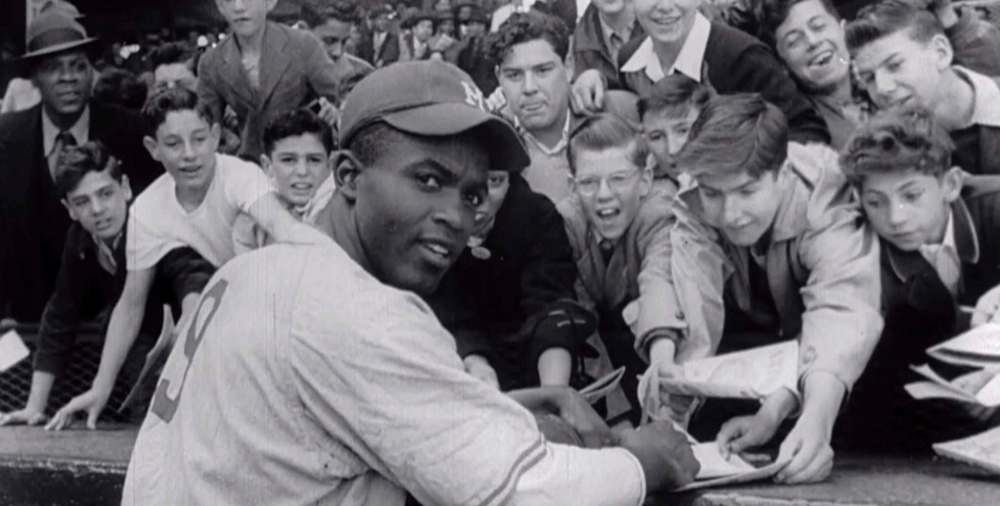
Robinson’s elevation to the majors in 1947 marked what most observers of sports and culture agree is the most important moment in baseball history. The player stayed true to his promise to Rickey by remaining silent and determined in the face of racial taunts and threats of violence as the Dodgers travelled from city to city. A threatened strike by white players on opposing teams quickly fizzled, and Robinson’s success on the field — as well as every team’s enhanced ticket-sales bottom line as a result of his popularity — inevitably led to the addition of more black players throughout the league.
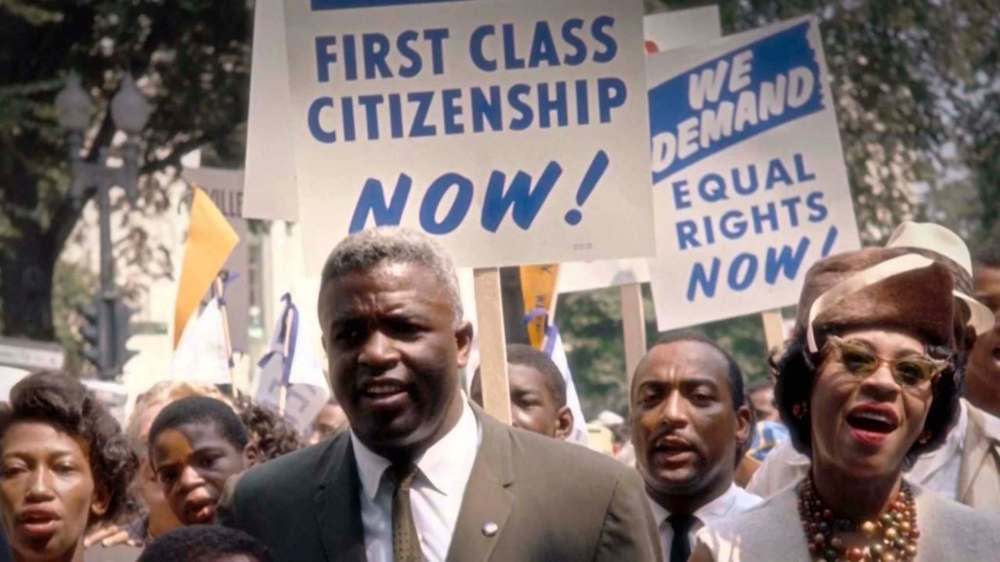
The second half of Jackie Robinson deals extensively with life after baseball, and how the figure who was so instrumental to the advancement of civil rights in the U.S. eventually came to be viewed as out of time and out of touch by the new generation’s more strident and aggressive activists. But the impact of Robinson’s life and career cannot be denied, and the telling of his story in this PBS project is handled with all the grace and depth and lyrical magnificence viewers have come to expect from Burns and company.
The impulse to lapse into the obvious has been suppressed for as long as possible, so here’s the final, hanging-curveball cut: with Jackie Robinson, Burns has once again knocked it out of the park.
brad.oswald@freepress.mb.caTwitter: @BradOswald

Our newsroom depends on a growing audience of readers to power our journalism. If you are not a paid reader, please consider becoming a subscriber.
Our newsroom depends on its audience of readers to power our journalism. Thank you for your support.
TV REVIEW
Jackie Robinson
Produced and directed by Ken Burns, Sarah Burns and David McMahon
Monday and Tuesday at 8 p.m.
PBS
4 1/2 stars out of 5
Our newsroom depends on a growing audience of readers to power our journalism. If you are not a paid reader, please consider becoming a subscriber.
Our newsroom depends on its audience of readers to power our journalism. Thank you for your support.
Advertisement Advertise With Us
Advertisement Advertise With Us