

Jump-start to election day
Advertisement
Read this article for free:
or
Already have an account? Log in here »
To continue reading, please subscribe:

Digital Subscription
One year of digital access for only $205*
- Enjoy unlimited reading on winnipegfreepress.com
- Read the E-Edition, our digital replica newspaper
- Access News Break, our award-winning app
- Play interactive puzzles
*First annual payment billed as $205.00 + GST for one year. This annual subscription will automatically renew at $233.00 + GST every 52 weeks (10% off the regular annual price of $259.35). Offer available to new and qualified returning subscribers only. Cancel any time.
To continue reading, please subscribe:
Add Free Press access to your Brandon Sun subscription for only an additional
$1 for the first 4 weeks*
- Enjoy unlimited reading on winnipegfreepress.com
- Read the E-Edition, our digital replica newspaper
- Access News Break, our award-winning app
- Play interactive puzzles
*Your next Brandon Sun subscription payment will increase by $1.00 and you will be charged $17.95 plus GST for four weeks. After four weeks, your payment will increase to $24.95 plus GST every four weeks.
Read unlimited articles for free today:
or
Already have an account? Log in here »
Hey there, time traveller!
This article was published 11/04/2016 (3803 days ago), so information in it may no longer be current.
Have you heard enough? For voters growing weary of the near-daily campaign promises and bickering of parties, now’s the chance to put an end to it all, so to speak. Advance polls, which opened this weekend for the Manitoba election, appear to be becoming an increasingly popular choice. The numbers from past elections show more Manitobans are turning out to vote at the early polls and, in fact, last year’s federal election saw lineups that frustrated some voters with long waits in the queue. Convenience counts.
Voting today is a bit like going to the movies; people show up in droves if there’s a headliner attraction and will stay home if they “know how this one is going to end.” That’s why the 2004 mayoral byelection that saw newbie Sam Katz challenge eight others, including councillors Garth Steek and Dan Vandal, resulted in an impressive turnout of 59 per cent.
Getting the vote out has become a chore because people, generally, are just less inclined to vote, a trend that’s focused the efforts of elections agencies and political parties. While the majority say they simply feel disconnected (didn’t know who to vote for; their vote didn’t matter), a sizable chunk of Manitobans cite reasons of timing (they were away, ill, busy), according to results published by Elections Manitoba.
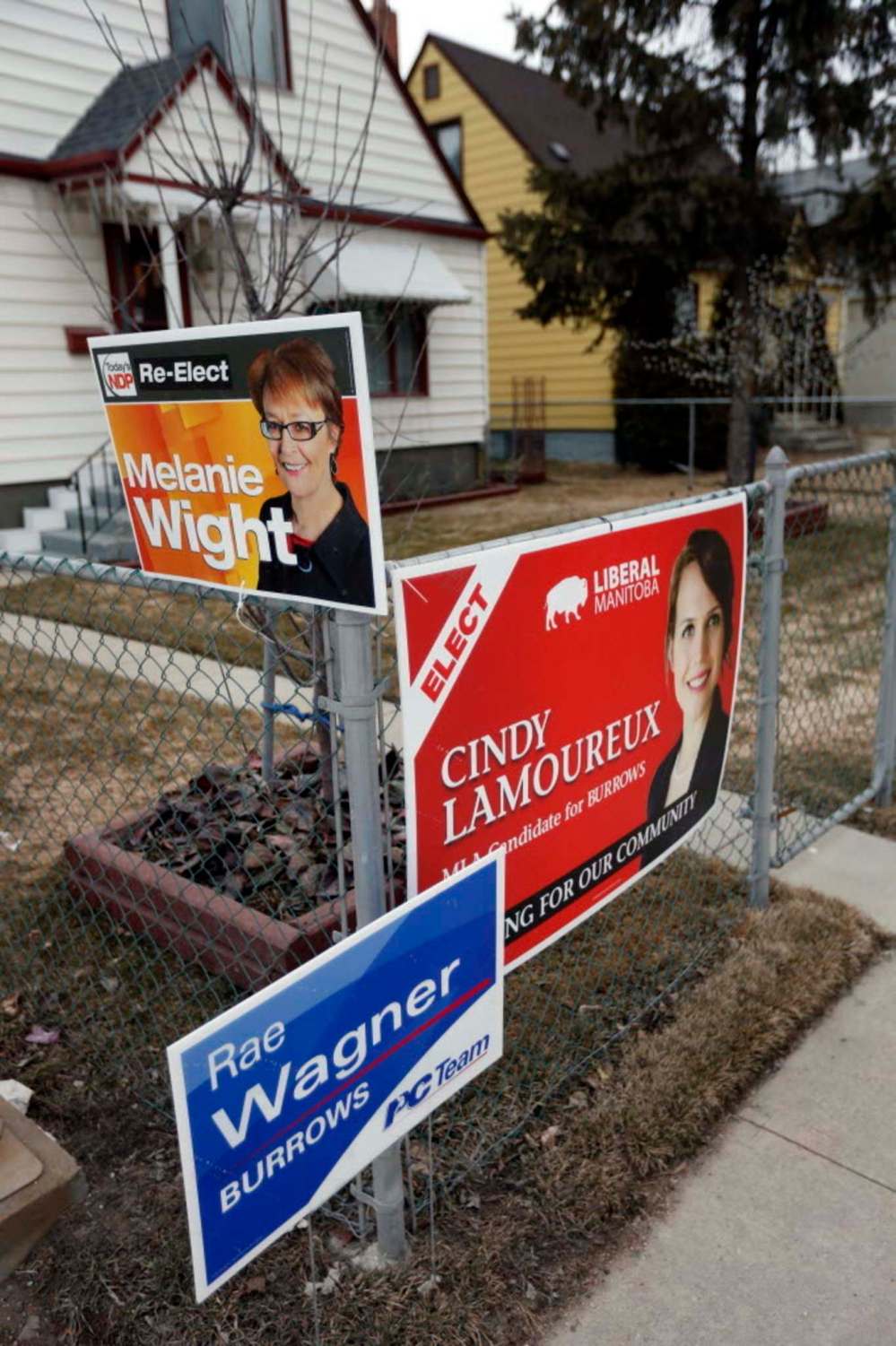
Elections Manitoba this year has about the same number of advance poll locations as 2011, and early birds have the option to vote anywhere — something many feel has helped increase voter turnout. This year, in a bid to attract the disaffected youth, voters can take selfies in front of “I voted” posters to post on social media.
But that’s just a concession to the Internet age without embracing its full potential. Canadian elections agencies have not embraced Internet voting, seen as the new frontier in the democratic exercise. What was all the talk a decade ago has faded as a priority. Federally, a proposal to launch a pilot project went nowhere. Analysis of the experience from where Internet voting has been used made it “clear there were challenges related to the integrity, verifiability and secrecy of online voting,” according to Elections Canada. In some elections, allowing people to vote online from the comfort of their homes didn’t make much of difference to turnout.
In 2014, the British Columbia government published a review that downplayed many of the perceived benefits (increasing voter turnout, cutting costs, improving accuracy) while warning there was elevated risk of coerced and fraudulent voting.

The City of Winnipeg administration and council believes Internet voting deserves to be tested as an option, but that will probably require buy-in from the province because it writes the rules about how votes get cast — paper ballots remain mandatory. Elections Manitoba, however, says it is not convinced: “Given the current technology, there are no assurances regarding who is voting, whether someone is being coerced to vote (or to vote in a particular way), that no one votes more than once, or whether an individual’s vote is secure.” Full stop. So, democracy’s foray into the brave new virtual world has hit the firewall. The future of voting appears to rest on giving voters, particularly young voters, reason to vote — a challenge to parties, schools and parents.
Voting the old-fashioned way has been made increasingly easy. In fact, on election day itself, when you show up to your designated poll, you won’t even need ID if you’re on the voters list. That puts Manitoba’s rules amongst the most liberal in the country. It speaks volumes about the system’s integrity and the people who still see the point of keeping democracy real in this province — the voters.
Related Articles
Meet your candidate: We invited would-be MLAs to introduce themselves to you





Advertisement Advertise With Us
Advertisement Advertise With Us