

Divisive defining moment
Fallout of Battle of Seven Oaks 'still as fresh as it was 200 years ago'

Advertisement
Read this article for free:
or
Already have an account? Log in here »
To continue reading, please subscribe:
Digital Subscription
One year of digital access for only $1.44 a week*
- Enjoy unlimited reading on winnipegfreepress.com
- Read the E-Edition, our digital replica newspaper
- Access News Break, our award-winning app
- Play interactive puzzles
*Billed as $5.77 plus GST every four weeks. After 52 weeks, price increases to the regular rate of $19.95 plus GST every four weeks. Offer available to new and qualified returning subscribers only. Cancel any time.
To continue reading, please subscribe:
Add Free Press access to your Brandon Sun subscription for only an additional
$1 for the first 4 weeks*
- Enjoy unlimited reading on winnipegfreepress.com
- Read the E-Edition, our digital replica newspaper
- Access News Break, our award-winning app
- Play interactive puzzles
*Your next Brandon Sun subscription payment will increase by $1.00 and you will be charged $17.95 plus GST for four weeks. After four weeks, your payment will increase to $24.95 plus GST every four weeks.
Read unlimited articles for free today:
or
Already have an account? Log in here »
Hey there, time traveller!
This article was published 18/06/2016 (3638 days ago), so information in it may no longer be current.
Some call it a battle, others a massacre.
And even 200 years later, it can go by different names: the Pemmican War or the Victory of Frog Plain or the Battle of Seven Oaks.
Yet, even those who disagree on the semantics — or even strongly dispute what happened that tragic day, June 19, 1816, in Kildonan — agree the deadly conflict between Métis fur traders from the North West Company, led by Cuthbert Grant, and a party of Hudson’s Bay Company employees, led by Red River colony governor Robert Semple, was a defining moment in the cultural and political evolution of a fledgling nation.
To review: in 1814, the HBC proclaimed no pemmican — a dried meat mixture of moose or bison (and sometimes fruit) — could be exported from the colony. Pemmican was a source of the Métis livelihood and the move sparked increasing tension with the HBC settlement. On that fateful day in June, Grant’s men, bearing a load of pemmican, were confronted by Semple’s party.
A shot — later determined to have come from Semple’s side — killed one of Grant’s men. The Métis returned fire. In 15 minutes, the battle was over and 21 of Semple’s force were dead, including the governor.
For Métis, the encounter has long been considered both a source of contention and pride.
David Chartrand, president of the Manitoba Metis Federation, said for decades the incident was called “the massacre at Seven Oaks.” It depicted the Métis as villains who murdered women and children.
“It was they who shot first and shot one of ours,” Chartrand said. “All this history in the schools is wrong. We were all portrayed as savages and killers.
“There are so many messages that are coming from this story. All we’re trying to do is set the record straight. Tell the truth. Let people know Métis were just entrepreneurs trying to provide for their families.”
Sandra Horyski, a direct descendant of Grant, agreed the original description of the conflict as a “massacre” has been detrimental to the Métis people.
“A lot of the history has to be rewritten,” Horyski said. “(Grant) does get a bad rap in history because of that one word that was pounded into people’s minds. There were no women and children (killed).
“We still have that negative connotation now. It’s still as fresh as it was 200 years ago.”
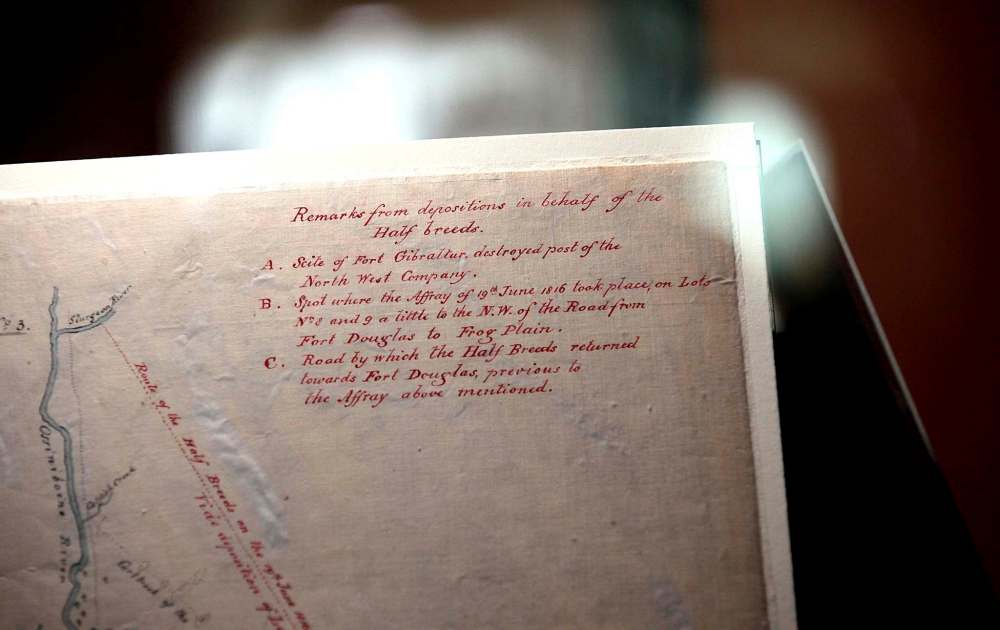
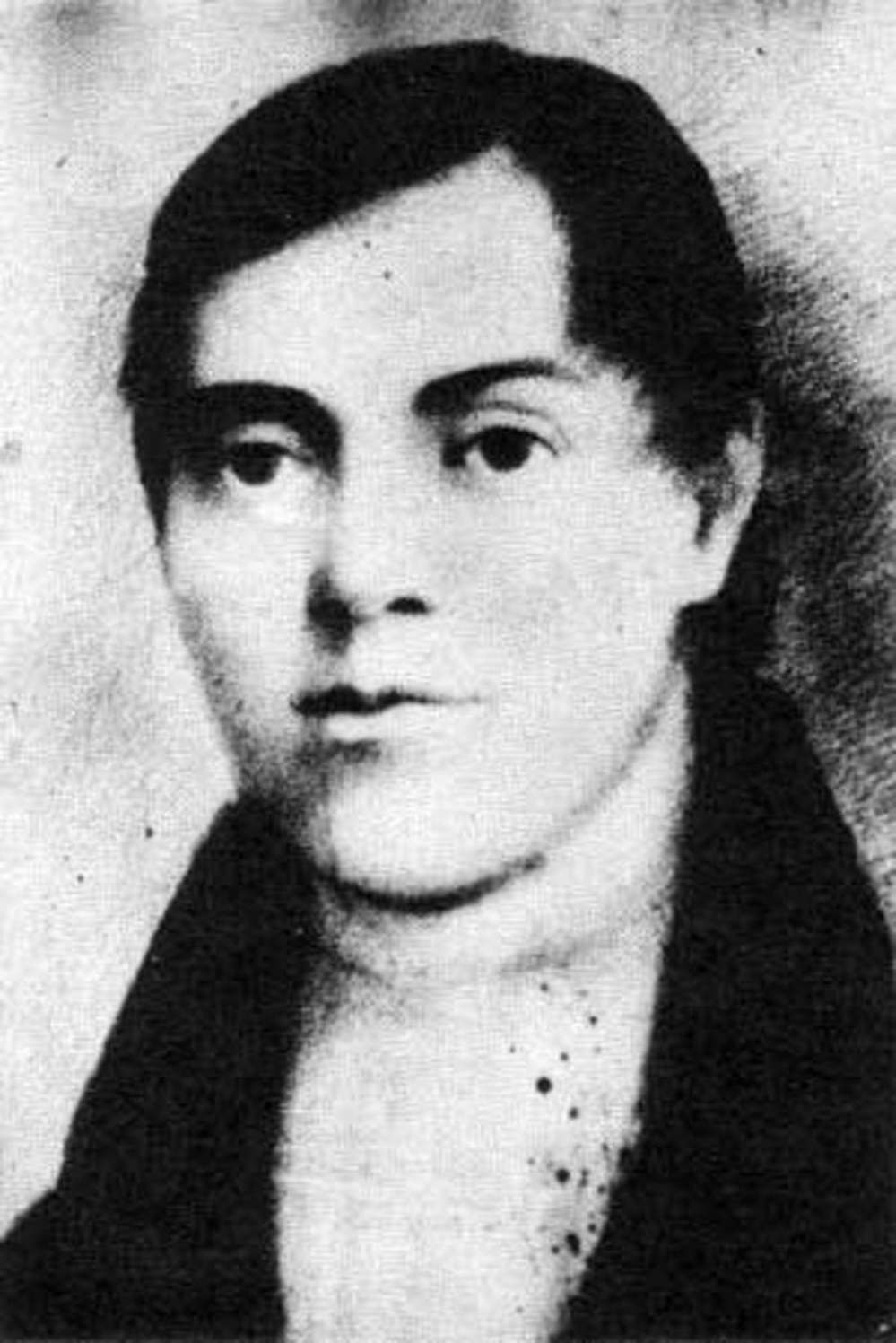
Grant, whose mother was the daughter of a Cree chief, stood trial in Montreal and was exonerated. A subsequent inquiry in 1818 led by William Coltman, called for by the British government, determined the first shot was fired by HBC men.
Both Chartrand and Horyski characterize the Battle of Seven Oaks, as it is now most commonly known, as the birth of the Métis nation. According to Chartrand, Seven Oaks marked the first time the Métis blue infinity flag was flown in battle. And the uprising was a precedent for later resistance led by Louis Riel.
“It’s all part of the nation’s growth,” Chartrand said. “It was a catalyst. We were here and united. That was a powerful message. The seed was planted.”
Added Horyski: “They set the blueprints for how Manitoba would come into its own as a province, culturally and politically. We’re still fighting for our identity even 200 years later.”
Paulette Duguay, president of the L’Union national metisse Saint-Joseph du Manitoba, said the legacy of the “terrible tragedy” for Métis people was ultimately empowering.
“They probably thought, ‘We’re not nobody here. We are an important people in this land. We contribute to this land immensely,’” Duguay said. “They must have at that moment thought, ‘We’re as good as anybody else. We are our own people.’”
That’s one side of the story.
Gordon Cameron is a member of the Lord Selkirk Association of Rupert’s Land, descendants of Red River settlers prior to 1836. Cameron’s great, great, great-grandfather Donald Gunn arrived at the colony in 1813 among the original settlers, and he views what happened June 19, 1816, as an event that should be mourned, not celebrated.
For starters, Cameron said the reason it was called a “massacre” was because there were no injured, only dead. He believes a “rogue” North West member “finished off” the wounded after the battle ended, consistent with a take-no-prisoners order.
Cameron disputes the narrative that Semple’s men were cut down because the Métis were experienced buffalo hunters who were expert shots on horseback. The guns of the day just weren’t that accurate, he said, noting: “That thing is overplayed that these guys were hotshots.”
“It was monumental,” Cameron said. “And it was a complete destruction of the colony. How can anybody make this a happy celebration? Twenty-one (of Semple’s) men were lying on the prairie, dead. That’s not happy.”
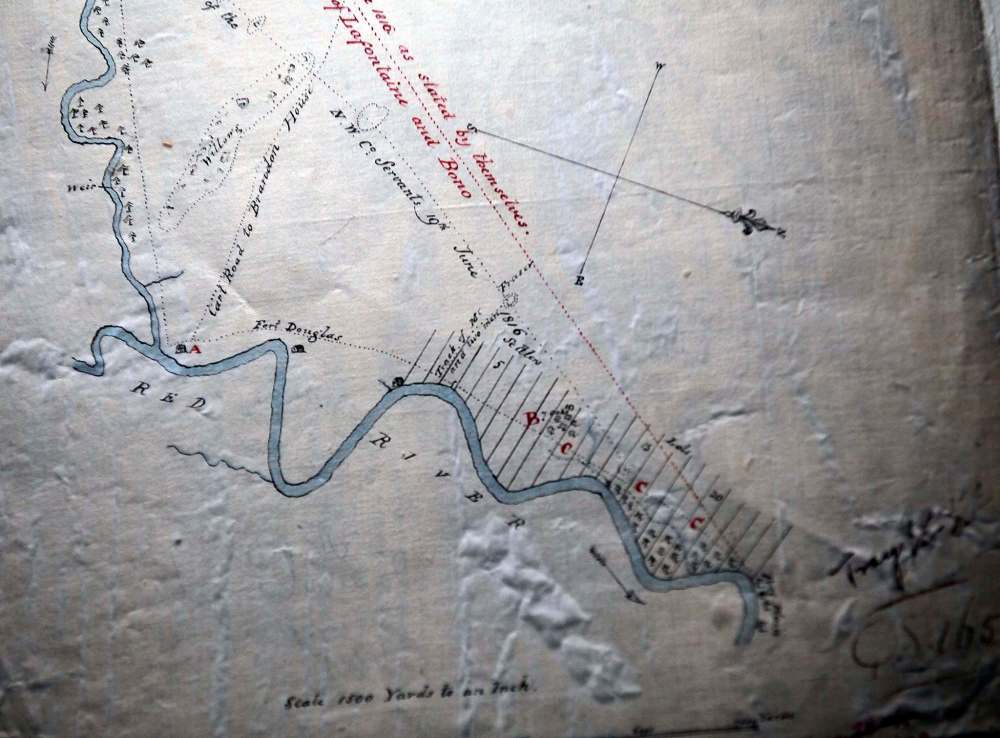
Yet, it’s important to note that for more than a year, Cameron, Horyski and Duguay — along with representatives from the St. John’s Anglican Cathedral and St. Boniface Roman Catholic Cathedral (both established in the wake of the Battle of Seven Oaks at the request of Lord Selkirk) — have been working together to commemorate the event’s 200th anniversary on Sunday.
Included in the itinerary is a commemorative prayer service at St. John’s historic site, hosted by Bishop Donald Phillips, Diocese of Rupert’s Land, and Archbishop Albert LeGatt, Archdiocese of Saint Boniface.
Asked why the churches would organize events around the battle’s bicentennial, St. John’s Rev. Paul Johnson said what occurred at Seven Oaks led directly to the establishment of the churches, which in turn led to residential schools.
“It’s been 200 years since and we’ve been there for almost 200 of them,” Johnson said. “But we’re also interested in being part of the community as it stands now. We’ve been part of some terrible things. So we’re clearly committed to the healing and reconciliation journey. We want to walk that road. Here’s a perfect opportunity to do some community education as well same some community building. That’s important to us.”
LeGatt said the commemorative events are “a call to harmony.”
“It’s about ongoing reconciliation, bringing together the different groups of society,” he said. “It’s an expression of not reconciliation accomplishment, but praying for ongoing efforts for reconciliation. That requires meeting each other and listening to each other… a greater sense of solidarity for the entire community. The barriers and walls are still there in various degrees.”
That sentiment is echoed among the descendants on their side of the battle, too.
For example, Cameron said any notions of victory that day were short-lived. Grant ended up as an employee of the HBC after a merger with the North West Company in 1821.
“What endured was the way they learned to work together,” said Cameron. “That, to us, is the real wonder of the Red River. Bad things happen, but it’s how you go on from it.”
Added Duguay: “The timing is perfect. We’re in a movement of truth and reconciliation, and I like that. Let’s learn from that. Let’s go beyond the tragedy. That’s why I’m part of this. I like the hopefulness of this.”
Gary McEwen, president of the Manitoba Historical Society, said perhaps, after 200 years, it’s time to put aside grudges.
“It was probably a defining moment for both the Métis and the Scottish settlers at the time,” said McEwen. “But I don’t think it’s much value to say who shot first or how many were killed. I don’t think that has any real place in 2016.
“They were all trying to eke out a living,” he said. “They were all trying to survive. Now we’re trying to live together and carry on. Our motto is, ‘Faith and trust in the future.’ What’s the future? Living side by side and making the province a better place.”
randy.turner@freepress.mb.ca
Twitter: @randyturner15
Randy Turner
Reporter
Randy Turner spent much of his journalistic career on the road. A lot of roads. Dirt roads, snow-packed roads, U.S. interstates and foreign highways. In other words, he got a lot of kilometres on the odometer, if you know what we mean.
Our newsroom depends on a growing audience of readers to power our journalism. If you are not a paid reader, please consider becoming a subscriber.
Our newsroom depends on its audience of readers to power our journalism. Thank you for your support.
Bicentennial blueprint
List of commemorative events Sunday for 200th anniversary of Battle of Seven Oaks:
9:00 a.m. — Commemoration service for Cuthbert Grant (mass and opening remarks): 1053 Hwy 26, St. François Xavier
11:00 a.m. — Grant’s Old Mill Museum (lunch and entertainment)
11:20 a.m.-12:35 p.m. — Grant’s Mill guided tours: 2777 Portage Ave., Winnipeg
1:30 p.m. — Parks Canada ribbon-cutting at the renewed Seven Oaks memorial site: Main Street and Rupert’s Land Boulevard
1:30 p.m. — Coltman report on display at Canadian Museum for Human Rights (June 16-23)
3:00 p.m. — Commemorative prayer service for healing and reconciliation: St. John’s Anglican Cathedral, 135 Anderson Ave. Service will be hosted by Bishop Donald Phillips, Diocese of Rupert’s Land, and Archbishop Albert LeGatt, Archdiocese of Saint Boniface, with elements from Scottish, Métis and First Nations communities.
5:00 p.m. — Feast in St. John’s Park, south of the cathedral (free hotdogs, hamburgers, chips, pop for 1,000 people), sponsored by the North West Company
7:00 p.m. — Free concert in St. John’s Park, with First Nations, Métis and Scottish participants, emphasis on reconciliation and the multicultural community of today
Randy Turner
Reporter
Randy Turner spent much of his journalistic career on the road. A lot of roads. Dirt roads, snow-packed roads, U.S. interstates and foreign highways. In other words, he got a lot of kilometres on the odometer, if you know what we mean.
Our newsroom depends on a growing audience of readers to power our journalism. If you are not a paid reader, please consider becoming a subscriber.
Our newsroom depends on its audience of readers to power our journalism. Thank you for your support.
Advertisement Advertise With Us
Advertisement Advertise With Us