

Warm welcome for Iceland’s players
Advertisement
Read this article for free:
or
Already have an account? Log in here »
To continue reading, please subscribe:

Digital Subscription
One year of digital access for only $205*
- Enjoy unlimited reading on winnipegfreepress.com
- Read the E-Edition, our digital replica newspaper
- Access News Break, our award-winning app
- Play interactive puzzles
*First annual payment billed as $205.00 + GST for one year. This annual subscription will automatically renew at $233.00 + GST every 52 weeks (10% off the regular annual price of $259.35). Offer available to new and qualified returning subscribers only. Cancel any time.
To continue reading, please subscribe:
Add Free Press access to your Brandon Sun subscription for only an additional
$1 for the first 4 weeks*
- Enjoy unlimited reading on winnipegfreepress.com
- Read the E-Edition, our digital replica newspaper
- Access News Break, our award-winning app
- Play interactive puzzles
*Your next Brandon Sun subscription payment will increase by $1.00 and you will be charged $17.95 plus GST for four weeks. After four weeks, your payment will increase to $24.95 plus GST every four weeks.
Read unlimited articles for free today:
or
Already have an account? Log in here »
Hey there, time traveller!
This article was published 23/06/2016 (3724 days ago), so information in it may no longer be current.
Iceland’s national soccer team has looked rather at home in its maiden European Championship.
It can thank its fans for that.
In their places by the time the players emerge for warm-ups, the good-humoured supporters — most of them outfitted in the blue shirt with red stripe; many sporting horned helmets — like to welcome their countrymen into the stadiums with hearty renditions of Eg Er Kominn Heim, or I’ve Come Home, their arms linked and bodies swaying.
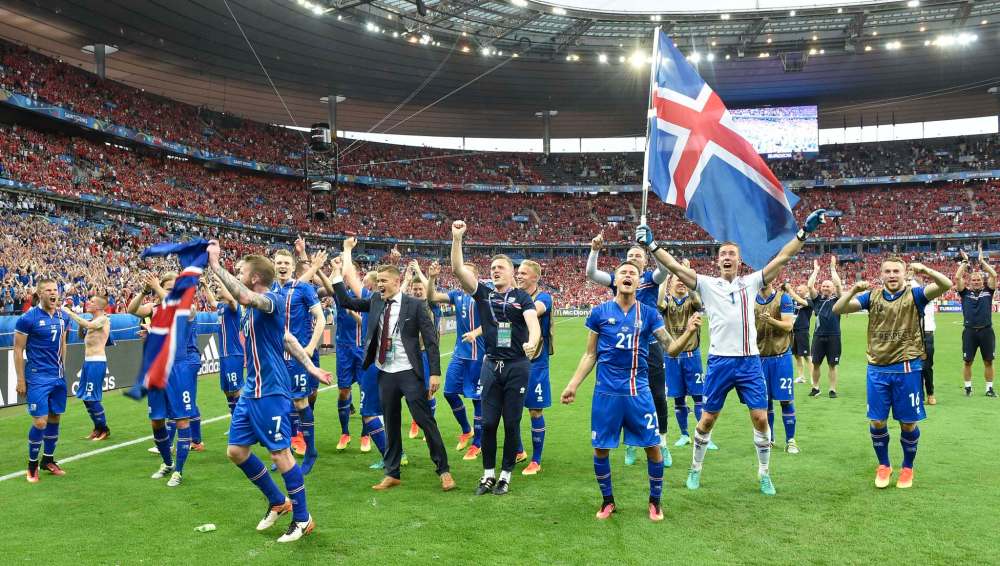
(Imagine ten thousand Neil Diamond fanatics belting out Song Sung Blue and you’ve got the picture.)
They did it throughout their Group F schedule, which produced draws with Portugal and Hungary and Tuesday’s 2-1 win over Austria, and they’ll do it again Monday when they face England in the round of 16.
Iceland, needless to say, are something of a surprise participant in Euro 2016’s knockout stages, albeit a pleasant one.
Ranked 131st in the world only four years ago, they shocked the European soccer establishment in September 2014 when they opened the qualification phase of this tournament with a 3-0 trouncing of Turkey. Five weeks later they beat the Netherlands 2-0 — an occasion midfielder Gylfi Sigurdsson labelled a “perfect night”— and since then haven’t really come off the boil.
Even against Portugal, which enjoyed nearly three quarters of the ball in last week’s contest, the islanders never looked as though they didn’t deserve to be at this competition. Frustrated Portuguese forward Cristiano Ronaldo might have blasted what he felt to be their “small mentality,” but if he’d been watching them the past 21 months he’d have seen a team nearly identical to the one that shut him down in Saint-Etienne.
And, for what it’s worth, his comment wasn’t all that inaccurate.
Iceland, as a country, is small — even compared to Portugal. Its soccer team is the product of an association that would need to triple its registrations just to fill Estado da Luz. There are no superstars, only a handful of players, such as Sigurdsson and striker Kolbheinn Sigthorsson, who can deliver the odd flash, and a group of workers, including captain Aron Gunnarsson and defender Kari Arnason, that knows exactly what’s required of them.
They play “small” for a reason: because they are; because they aren’t so naive as to run and gun with Ronaldo last week and Jamie Vardy next. Far from being in over their heads, they are, in fact, playing exactly the way they intend, the way they know will work for them, the way that’s worked in the past.
During qualification, when they were beating Turkey, the Netherlands, the Czech Republic, Latvia and Kazakhstan, Iceland pumped themselves up for matches by listening to the Bee Gees’ You Win Again. (“There’s no fight you can’t fight,” etc.)
Self-belief has never been an issue for this team, and if they’ve ever had their doubts the players have only had to look up to see the support in the stands, to settle into the comfort of Eg Er Kominn Heim and proceed in a headspace of pleasant familiarity.
This is what fans can do.
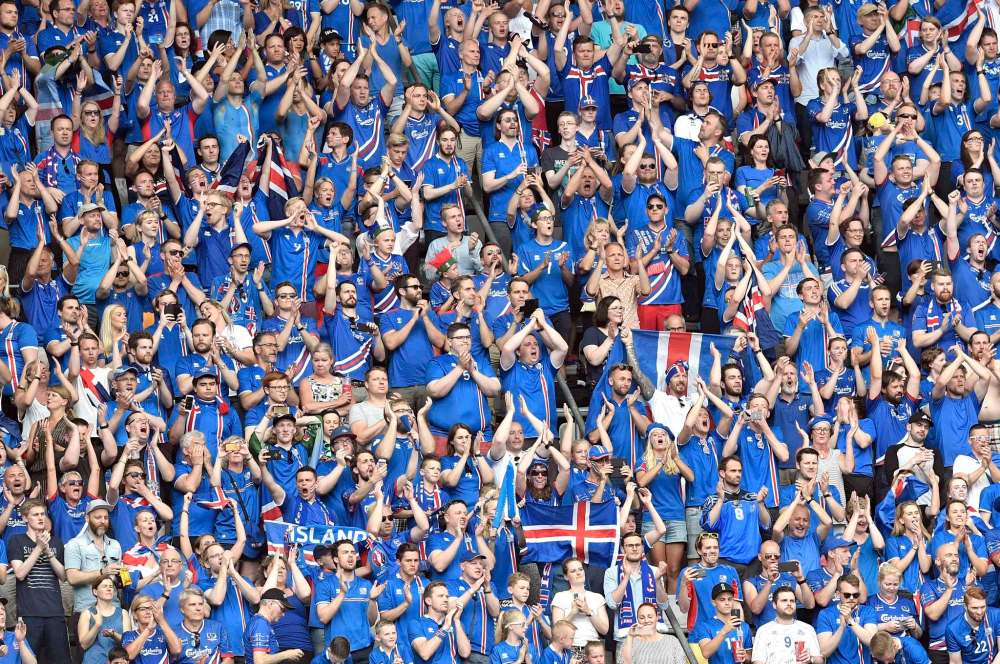
They can create places, even in far-off lands, that invite their teams into environments the players recognize and are proud of, that they want to excel in. And they don’t do it by tossing flares on the pitch, assaulting rival supporters and ransacking Marseille.
They do it by singing Eg Er Kominn Heim, their arms linked and bodies swaying.
Iceland isn’t the only team providing heartening storylines at Euro 2016. Here are some others:

Hungary: After beating regional rivals Austria 2-0, Hungary came back to draw Iceland and held three leads in Wednesday’s match with Portugal before holding on to a 3-3 result. Captain Balazs Dsudsak, who had a difficult season at club level with Dinamo Moscow and Bursaspor, broke out for a brace and will need to be similarly influential in Sunday’s round of 16 appointment with Belgium.
Northern Ireland: Manager Michael O’Neill’s stock was already sky-high after guiding Northern Ireland into a first major tournament in 30 years, and the 46-year-old only consolidated his reputation by securing a round of 16 match against Wales. Central defenders Gareth McAuley and Craig Cathcart have been immense in France, and captain Steven Davis had a match to remember against Ukraine after challenging himself and his teammates to “have a real go.”
Wales: Wales have been fun to watch, and star attacker Gareth Bale has scored in all three matches he’s started at Euro 2016. With England being held by Slovakia on Monday, The Dragons ripped Russia to shreds and finished atop Group B. Northern Ireland and one of Belgium and Hungary now stand between them and the semi-finals, and there’s little reason to doubt they can’t go at least that far.
Alvaro Morata: Two years ago Real Madrid sold Alvaro Morata to Juventus for €20 million. On Tuesday they bought him back for €30 million. The 23-year-old striker is joint-top scorer of Euro 2016 and has flourished after being given a chance to lead the line by Spain boss Vicente Del Bosque.
jerradpeters@gmail.comTwitter @JerradPeters
Our newsroom depends on a growing audience of readers to power our journalism. If you are not a paid reader, please consider becoming a subscriber.
Our newsroom depends on its audience of readers to power our journalism. Thank you for your support.
Our newsroom depends on a growing audience of readers to power our journalism. If you are not a paid reader, please consider becoming a subscriber.
Our newsroom depends on its audience of readers to power our journalism. Thank you for your support.
Related Articles
Piatti returns to Impact's lineup Saturday
Advertisement Advertise With Us
Advertisement Advertise With Us