Common mites found on Manitoba trees and shrubs

Advertisement

Advertise with us

There are thousands of known mite species around the world. Mites are, as their name suggest, very small. They are definitely not insects. Most are less than 0.3 mm long. Under a 100 power microscope they look like squashed cylinders or even cigar shaped. The most common of the mite groups in our area are the eriophyids. The adults have a mouth area at one end of their body and two pairs of legs at the other end of the body. Most other mite groups usually have four legs. We can’t see these mites with our eyes, only the damage they do to plants.

Read this article for free:

or

Already have an account? Log in here »

To continue reading, please subscribe:

Subscribe and receive a limited-edition Free Press branded hat or tote.

Digital Subscription

One year of digital access for only $205*

  • Enjoy unlimited reading on winnipegfreepress.com
  • Read the E-Edition, our digital replica newspaper
  • Access News Break, our award-winning app
  • Play interactive puzzles

*First annual payment billed as $205.00 + GST for one year. This annual subscription will automatically renew at $233.00 + GST every 52 weeks (10% off the regular annual price of $259.35). Offer available to new and qualified returning subscribers only. Cancel any time.

To continue reading, please subscribe:

Add Free Press access to your Brandon Sun subscription for only an additional

$1 for the first 4 weeks*

  • Enjoy unlimited reading on winnipegfreepress.com
  • Read the E-Edition, our digital replica newspaper
  • Access News Break, our award-winning app
  • Play interactive puzzles
Start now

*Your next Brandon Sun subscription payment will increase by $1.00 and you will be charged $17.95 plus GST for four weeks. After four weeks, your payment will increase to $24.95 plus GST every four weeks.

Hey there, time traveller!
This article was published 09/07/2016 (3680 days ago), so information in it may no longer be current.

There are thousands of known mite species around the world. Mites are, as their name suggest, very small. They are definitely not insects. Most are less than 0.3 mm long. Under a 100 power microscope they look like squashed cylinders or even cigar shaped. The most common of the mite groups in our area are the eriophyids. The adults have a mouth area at one end of their body and two pairs of legs at the other end of the body. Most other mite groups usually have four legs. We can’t see these mites with our eyes, only the damage they do to plants.

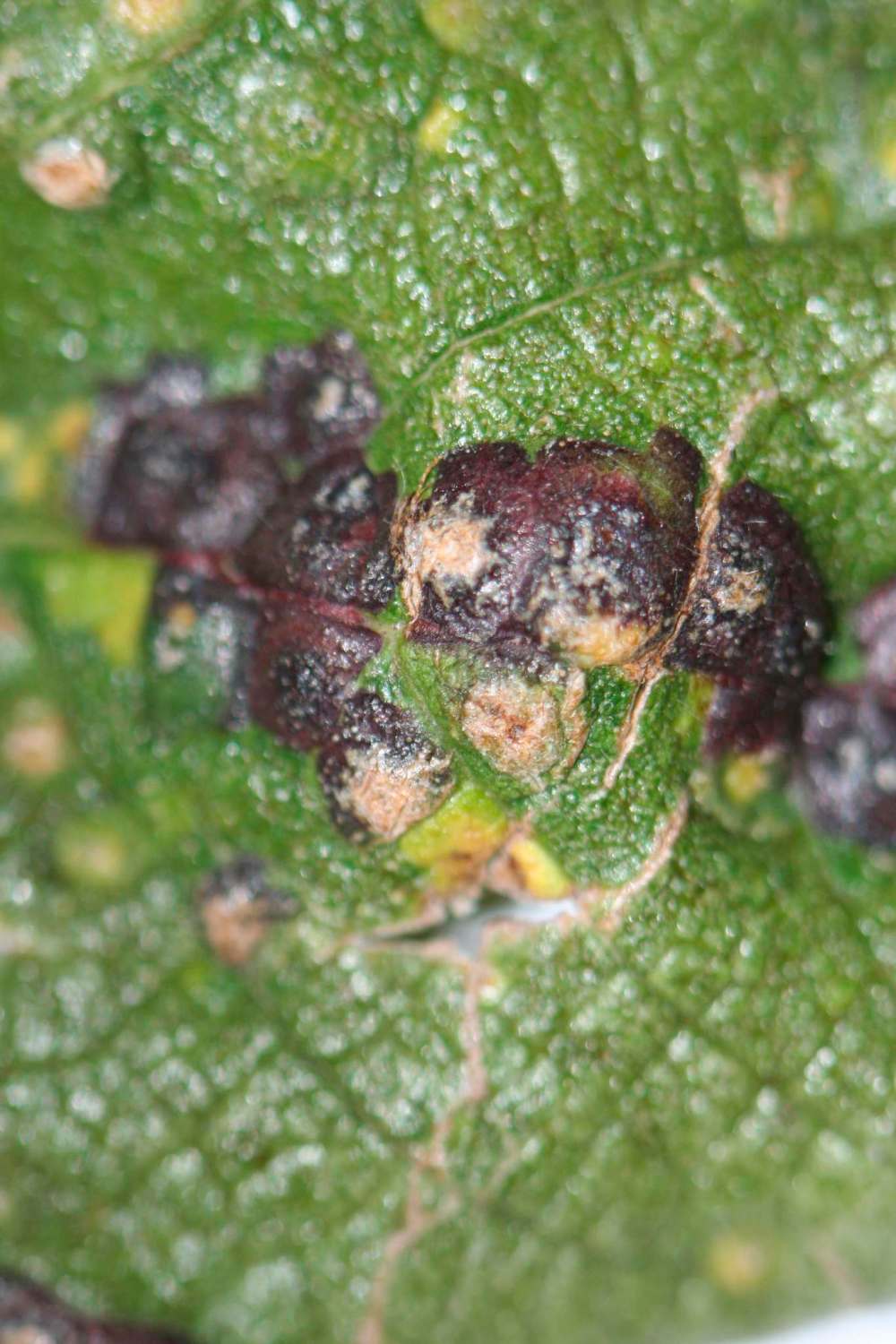
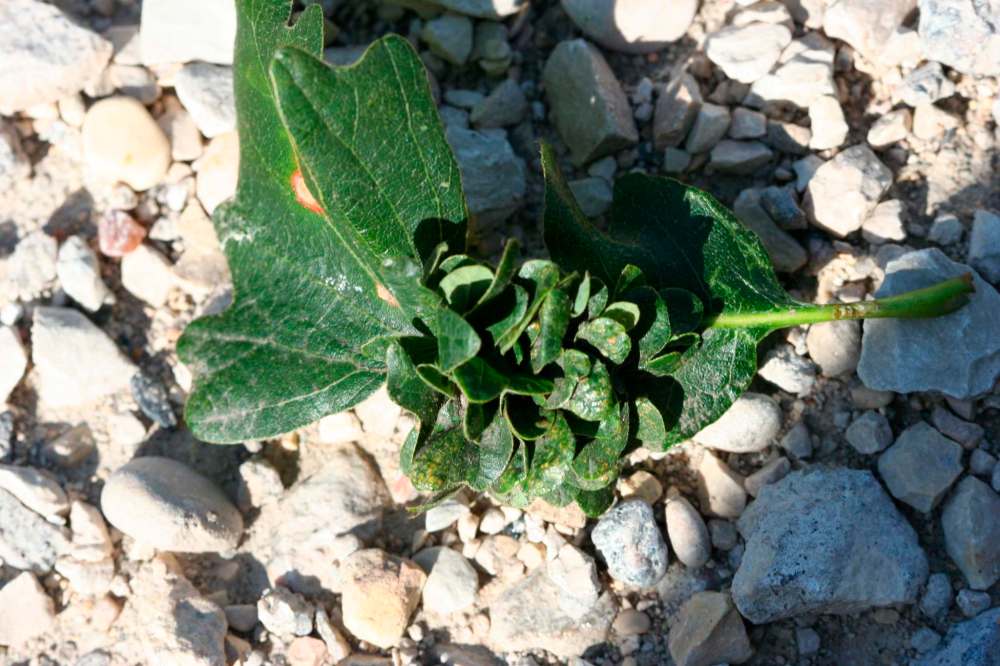
Not all trees and shrubs in our area are affected. They normally feed on leaves, but fine twigs can also be attacked causing a variety of distorted features. Most commonly tree leaves such as those on oaks, maples, hackberries, plums and poplars are targeted. They are also very common on cranberry shrubs. Their feeding patterns can vary quite a bit depending on the species of plant on which they are feeding. On maple and hackberry leaves the feeding characteristics typically show up as tiny squashed balls. On oak leaves their feeding can have a number of different appearances — from cottony pink and white ball-like clusters to flattened swellings to tiny multiple distorted leaf clusters. On the leaves of plums, they typically produce long, spindle like swellings appearing like tiny distorted roots. On some maple and cranberry leaves in particular, a red felt-like flattened surface feature can appear on the underside of the leaf upon which they are feeding. This red feature is called an erineum. It is most common on silver maple and European cranberry leaves.

The mites usually lay clusters of eggs often up to a hundred at a time. The tiny mites can be carried by various insects from one susceptible plant part to another. Aphids tend to be the most common carriers, but mites can attached themselves to the legs of other small insects such as leaf hoppers. Feeding by mites rarely causes death of the host plant, but they can kill individual leaves. Usually damage is restricted to unusual growth of the leaves or isolated patches of mite colony appearance on the leaves.
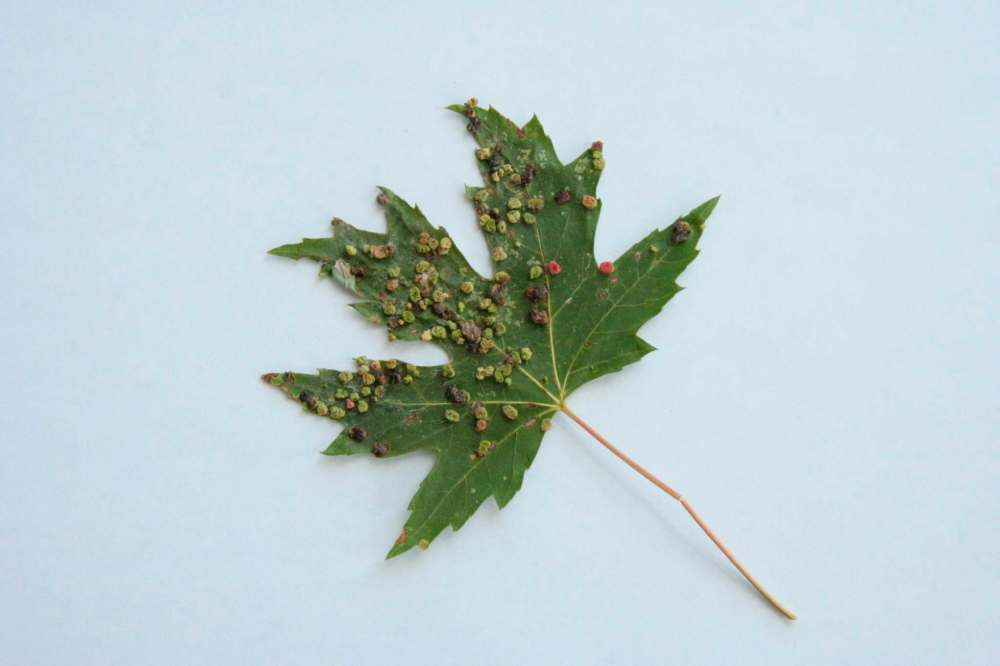
Maple bladder mite
Maple bladder mite

There are mites that infect poplar trees which produce a woody gall consisting of a colony of mites along a short piece of twig. Woody galls tend to be very rare on trees in my experience. Giant galls located commonly on the trunks of trees are usually referred to as burls. They are commonly associated with bacterial infection and insect infestation.

As mites are not insects, insecticides are not effective in their control. Once the damage is observed, there is very little that can be done to undo the damage. I have not been successful in finding miticides to control these pests. Miticides are generally very specific, but mostly they are not generally available in our area.

If you have suspected feeding damage this year, the following procedures should be followed to prevent them from returning the following year. Remove all fallen leaves and twigs from your yard whether they are on grass or soil. These fallen plant materials will likely have mite eggs on them. It is unlikely you will see these very tiny egg masses. This task can be very difficult especially if you have a large oak or silver maple tree, since almost every leaf can be infested.

Sometimes this removal may not be necessary. I have seen oak woodlands in one year in which nearly every tree leaf was infested with mites. In the following year, hardly any of the leaves had signs of infestation on them. I wish I had a good answer for that phenomenon.

The other means of control is to spray a horticultural dormant oil product over the entire tree or shrub in April to smother the over-winter eggs before they hatch in the spring. This is definitely the most recommended treatment to control mites.
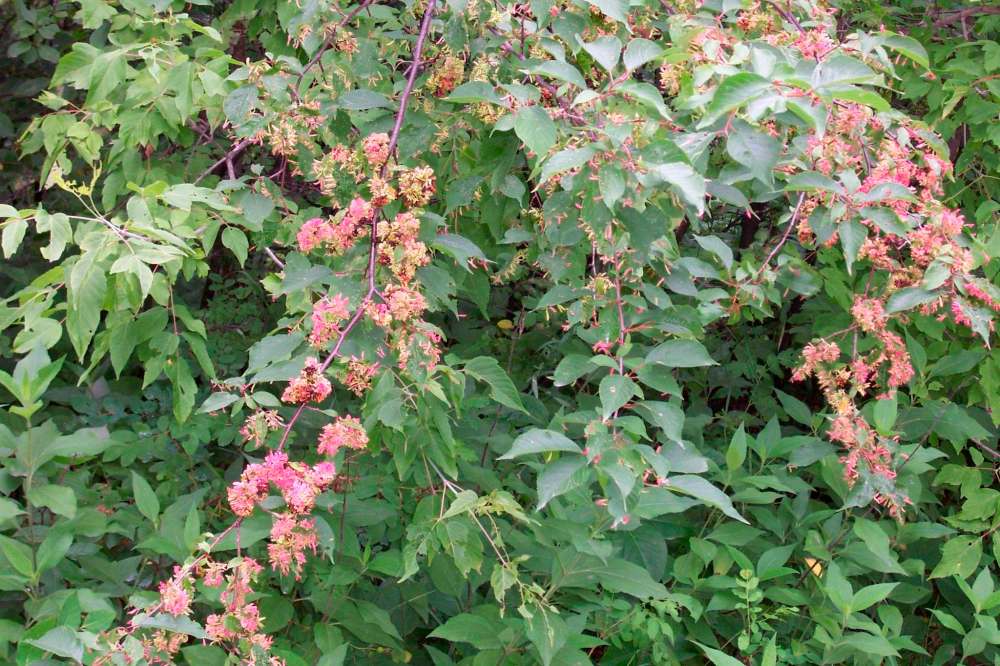
Plum bladder galls and Hawthorn rust

viburnumtrees@shaw.ca

Michael Allen M.Sc.F., RPF (ret’d) is a consulting urban forester, tree diagnostician and certified arbourist. He owns Viburnum Tree Experts. He can be reached at 204-831-6503 or 204-223-7709. His website is www.treeexperts.mb.ca
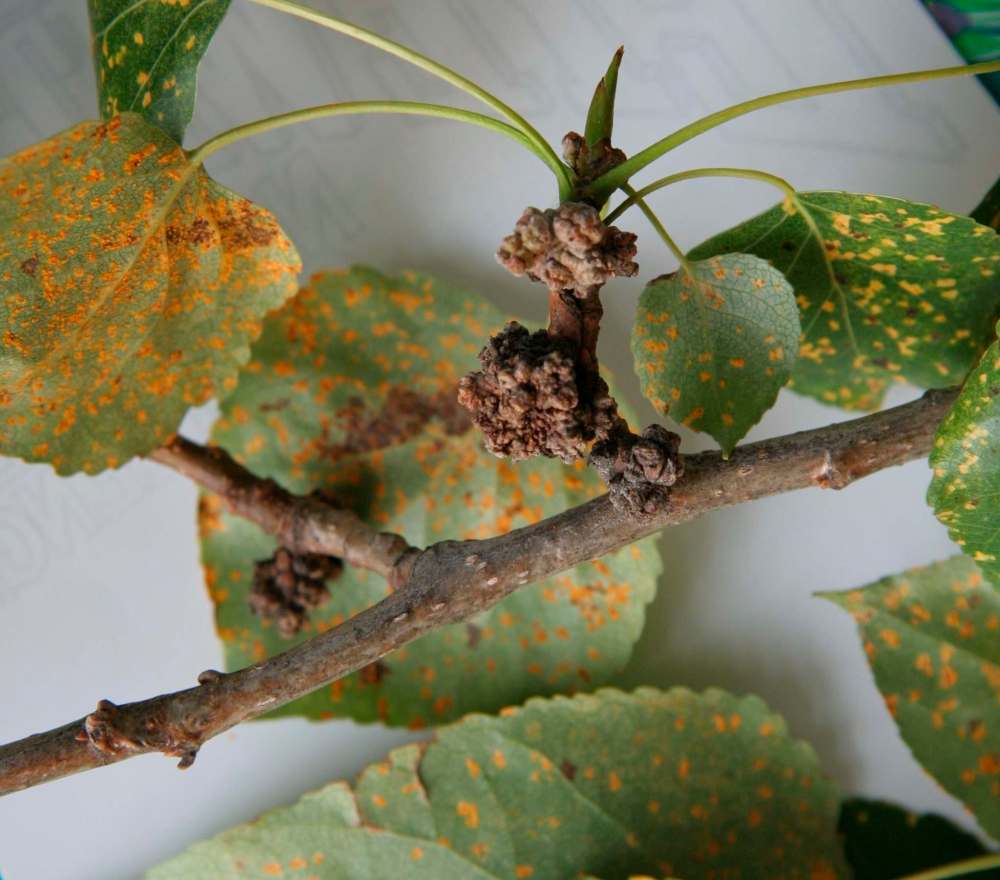
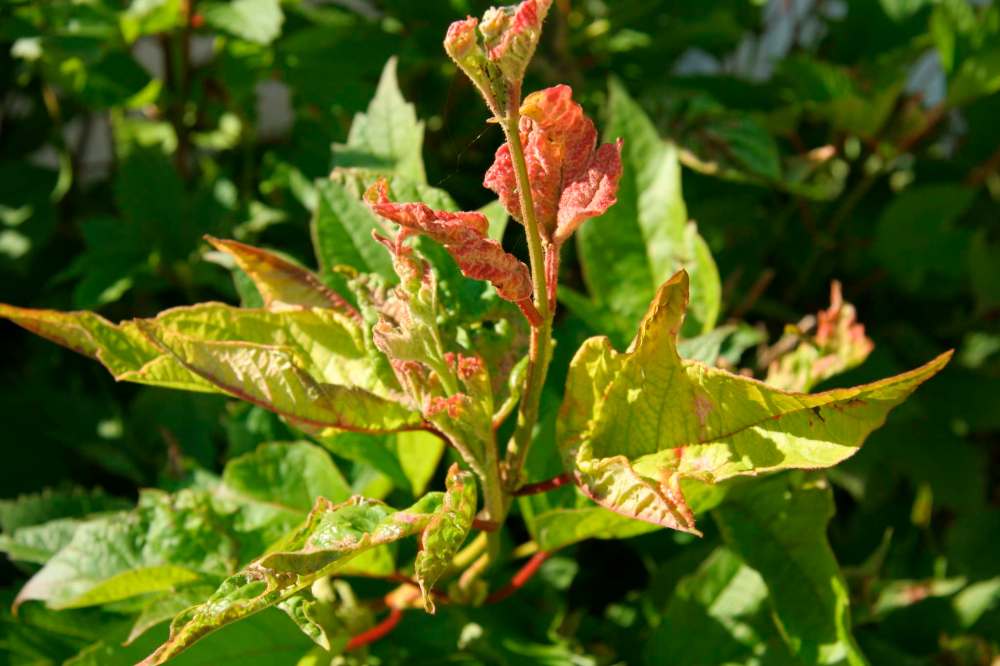
Twig gall mite and leaf rust
European cranberry gall mite
Hackberry leaf mite colony
Oak Rosette mite
Oak Rosette mite
Report Error Submit a Tip

More Stories

Goldeyes catcher Pelletier moonlights as team barber

Taylor Allen 6 minute read Preview

Goldeyes catcher Pelletier moonlights as team barber

Taylor Allen 6 minute read Updated: Yesterday at 10:06 PM CDT

Tucked inside the Winnipeg Goldeyes’ clubhouse is a no-frills washroom with a urinal, a pair of toilets and a trio of sinks beneath matching mirrors.

But when rookie catcher Raphael Pelletier drags in a well-worn black leather salon chair with cracked upholstery and lays out his clippers, trimmers and shears, the space transforms into something else: a barbershop.

While far from luxurious, it’s the type of haircutting experience that could only exist inside the wacky world of independent baseball.

“He keeps everyone looking good on the field, honestly. We needed this,” said third-year Goldeyes pitcher Derrick Cherry, while getting a trim on Wednesday ahead of the team’s game against the Chicago Dogs.

Read
Updated: Yesterday at 10:06 PM CDT

U of M researchers studying ‘digital legacy planning’ before death

Maggie Macintosh 6 minute read Preview

U of M researchers studying ‘digital legacy planning’ before death

Maggie Macintosh 6 minute read Yesterday at 6:10 PM CDT

A team of researchers at the University of Manitoba wants adults to take the cloud they leave behind into special consideration when they envision heaven and their afterlife.

Read
Yesterday at 6:10 PM CDT

Canad Inns puts Portage Avenue hotel, MET, office building ‘connected campus’ up for sale

Gabrielle Piché 4 minute read Preview

Canad Inns puts Portage Avenue hotel, MET, office building ‘connected campus’ up for sale

Gabrielle Piché 4 minute read Yesterday at 5:57 PM CDT

Downtown entrepreneurs are watching with wary eyes as a prominent hotel and event centre hits the market.

Read
Yesterday at 5:57 PM CDT

Government overrides school board in ‘mature minor’ controversy

Maggie Macintosh 5 minute read Preview

Government overrides school board in ‘mature minor’ controversy

Maggie Macintosh 5 minute read Tuesday, Aug. 4, 2026

The Manitoba government has vetoed the Steinbach school board’s plan to override common law by making parents the ultimate authority on all student health issues.

Since Hanover School Division trustees approved a motion to disregard the category of “mature minors” just over two months ago, there has been widespread debate.

Trustees unanimously voted to stop honouring the mature minor doctrine — in which teenagers 16 and older are automatically assumed to have the maturity to make medical decisions for themselves — at the end of the 2025-26 school year.

“We would just encourage the Hanover School Division to do what they do best, which is providing high-level, quality education for the kids in their community,” Education Minister Tracy Schmidt said in an interview on Tuesday about her July 22 directive to the board to repeal its motion.

Read
Tuesday, Aug. 4, 2026

Storm left $840M of insured losses across Manitoba, Saskatchewan

Gabrielle Piché 3 minute read Preview

Storm left $840M of insured losses across Manitoba, Saskatchewan

Gabrielle Piché 3 minute read Yesterday at 6:41 PM CDT

Severe weather spanning two days in June — hitting both Manitoba and Saskatchewan — has led to at least $840 million in insured losses.

The June 9 and 10 weather is the latest in an increasing number of “catastrophic” events with major insurance payouts, said Rob de Pruis, the Insurance Bureau of Canada’s national director of consumer and industry relations.

The Insurance Bureau didn’t share a breakdown of insured losses by province. Most of the claims cover hail and flood damage, including sewer backups, de Pruis said.

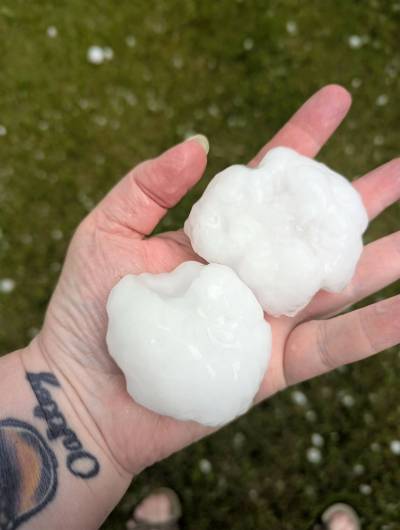
At the time of the storm, Manitoba saw grapefruit-sized hail, torrential downpours and at least one tornado.

Read
Yesterday at 6:41 PM CDT

Once hailed as sign of strong bond, U.S. consulate in Winnipeg to close

Tyler Searle 6 minute read Preview

Once hailed as sign of strong bond, U.S. consulate in Winnipeg to close

Tyler Searle 6 minute read Tuesday, Aug. 4, 2026

There was much fanfare when the U.S. government re-established a permanent presence in Winnipeg in April 2001 as it unveiled its consulate and hailed it as a major achievement between two friendly nations.

“It is testimony not only to the importance the U.S. government attaches to our bilateral relationship with Canada but also to the increasing prominence of Winnipeg, Manitoba and the western region of the country in bilateral and multilateral affairs,” said U.S. Ambassador to Canada Gordon Giffin at a ceremony with then-premier Gary Doer.

Fast-forward to this week when it was learned the office at Portage and Main is set to close, meaning the U.S. will lose its primary advocate for American business and trade interests in Manitoba.

Dwight MacAulay was chief of protocol for the Manitoba government in 2001, calling it a time of celebration and strength between the countries.

Read
Tuesday, Aug. 4, 2026