

Building a better city
Advertisement
Read this article for free:
or
Already have an account? Log in here »
To continue reading, please subscribe:

Digital Subscription
One year of digital access for only $205*
- Enjoy unlimited reading on winnipegfreepress.com
- Read the E-Edition, our digital replica newspaper
- Access News Break, our award-winning app
- Play interactive puzzles
*First annual payment billed as $205.00 + GST for one year. This annual subscription will automatically renew at $233.00 + GST every 52 weeks (10% off the regular annual price of $259.35). Offer available to new and qualified returning subscribers only. Cancel any time.
To continue reading, please subscribe:
Add Free Press access to your Brandon Sun subscription for only an additional
$1 for the first 4 weeks*
- Enjoy unlimited reading on winnipegfreepress.com
- Read the E-Edition, our digital replica newspaper
- Access News Break, our award-winning app
- Play interactive puzzles
*Your next Brandon Sun subscription payment will increase by $1.00 and you will be charged $17.95 plus GST for four weeks. After four weeks, your payment will increase to $24.95 plus GST every four weeks.
Read unlimited articles for free today:
or
Already have an account? Log in here »
Hey there, time traveller!
This article was published 29/08/2016 (3682 days ago), so information in it may no longer be current.
The debate over proposed fees being applied to new housing and commercial buildings in Winnipeg comes down to this: what kind of city do we want to end up with? The city is contemplating bringing in a fee of $20,000 to $30,000 for all new homes built, regardless if they’re in new subdivisions or if they’re built as infill.
A simple fee on all new developments could, as some industry critics have observed, drive development away from Winnipeg. Nearby communities could be the beneficiaries of builders choosing to construct homes within driving distance of the city, for instance.
If the motivation behind the fee on new builds is to curb urban sprawl — which is a valid concern given that once built, infrastructure such as roads, water and sewer lines need to be maintained, presumably for many decades — then applying it to new construction that creates infill housing would hinder that. (Driving more residential development, in the form of single-family dwellings to bedroom communities has the same ultimate effect.)
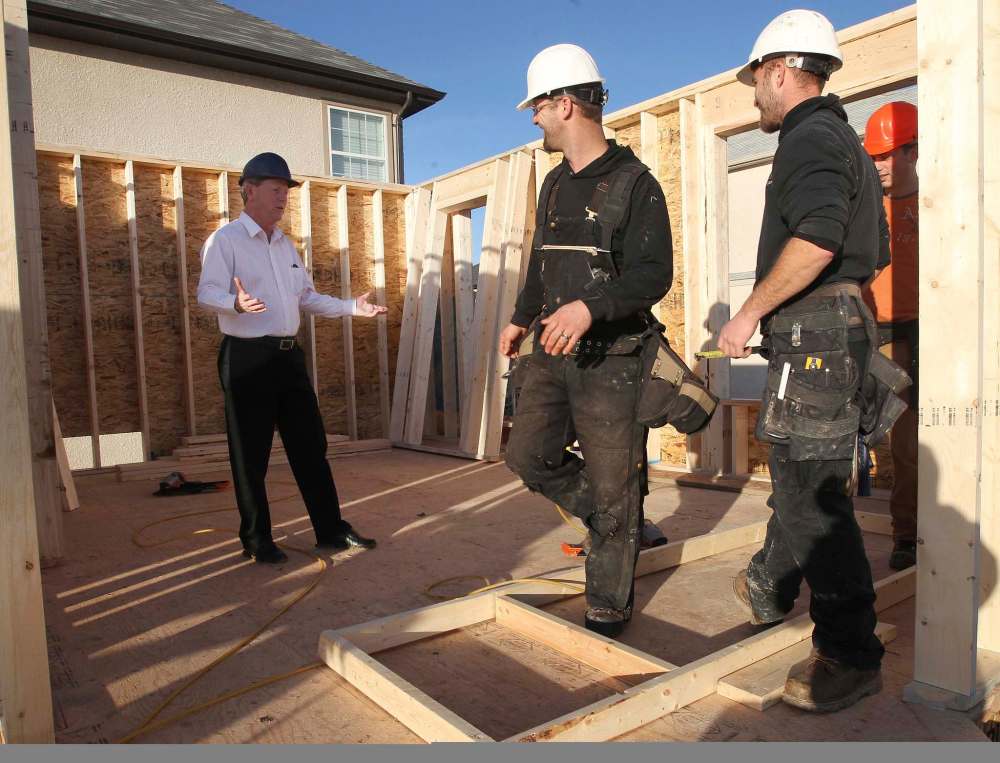
There is, however, a case to be made for doing that. Infill housing isn’t necessarily replacing an old house with a new house, taking advantage of the already existing amenities and having little increased effect on the infrastructure. If densification of older neighbourhoods is the goal, a condo building with 40 units that takes the place of two single-family dwellings puts more wear and tear on those roads, sewers and water lines.
That approach could, potentially, result in greater demand for transit services, which could ultimately reduce the number of cars on the streets in the neighbourhood, but in any case, more people equals more use of roads, sidewalks and public spaces.
It’s tough not to imagine a new fee applied to infill housing initiatives wouldn’t stop those initiatives in their tracks. Again, it’s a question of philosophy. What kind of city do we want to build?

Is it one with more walkable neighbourhoods, dense enough to support enrolment in schools and accommodated with health care, access to bus service and local businesses?
Mayor Brian Bowman has expressed concern over covering the costs of infrastructure over time, and the Winnipeg of 2040 would need to not only have its communities connected to vital services, but also to provide for their upkeep.
If Winnipeg’s population is expected to pass 900,000 by 2040, is it a city where we expect everyone to have to drive everywhere? (Or, in fact, drive for quite some time just to get out of the city?) A city of nearly one-million people in low-density neighbourhoods is going to take up a lot of space.
Another consideration is how diverse a given neighbourhood is. Take average age of the residents. A neighbourhood that has predominantly young families today has a great need for schools, daycares, playgrounds and community centres. In 20 years, that neighbourhood’s population could have much different needs — and those schools could stand largely empty, the playgrounds used less, and so on. Areas with higher population density can support a better variety of infrastructure, and in turn, a diverse infrastructure can accommodate a changing populace.
The assumption that Winnipeg will grow is embedded in the rationale for the proposed development fees. The kind of growth the fees are intended to encourage — or discourage — should be made clear to Winnipeggers so we can debate the question: what kind of city do we want to live in?
Related Articles
City's thirst for growth fees ignores their power as a planning tool
Advertisement Advertise With Us
Advertisement Advertise With Us
History
Updated on Monday, August 29, 2016 6:54 AM CDT: Adds photo