

No surprise ‘Indian hospital’ switched babies at birth: expert
Advertisement
Read this article for free:
or
Already have an account? Log in here »
To continue reading, please subscribe:

Digital Subscription
One year of digital access for only $205*
- Enjoy unlimited reading on winnipegfreepress.com
- Read the E-Edition, our digital replica newspaper
- Access News Break, our award-winning app
- Play interactive puzzles
*First annual payment billed as $205.00 + GST for one year. This annual subscription will automatically renew at $233.00 + GST every 52 weeks (10% off the regular annual price of $259.35). Offer available to new and qualified returning subscribers only. Cancel any time.
To continue reading, please subscribe:
Add Free Press access to your Brandon Sun subscription for only an additional
$1 for the first 4 weeks*
- Enjoy unlimited reading on winnipegfreepress.com
- Read the E-Edition, our digital replica newspaper
- Access News Break, our award-winning app
- Play interactive puzzles
*Your next Brandon Sun subscription payment will increase by $1.00 and you will be charged $17.95 plus GST for four weeks. After four weeks, your payment will increase to $24.95 plus GST every four weeks.
Read unlimited articles for free today:
or
Already have an account? Log in here »
Hey there, time traveller!
This article was published 30/08/2016 (3629 days ago), so information in it may no longer be current.
The revelation that four men were switched at birth in a Norway House hospital in 1975 has startled many people, but not the author of a book on “Indian hospitals.”
Dr. Maureen Lux believes there could be more such cases.
Lux, a professor at Brock University and author of Separate Beds: A History of Indian Hospitals in Canada, 1920s and 1980s, said the hospitals were established to isolate indigenous people from community hospitals used by non-aboriginals. She said the federally run Indian hospitals were often overcrowded and had unqualified staff
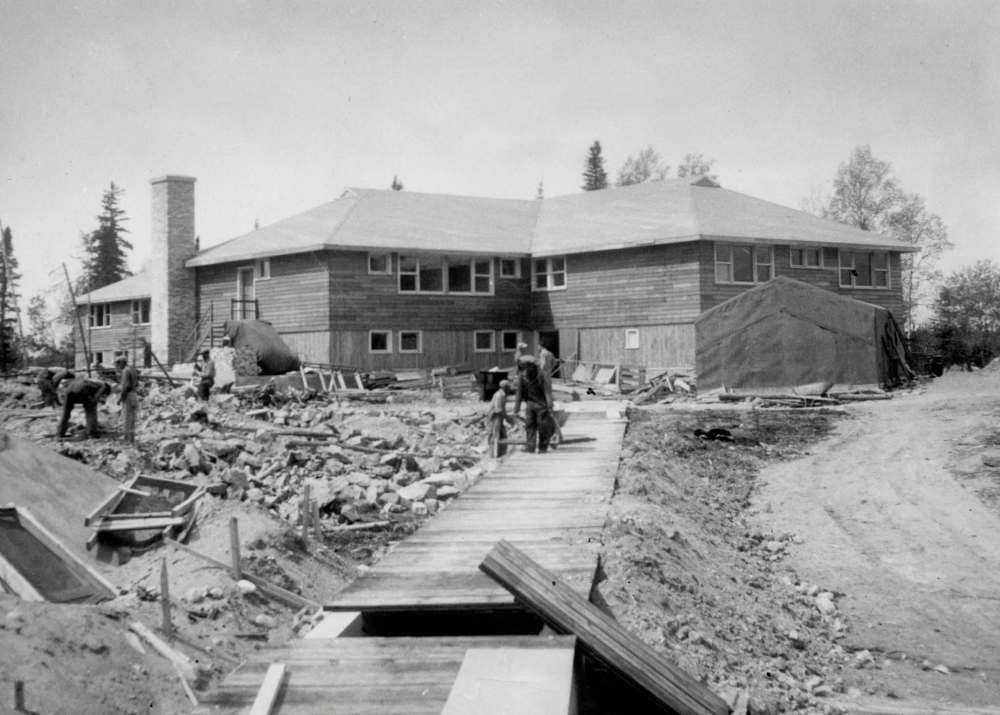
“When you think of babies getting switched at birth, it could be something as simple as not bothering with wristbands, not keeping proper records, and with the staff in turmoil in hospitals it’s surprising there are not more cases of it, frankly,” she said.
David Tait Jr. and Leon Swanson -—who grew up as best friends in Norway House Cree Nation — recently discovered they were switched at birth. Both men were born at the Norway House Indian hospital days apart in 1975. Their’s is the second switched-at-birth incident at the northern hospital to come to light.
Lux said Indian hospitals were run by a federal agency called Indian Health Services and most were located in redundant military facilities. Following the Second World War, the federal government built thousands of hospitals across the country, resulting in a high demand for doctors and nurses.
“Wages were going up, and Indian Health Services wages did not compete,” Lux said. “It was very hard to find qualified people to work at these Indian hospitals, which were often in remote locations.”
Before medicare, Lux said doctors would work in private practice. If they couldn’t maintain a practice, they could find work at Indian hospitals. After the war, Indian Health Services tended to hire doctors who were European refugees. Lux said they didn’t have the language skills or qualifications to practise in Canada.
“Before 1968, you would’ve been directed to an Indian hospital unless you wanted to pay for your care in a community hospital,” she said. “But there were very often basement wards (and) Indian wings in community hospitals, again, to keep indigenous people isolated from community hospitals.”
Poverty on reserves, contaminated drinking water and overcrowding created more disease, which led to overcrowding in hospitals, Lux said.
Rather than investing in infrastructure to prevent disease, she said a “conscious government effort” was made to treat diseases in hospital.
“Canada was embarking on something that they called national health,” she said. “Indigenous people had come to be seen as a threat to national health, and so they needed to be isolated and marginalized in these Indian hospitals.”
She said as late as 1973, Indian hospitals, including at Norway House, were contracting out medical service. Doctors at Indian hospitals were expected to live in indigenous communities — which their families often disliked — said Lux.

It wasn’t until the late 1960s — after medicare arrived — the federal government started to shut down Indian hospitals. “Closing Indian hospitals was part of a larger effort to get out from under any kind of commitment to the health care for indigenous people,” Lux said.
Lux said hospital closures were met with resistance from indigenous communities, who weren’t consulted about building them in the first place.
“These hospitals were seen as a kind of belated, but final acknowledgement by the federal government that they were indeed responsible for the healthcare of indigenous people,” she said.
— With files from Ashley Prest
alexandra.depape@freepress.mb.ca
Related Articles
Feds make no commitment to meet with men switched at birth
Advertisement Advertise With Us
Advertisement Advertise With Us