

It’s time to get serious about police pension reform
Advertisement
Read this article for free:
or
Already have an account? Log in here »
To continue reading, please subscribe:

Digital Subscription
One year of digital access for only $205*
- Enjoy unlimited reading on winnipegfreepress.com
- Read the E-Edition, our digital replica newspaper
- Access News Break, our award-winning app
- Play interactive puzzles
*First annual payment billed as $205.00 + GST for one year. This annual subscription will automatically renew at $233.00 + GST every 52 weeks (10% off the regular annual price of $259.35). Offer available to new and qualified returning subscribers only. Cancel any time.
To continue reading, please subscribe:
Add Free Press access to your Brandon Sun subscription for only an additional
$1 for the first 4 weeks*
- Enjoy unlimited reading on winnipegfreepress.com
- Read the E-Edition, our digital replica newspaper
- Access News Break, our award-winning app
- Play interactive puzzles
*Your next Brandon Sun subscription payment will increase by $1.00 and you will be charged $17.95 plus GST for four weeks. After four weeks, your payment will increase to $24.95 plus GST every four weeks.
Read unlimited articles for free today:
or
Already have an account? Log in here »
Hey there, time traveller!
This article was published 09/09/2016 (3653 days ago), so information in it may no longer be current.
The Winnipeg Police Service quarterly update goes before the police board today with more bad news: the figures show a $6.5-million deficit, with a drop in photo-radar ticket revenue largely blamed.
We’ve been down this road before. Concerns about how the police service spends tax dollars and deficits have been ongoing, particularly given Winnipeg has one of the highest number of police officers for its size, replete with vanity projects such as a helicopter and an armoured car. Salaries, overtime and pensions are considered the key culprits in terms of cost overruns. One concern is the police pension budget is facing a shortfall and extra money must be found to cover those future costs.
This is not new. In 2013, the City of Winnipeg attempted to negotiate with the police union to obtain a solvency exemption for the pension plan, in the unlikely scenario the city goes bankrupt. The union refused, and the city had to obtain a letter of credit (which expires this month and the city has no choice but to renew it again). In January, an administrative report called for another $800,000 for the police budget to cover the city’s contribution rate that ensures the pension plan can cover its benefits. Add to that an additional $95,000 for the city’s annual cost of a letter of credit paid out in December.
The concerns about pension insolvency are not limited to the Winnipeg Police Service. Federally, the Liberal government has been told there is a substantive shortfall in public service pensions that must be made up to the tune of $426 million during the next 15 years. In the private sector, Air Canada was also facing a pension shortfall of more than $4 billion in 2013 but rebounded to a surplus just two years later. (In part, it came from employee concessions and changes to the pension plan for all future hires.)
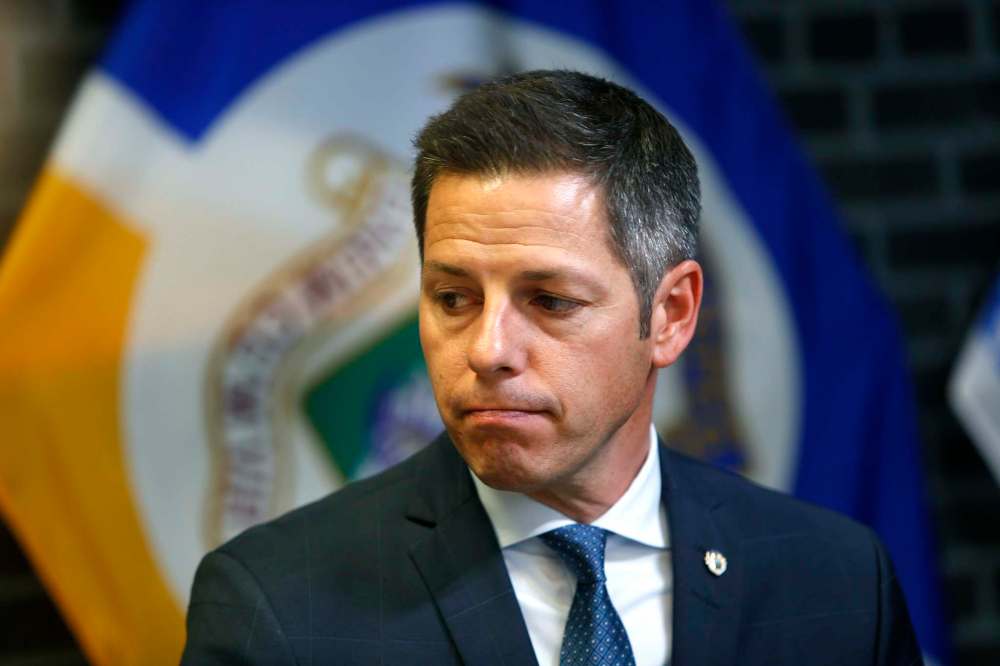
Revamping pensions was one of the main planks of Brian Bowman’s mayoral election bid in 2014. After his win, he told the Free Press editorial board reforming the civic pension plan was something he planned to pursue. “What I said during the election campaign was that I’m not convinced the current model is sustainable for taxpayers,” Mr. Bowman said. “What I’d like to do is meet with stakeholders, including our unions, collaboratively, to see how we can make sure the programs are sustainable.”
It is two years later, Mr. Bowman, and we’re still waiting.
In December, Coun. Russ Wyatt (Transcona) suggested it may be the time to explore a two-tiered pension system adopted by many private and public-sector organizations (including Air Canada, Winnipeg Free Press and the University of Winnipeg). It would mean future employees would not receive a defined pension upon retirement, and instead, contributions by both employer and employee would be made into managed retirement funds.

When this was first brought forward by Mr. Wyatt, the mayor, the city’s finance committee chairman (Marty Morantz) and the police association, all seemed to at least be open to the idea.
It’s time to show some leadership and take action.

Advertisement Advertise With Us
Advertisement Advertise With Us