

The last spite
If Pallister is all aboard the fiscal train, then derailing the NDP-led rail-relocation study was about politics, not money

Advertisement
Read this article for free:
or
Already have an account? Log in here »
To continue reading, please subscribe:

Digital Subscription
One year of digital access for only $205*
- Enjoy unlimited reading on winnipegfreepress.com
- Read the E-Edition, our digital replica newspaper
- Access News Break, our award-winning app
- Play interactive puzzles
*First annual payment billed as $205.00 + GST for one year. This annual subscription will automatically renew at $233.00 + GST every 52 weeks (10% off the regular annual price of $259.35). Offer available to new and qualified returning subscribers only. Cancel any time.
To continue reading, please subscribe:
Add Free Press access to your Brandon Sun subscription for only an additional
$1 for the first 4 weeks*
- Enjoy unlimited reading on winnipegfreepress.com
- Read the E-Edition, our digital replica newspaper
- Access News Break, our award-winning app
- Play interactive puzzles
*Your next Brandon Sun subscription payment will increase by $1.00 and you will be charged $17.95 plus GST for four weeks. After four weeks, your payment will increase to $24.95 plus GST every four weeks.
Read unlimited articles for free today:
or
Already have an account? Log in here »
Hey there, time traveller!
This article was published 10/09/2016 (3661 days ago), so information in it may no longer be current.
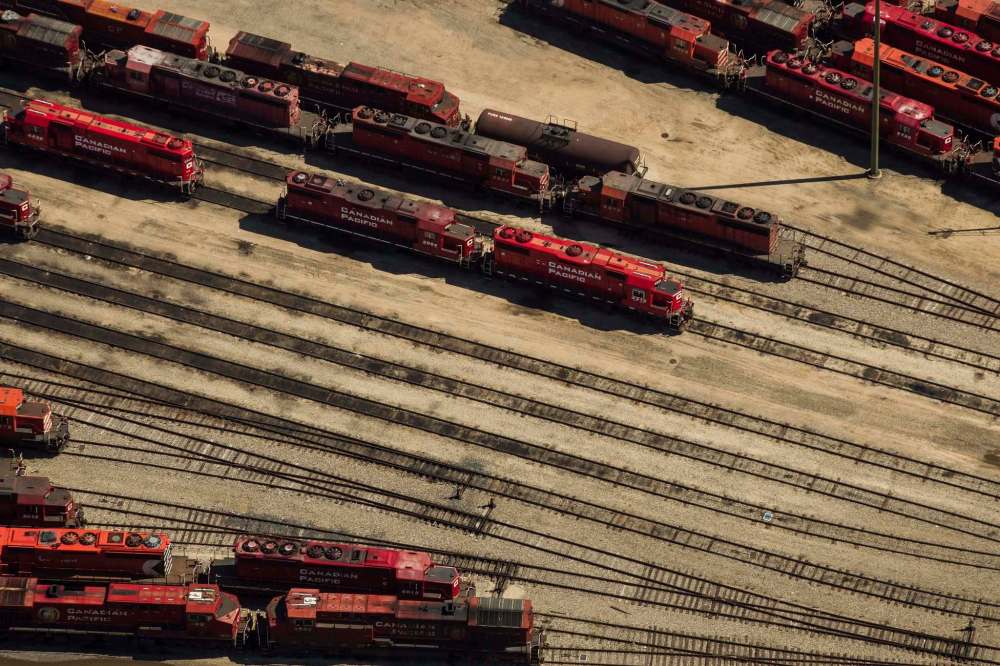
Premier Brian Pallister wants Winnipeggers to believe his decision to abandon a $400,000-study on relocating the CP Winnipeg Yards from the core of the city is about fiscal prudence.
He certainly doesn’t want you to know that it was spite that ultimately did in the task force. But when you look closely at what Pallister is doing, and why he is doing it, it is pretty easy to see that a debilitating partisan grudge is at the heart of this decision.
The province did not say a whole lot about its decision but what it did say was illuminating. “After 17 years in office, the previous NDP government announced a task for on rail relocation in the days before the pre-election blackout period,” Municipal and Indigenous Affairs Minister Eileen Clarke said in an email statement to the Free Press. “Manitoba’s new government was elected on a mandate to fix the province’s finances, and therefore we will not be proceeding with the task force.”
Clarke’s statement reveals two important and worrisome truths about the Tory government.
First, the Pallister government is working diligently to narrow its mandate to “fixing the province’s finances.”
During last spring’s election, Pallister was careful to balance his campaign message to include slowing the rate of government spending increases, protecting front-line civil servants and core services and balancing the budget at some point in the future. To now suggest now it’s all about balancing the budget — and that axing a $400,000 task force makes any meaningful contribution to reaching that goal — is a betrayal of that balanced approach he took during the election.
Which brings us to the second big reveal: this is an overt act to kill an initiative that reeks of NDP politics.
When former premier Greg Selinger announced in the November 2015 throne speech he was launching a rail line relocation task force, it was a clear, unadulterated act of political desperation. After two years of infighting and scandal, he was frantic to change the channel in the heading into the spring 2016 election. The strategy did not work.
However, while it is fair to portray Selinger’s strategy as inherently desperate, it is just as true and fair to say it is a worthy idea. Furthermore, now is most definitely the time to pursue the relocation of the rail yards.
Pallister and his cabinet must be aware the City of Winnipeg has spent millions of dollars to design horrifically expensive bridges and tunnels to go over and under rail lines throughout the city. Up first is the $155-million rail underpass at Waverley Street, for which the city is attempting to assemble land.
But that is hardly all of the current and future infrastructure liabilities that are created if the current network of rail lines are left untouched. There is the replacement of the Arlington Bridge, which is scheduled to be demolished in 2020. This year, the city will spend $2 million on further design work for a new bridge, which could cost anywhere from $210 million to $480 million when it is all said and done.
On top of those two projects, there is a possible $250-million underpass at Marion Street and, based on population growth estimates, an additional tunnel under the central yards. The combined costs to go over, under and around rail lines could exceed $1 billion. Ironically, that is nearly identical to the best, but still rough, estimates of the cost of relocating the yards.
If you want to view this issue through a purely fiscal lens, consider the province is spending $46 million to cover its share of the Waverley underpass. Using that project as a guide, the province will likely be on the hook for hundreds of millions of dollars of contributions to future infrastructure projects that are only necessary because of a failure to relocate the rail lines.
All that makes the notion of relocating the rail lines, as costly as it may be, the more fiscally prudent option.

Relocating the yards not only eliminates the need for those grade separations, but opens up nearly 500 acres of land for redevelopment, which would generate many millions of dollars on an annual basis in municipal and provincial taxes. In other words, relocation and redevelopment is a concept with a long-term payoff for government; costly bridges and tunnels ultimately function as liabilities for future generations of taxpayers.
To be fair, Clarke did not say the issue was dead. In fact, an official from her office claimed the province isn’t “closing the door to ideas,” and that there was a need for more “strategic thinking” around infrastructure spending. The irony, of course, is the relocation task force would have made a net positive contribution to strategic thinking around infrastructure. Eliminating it, and offering no alternative process, keeps strategic thinking out of reach of this government.
There was no reason to throw this baby out with the murky NDP bath water. In fact, if fixing finances is now the prime directive of the Tory government, there is a strong argument a little bit of study now is a much better fiscal decision than doing nothing. That does nothing, of course, to solve some of the political problems.
Pallister must at some point realize if he is able to find a way to relocate the lines, no one will remember the guy who tried to launch a death-bed task force. They will only remember the guy who got it done.
dan.lett@freepress.mb.ca
Dan Lett is a columnist for the Free Press, providing opinion and commentary on politics in Winnipeg and beyond. Born and raised in Toronto, Dan joined the Free Press in 1986. Read more about Dan.
Dan’s columns are built on facts and reactions, but offer his personal views through arguments and analysis. The Free Press’ editing team reviews Dan’s columns before they are posted online or published in print — part of the our tradition, since 1872, of producing reliable independent journalism. Read more about Free Press’s history and mandate, and learn how our newsroom operates.
Our newsroom depends on a growing audience of readers to power our journalism. If you are not a paid reader, please consider becoming a subscriber.
Our newsroom depends on its audience of readers to power our journalism. Thank you for your support.
Dan Lett is a columnist for the Free Press, providing opinion and commentary on politics in Winnipeg and beyond. Born and raised in Toronto, Dan joined the Free Press in 1986. Read more about Dan.
Dan’s columns are built on facts and reactions, but offer his personal views through arguments and analysis. The Free Press’ editing team reviews Dan’s columns before they are posted online or published in print — part of the our tradition, since 1872, of producing reliable independent journalism. Read more about Free Press’s history and mandate, and learn how our newsroom operates.
Our newsroom depends on a growing audience of readers to power our journalism. If you are not a paid reader, please consider becoming a subscriber.
Our newsroom depends on its audience of readers to power our journalism. Thank you for your support.
Related Articles
City unveils Waverley underpass project plans
Advertisement Advertise With Us
Advertisement Advertise With Us
History
Updated on Saturday, September 10, 2016 7:58 AM CDT: Photo added.