

Old-time farming evokes nostalgia, but let’s leave it at that

Advertisement
Read this article for free:
or
Already have an account? Log in here »
To continue reading, please subscribe:
Monthly Digital Subscription
$1 per week for 24 weeks*
- Enjoy unlimited reading on winnipegfreepress.com
- Read the E-Edition, our digital replica newspaper
- Access News Break, our award-winning app
- Play interactive puzzles
*Billed as $4.00 plus GST every four weeks. After 24 weeks, price increases to the regular rate of $19.95 plus GST every four weeks. Offer available to new and qualified returning subscribers only. Cancel any time.
Monthly Digital Subscription
$4.99/week*
- Enjoy unlimited reading on winnipegfreepress.com
- Read the E-Edition, our digital replica newspaper
- Access News Break, our award-winning app
- Play interactive puzzles
*Billed as $19.95 plus GST every four weeks. Cancel any time.
To continue reading, please subscribe:
Add Free Press access to your Brandon Sun subscription for only an additional
$1 for the first 4 weeks*
*Your next subscription payment will increase by $1.00 and you will be charged $16.99 plus GST for four weeks. After four weeks, your payment will increase to $23.99 plus GST every four weeks.
Read unlimited articles for free today:
or
Already have an account? Log in here »
Hey there, time traveller!
This article was published 10/09/2016 (3503 days ago), so information in it may no longer be current.
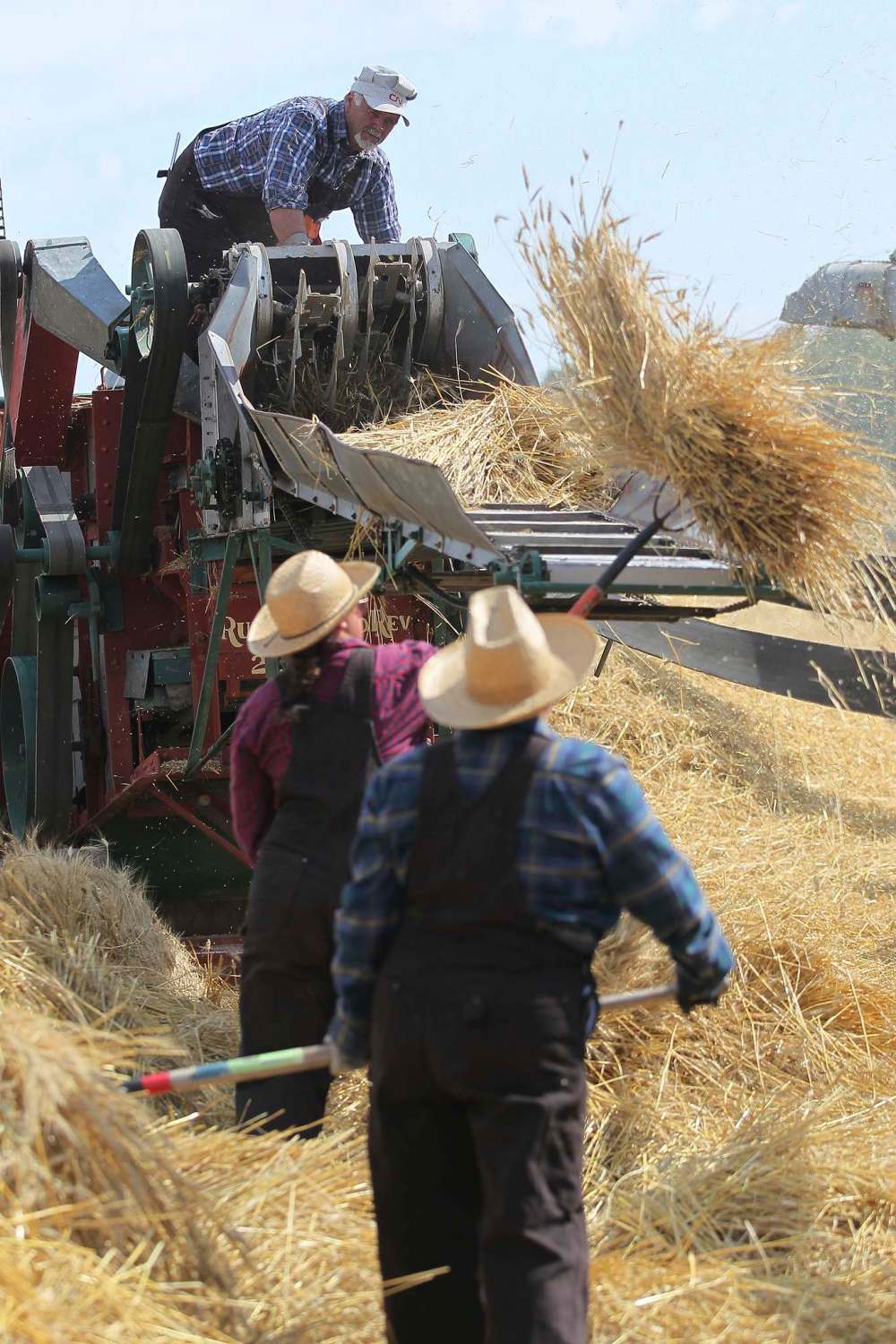
Old-time threshing demonstrations honouring the pioneer way of life are a popular feature of a Manitoba summer. They provide a chance for people who still remember those days to gather and reminisce, and for younger folks to catch a glimpse of what farm life used to be.
Few of those who lived through those days long for their return. For farm wives, feeding those crews moving from farm to farm with their ponderous machines was another full-time job stacked on top of their daily chores.
I don’t remember my grandparents pining for the “good old days” on the farm with summers that were a dawn-to-dusk regime of growing, picking, processing and storing enough of the farm’s bounty to carry the family through winter. Food-handling and preparation skills were mandatory; the cost of failure included hunger, sickness or even death for their loved ones.
It was a whole lot of work that in a good year produced enough to feed the family with some surplus to sell.
Although the food no doubt tasted pretty good when it was fresh from the garden and served piping hot after a long, hard day’s work in the fields, it’s hard to argue it was better or more nutritious than what is available today. You could say people appreciated their food more when variety was seasonal and they knew how much work went into producing it. Wastefulness was heresy.
Modern consumers who long for food and farming to return to “the way it used to be” are an enigma to today’s farming community. From the perspective of the modern farmer, his or her efforts feed hundreds instead of a few, and they are producing food that has never been cleaner, more wholesome and more affordable.
But that disconnect is real and deepening, as evidenced by some of the comments to a recent column about irradiating ground beef to kill off contaminants that could make people sick.
“I don’t want my food messed with any more than it already is. In the name of safety we are making things unsafe in the long run: cancer rates are up, allergies for kids are up and obesity rates are skyrocketing. What are we doing to the food? Let’s stop this nonsense and get back to wholesome foods of our grandmothers’ time,” said one writer.
“Enough with all the chemicals, processes etc. …People need to get back to more home cooking with natural products, not more chemical processes,” said another.
Perhaps what’s missing in today’s food chain is that sense of connection people once felt with their food and the people who produce it. Food processing has largely been turned over to industry, which employs technologies our ancestors never imagined. Generally, modern consumers never cross paths with the people who grow their food; their opinions are formed from what they see and hear what’s said by others.

This is not to suggest modern agriculture doesn’t have issues, or that it always gets it right. There are real and pressing environmental, ethical and economic concerns that must be addressed. However, resolving them requires compromises and tradeoffs that are tough to convey to generations far removed from the front lines of food production.
Nothing beats a good old-fashioned face-to-face discussion with food producers. While many of the 44 Manitoba farms opening their gates to visitors on Open Farm Day Sept. 18 cater to the public’s nostalgic view of agriculture, there is also a smattering of grain and livestock farms using the latest technology.
Find out where they are by going to: http://www.openfarmday.ca.
It doesn’t matter whether they are big or small, committed to organic or chemical pest control, producing grain or livestock, they all have a story to tell.
Laura Rance is editorial director for Farm Business Communications. She can be reached at laura@fbcpublishing.com or 204-792-4382
Laura Rance is editorial director at Farm Business Communications.
Our newsroom depends on a growing audience of readers to power our journalism. If you are not a paid reader, please consider becoming a subscriber.
Our newsroom depends on its audience of readers to power our journalism. Thank you for your support.
Laura Rance is editorial director at Farm Business Communications.
Our newsroom depends on a growing audience of readers to power our journalism. If you are not a paid reader, please consider becoming a subscriber.
Our newsroom depends on its audience of readers to power our journalism. Thank you for your support.
Advertisement Advertise With Us
Advertisement Advertise With Us