

Talking trees
Forester's foray into the 'wood wide web' leaves little to dislike
Advertisement
Read this article for free:
or
Already have an account? Log in here »
To continue reading, please subscribe:
Monthly Digital Subscription
$1 per week for 24 weeks*
- Enjoy unlimited reading on winnipegfreepress.com
- Read the E-Edition, our digital replica newspaper
- Access News Break, our award-winning app
- Play interactive puzzles
*Billed as $4.00 plus GST every four weeks. After 24 weeks, price increases to the regular rate of $19.95 plus GST every four weeks. Offer available to new and qualified returning subscribers only. Cancel any time.
Monthly Digital Subscription
$4.99/week*
- Enjoy unlimited reading on winnipegfreepress.com
- Read the E-Edition, our digital replica newspaper
- Access News Break, our award-winning app
- Play interactive puzzles
*Billed as $19.95 plus GST every four weeks. Cancel any time.
To continue reading, please subscribe:
Add Free Press access to your Brandon Sun subscription for only an additional
$1 for the first 4 weeks*
*Your next subscription payment will increase by $1.00 and you will be charged $16.99 plus GST for four weeks. After four weeks, your payment will increase to $23.99 plus GST every four weeks.
Read unlimited articles for free today:
or
Already have an account? Log in here »
Hey there, time traveller!
This article was published 01/10/2016 (3486 days ago), so information in it may no longer be current.
You’re on a walk in Assiniboine Forest. After years of noting “that whitish tree” and “that tree with acorns,” you’ve brought along a field guide — say, Lone Pine’s Plants of the Western Boreal Forest & Aspen Parkland — that helps you to identify the trees as trembling aspens and burr oaks, both of which are native to Manitoba.
When you get home, you’re still curious about the trees, so you pull Diana Beresford-Kroeger’s Arboretum Borealis: A Lifeline of the Planet from the shelf.
From one, you get descriptions of leaf shape and bark: data. From the other, you learn aspens manufacture salicylates — the source of Aspirin — and release aerosolized salicylates into the air via their rustling leaves, creating “an antiseptic for the atmosphere.”
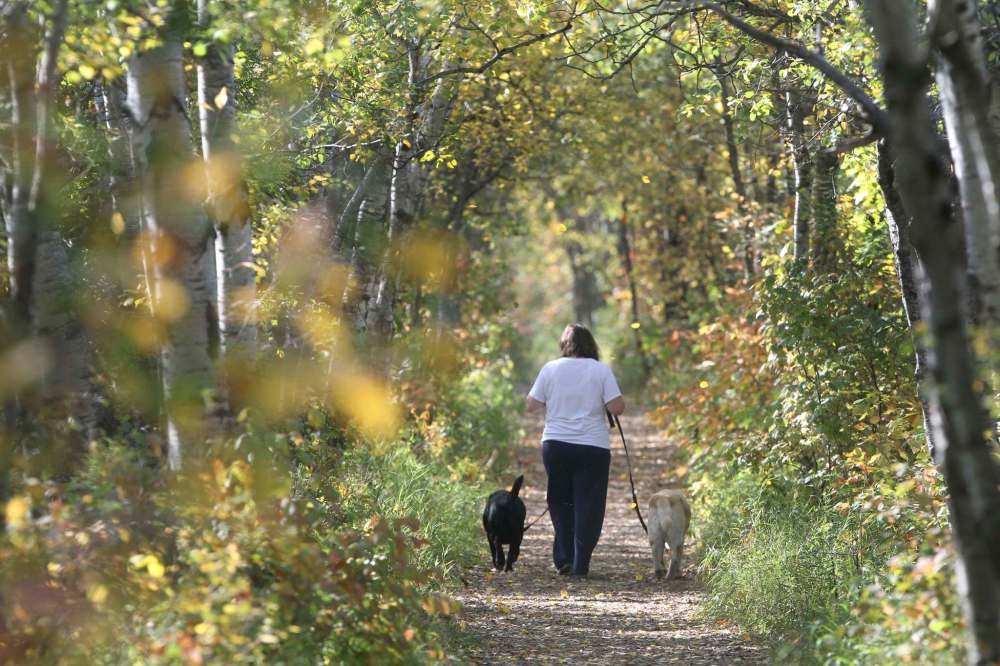
This is nature writing, a heady mixture of science and literature that not only situates the tree within the forest but also takes a moment to consider its beauty.
The most recent entry in this genre is German forester Peter Wohlleben, whose The Hidden Life of Trees: What They Feel, How They Communicate — Discoveries from a Secret World is an international bestseller. (Vancouver’s Greystone Books, in partnership with the David Suzuki Institute, has just released the English edition with a foreword by Tim Flannery, the Australian environmentalist and climate change activist.)
Before he wrote The Hidden Life of Trees, Wohlleben was a typical forester, assessing the suitability of individual trees and stands of trees for the lumber mill.
One day, he found the remains of an ancient stump, parts of which were still alive. He wondered how that was possible, without leaves or branches or even a trunk. The answer: neighbouring trees were feeding the stump sugars they’d photosynthesized via their connected roots.
Wohlleben was changed in that moment. He started living and working differently, studying the scientific literature on the “wood wide web” and closely observing the trees in his forest.
“When you know that trees experience pain and have memories and that tree parents live together with their children, then you can no longer just chop them down and disrupt their lives with large machines,” he writes.
While Wohlleben worked as a forester for 20 years and his discussions of forests and trees frequently bring in current research, his use of the expression “tree parents” shows he’s fairly comfortable with anthropomorphism, which is to say he frequently attributes human characteristics such as language and memory formation to non-human organisms (trees).
Do trees talk? Well, no, not as we’ve defined it.
What is clear from the research Wohlleben draws on — including from University of British Columbia’s pioneering professor of forest ecology Dr. Suzanne Simard, who herself could write an astonishing book on trees — is trees communicate, both above and below ground. Individual trees “talk” with trees of the same species and their competitors as well as with the creatures who attempt to burrow under their bark or eat their leaves.
Terminology and analogs aside, what The Hidden Life of Trees does especially well is explain how trees function — from seed to sapling to ancient tree, from root to bark to leaf.
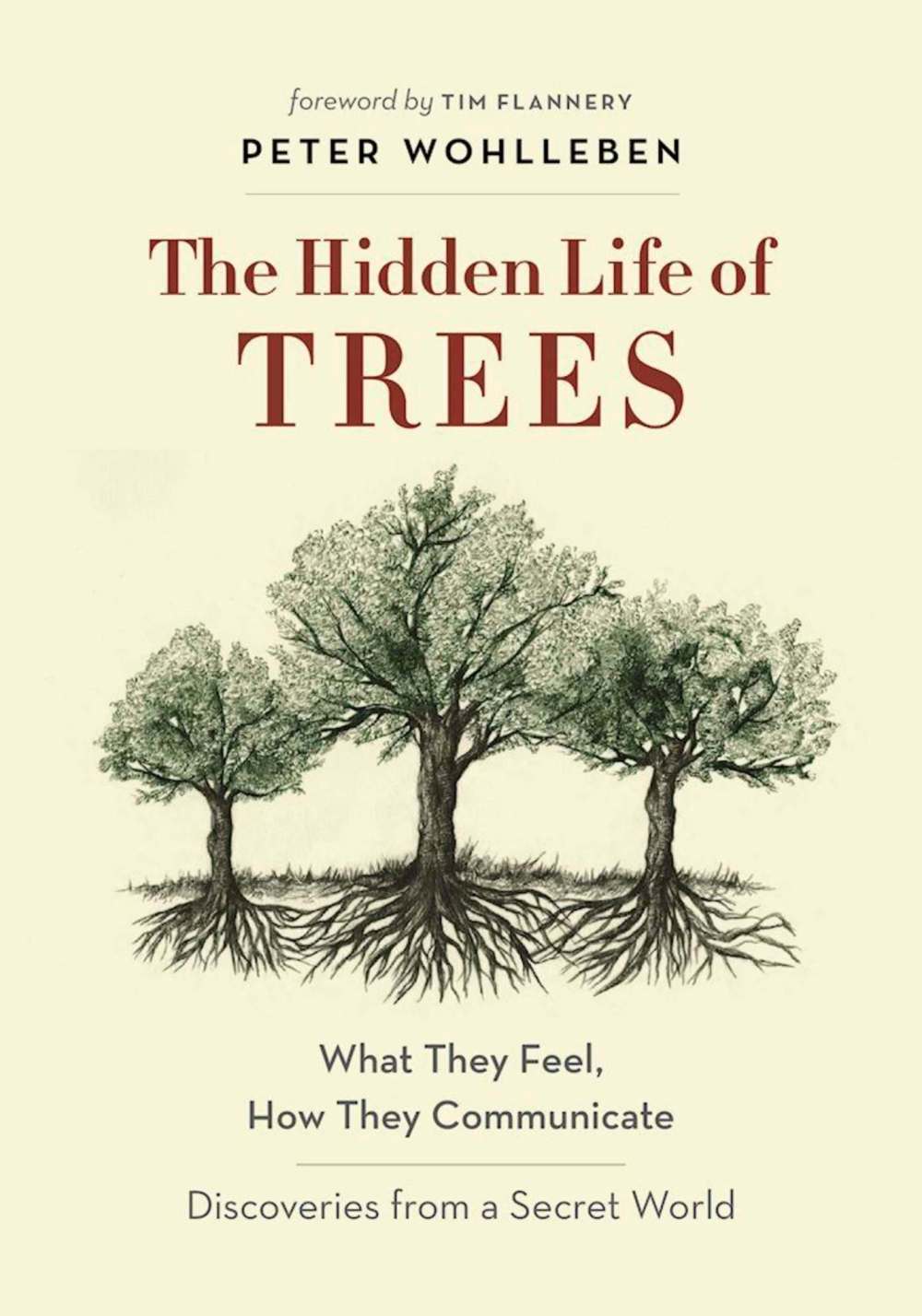
Wohlleben describes how different species co-exist in the forest and how they compete for space and sun and water. What’s more, he explains how trees adapt to catastrophic events such as ice storms and tornados, but also to climate change. And he sugar-coats all of these explanations with a great deal of enthusiasm and fondness for his subject.

That mixture of information and storytelling, science and sentiment, is exactly what we need here in tree-loving Winnipeg, with our doomed elm canopy and our expectation the emerald ash borer will show up any minute.
A final thought, in the interest of de-anthropomorphizing this review: if Wohlleben were a tree, he’d be a beech. The forests of central Europe where he lives are dominated by beeches, so he spends a great deal of time describing them.
But don’t let that put you off. As Wohlleben notes, “your trees may not function exactly as my trees do, and your forest might look a little different, but the underlying narrative is the same: forests matter at a more fundamental level than most of us realize.”
Ariel Gordon is completing a manuscript of essays about Winnipeg’s urban forest.