

Feds to forge ahead on Freedom Road
Pallister government reviewing pledge to cost-share Shoal Lake 40 project
Advertisement
Read this article for free:
or
Already have an account? Log in here »
To continue reading, please subscribe:

Digital Subscription
One year of digital access for only $205*
- Enjoy unlimited reading on winnipegfreepress.com
- Read the E-Edition, our digital replica newspaper
- Access News Break, our award-winning app
- Play interactive puzzles
*First annual payment billed as $205.00 + GST for one year. This annual subscription will automatically renew at $233.00 + GST every 52 weeks (10% off the regular annual price of $259.35). Offer available to new and qualified returning subscribers only. Cancel any time.
To continue reading, please subscribe:
Add Free Press access to your Brandon Sun subscription for only an additional
$1 for the first 4 weeks*
- Enjoy unlimited reading on winnipegfreepress.com
- Read the E-Edition, our digital replica newspaper
- Access News Break, our award-winning app
- Play interactive puzzles
*Your next Brandon Sun subscription payment will increase by $1.00 and you will be charged $17.95 plus GST for four weeks. After four weeks, your payment will increase to $24.95 plus GST every four weeks.
Read unlimited articles for free today:
or
Already have an account? Log in here »
Hey there, time traveller!
This article was published 20/10/2016 (3585 days ago), so information in it may no longer be current.
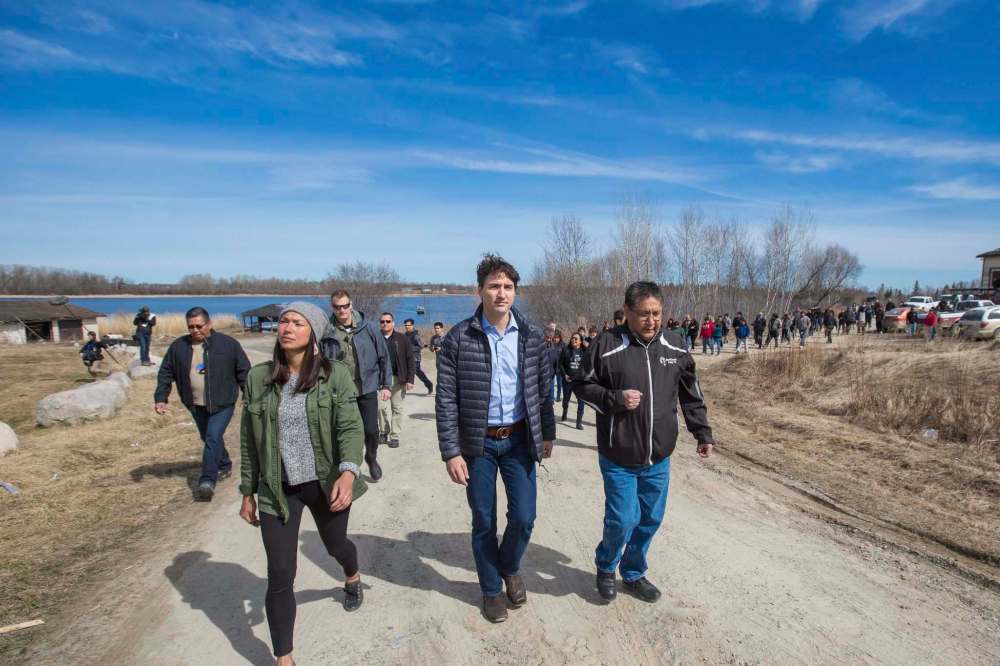
OTTAWA — Shoal Lake 40 First Nation and the federal government are working on a plan to get construction of the reserve’s all-weather road underway even though the Manitoba government is still reviewing its involvement in the project.
Chief Erwin Redsky was in Ottawa Wednesday to meet with officials from Indigenous and Northern Affairs Canada. He said federal officials were receptive to starting work on portions of the road on reserve land.
“Basically, their one-third is committed,” said Redsky, of the federal government.
A source from Indigenous Affairs Minister Carolyn Bennett’s office said Bennett is willing to work with the reserve to do what can be done without Manitoba to start.
“It makes no sense to wait,” he said.
Design work by AECOM in Winnipeg is 99 per cent done, Redsky said.
An AECOM report on the project last spring shows 8.7 kilometres of the road is on reserve land, which is under federal jurisdiction. That portion of the road doesn’t need a Manitoba environmental licence. Work on this section could begin. It involves upgrades and extensions to existing roads to link the provincial portion to the reserve’s band office.
The report says the City of Winnipeg is responsible for the two required bridges, including one over the aqueduct that transports water to the city.
The remaining 14.7 kilometres of the new road are on provincial Crown land and would link the reserve to the Trans-Canada Highway. The road will be a two-lane gravel road.
Last December, the federal government, provincial government and City of Winnipeg each committed to pay for one-third of the road, known as Freedom Road, which was to reconnect Shoal Lake 40 First Nation to the mainland for the first time in a century. The city and federal governments are on board, but since the new PC government took over in Manitoba in April, the provincial commitment has been under review.
Premier Brian Pallister made a commitment to review all financial promises made by the former NDP government, including the Freedom Road. The Pallister government sent its own infrastructure staff to survey the land over the summer, but as of Wednesday, it still hadn’t committed to its portion of the new price tag.
Pallister told reporters Wednesday it was “absolutely false” to suggest Manitoba was holding anything up by not releasing the funds, but said consultations have to take place.
“We’ll continue to move the project forward with great excitement,” he said. “I think all Manitobans share a desire to see these folks, who have done so much and sacrificed so much for the people of Manitoba over the years — that they get fair treatment.”
The price tag seems to be a sticking point. Last December, the cost was pegged at around $30 million but as design work started, the cost went up. By late spring, the price tag had jumped closer to $54 million. Pallister would not commit to paying one-third of the higher cost Wednesday.
“We haven’t closed the door on that (looking at increased costs), but we have real desire to see the thing get done and get done properly,” he said.
The province started the environmental assessment process to license the road project on March 22, six days after the start of the election campaign. That process is ongoing.
Also in March, the East Side Road Authority signed an agreement with Shoal Lake 40 to build the road and was to oversee the work. However, the Pallister government is dissolving the authority and all its functions will be done within the Infrastructure Department.
The province’s review process is not playing well in either Shoal Lake 40 or in Ottawa. The source in Bennett’s office said it appears Manitoba is looking for ways to cut its share. Redsky said the province needs to commit to its final share of the cash.

“It’s frustrating,” he said. “We had the political will and the commitment in December but to implement that is very cumbersome.”
The reserve, which sits on the west end of Shoal Lake along the Manitoba/Ontario border, about 30 minutes west of Kenora, became an artificial island in 1917 as part of the construction to transport water from Shoal Lake to Winnipeg. The community relies on ferries and small crafts in the summer and ice roads in the winter, which has led to numerous deaths over the years. The lack of an all-weather road has made building a new water treatment plant cost-prohibitive, so residents have had to boil water for 20 years.
That Winnipeggers get water from the lake while Shoal Lake 40 residents can’t drink their tap water has become an example of the disparity between the quality of life of indigenous and non-indigenous people.
Related Articles
Time for Trudeau to fulfil promises
Advertisement Advertise With Us
Advertisement Advertise With Us
History
Updated on Thursday, October 20, 2016 12:04 PM CDT: Corrects department name.