

City of Brandon proposing development fee as growth strains infrastructure
Advertisement
Read this article for free:
or
Already have an account? Log in here »
To continue reading, please subscribe:
Monthly Digital Subscription
$1 per week for 24 weeks*
- Enjoy unlimited reading on winnipegfreepress.com
- Read the E-Edition, our digital replica newspaper
- Access News Break, our award-winning app
- Play interactive puzzles
*Billed as $4.00 plus GST every four weeks. After 24 weeks, price increases to the regular rate of $19.95 plus GST every four weeks. Offer available to new and qualified returning subscribers only. Cancel any time.
Monthly Digital Subscription
$4.99/week*
- Enjoy unlimited reading on winnipegfreepress.com
- Read the E-Edition, our digital replica newspaper
- Access News Break, our award-winning app
- Play interactive puzzles
*Billed as $19.95 plus GST every four weeks. Cancel any time.
To continue reading, please subscribe:
Add Free Press access to your Brandon Sun subscription for only an additional
$1 for the first 4 weeks*
*Your next subscription payment will increase by $1.00 and you will be charged $16.99 plus GST for four weeks. After four weeks, your payment will increase to $23.99 plus GST every four weeks.
Read unlimited articles for free today:
or
Already have an account? Log in here »
Hey there, time traveller!
This article was published 11/02/2017 (3349 days ago), so information in it may no longer be current.
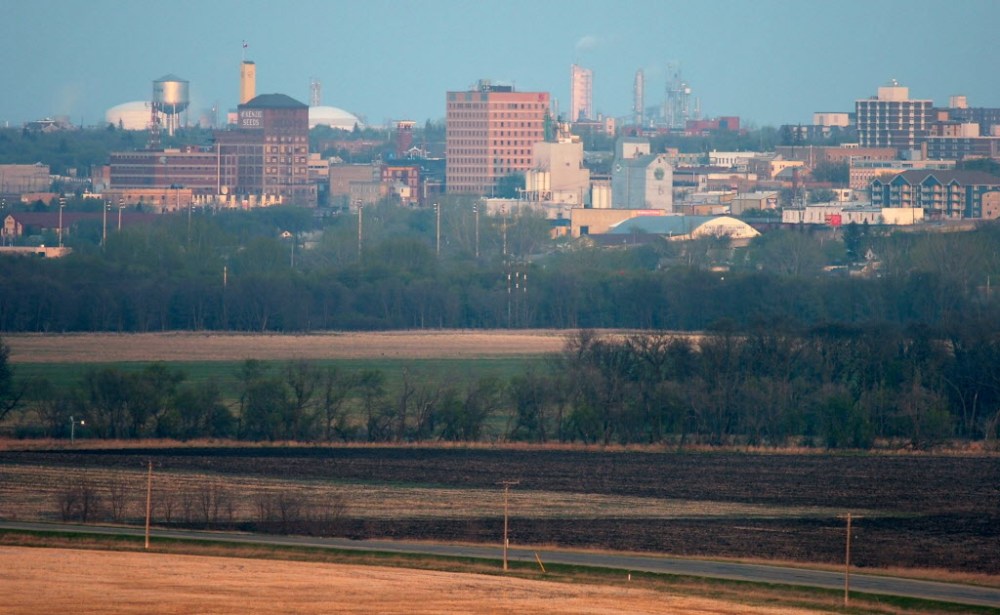
As Brandon continues to grow, the city is proposing a development charge to help pay for new infrastructure needs.
Following an in-depth study, the city has calculated a charge for developers of $7,656 per single-family home and just under $5,000 per apartment. For industrial/commercial, the charge would be $2.37 per square foot.
“We are on the brink of being in a position of having to not let development go forward because we’re struggling to find a way to service it,” said Jacqueline East, the city’s general manager of development services. “Our servicing that exists right now in the city is almost at the end of its capacity, and our work to squeeze capacity out of our existing system is actually slowing down development right now.”
The city retained Watson & Associates Economists Ltd. to undertake the study, alongside city staff and Dillon Consulting Ltd.
The study points to Brandon’s population growth — in excess of 10 per cent between 2006 and 2011. Statistics Canada data released this week shows Brandon grew by another 6.1 per cent between 2011 and 2016, outpacing both the national and provincial growth rates.
“This high level of growth places demands on the city to provide the necessary infrastructure to facilitate continued growth,” states the report.
Currently, the city recovers some infrastructure costs from developers through development agreements, and are often entered into as a condition of subdivision, rezoning, or conditional use applications.
The proposed development charge was determined by looking at the total cost of new services required to service designated lands, divided by the total number of homes and businesses that will benefit from the new infrastructure. The city’s growth plan projects nearly 23,000 new residents and more than 10,000 new employees over the next 20 to 30 years. This translates into 9,450 new residential units and 672 hectares of non-residential development.
“These costs are the same as they would be if we allocated them piecemeal but it’s much more transparent, fair and open,” East said.
It would be difficult to attract outside business currently, East added, due to the fact the city can’t offer serviced industrial land or serviced new residential land.
“So the advantage to outside investment is to know very clearly what the charge is, and to not have to learn how to work within our systems, and negotiate each little bit and piece as we go along because that doesn’t work for the city, and it doesn’t work for new investment.”
Capital works included in the development charge calculation are for offsite improvements in relation to transportation, water, wastewater and drainage. Infrastructure within the development, such as roads and pipes, will continue to be paid for by the developer.
The report outlines capital projects needed to facilitate growth, including six drainage projects at a cost of $11.7 million. With respect to transportation, 16 projects have been identified which include off-site road construction, upgrades to existing roads, etc. This cost is more than $30 million.
The city has identified approximately $4.3 million in gross costs related to 11 intersection improvement projects. For sewer services, 15 capital projects have been identified, including sewer mains, a forcemain, and lift stations. The estimated cost, after grants and subsidies, would be nearly $26 million.
Over the next month, the planning department will conduct meetings with local stakeholders and invite feedback on the proposed development charge.
A public meeting will be held in March, followed by an updated report. The hope is to pass a new bylaw by the summer. The full study and a map identifying the various infrastructure needs is available online at brandon.ca/planning.
The City of Winnipeg is implementing an "impact fee" on new homes built in select suburban areas. The fee — about $5,100 per 1,000 square feet — goes into effect May 1.
The city says the new fee is needed to generate revenue to offset the cost of constructing new infrastructure — regional roads, transit, recreation and leisure facilities — to meet the needs stemming from the creation of new subdivisions.
The concept of a fee is opposed by the development industry, arguing new development pays more than their fair share for infrastructure related costs. The industry also argues the fee is nothing more than a new tax, which city hall doesn’t have the authority to impose.
The Manitoba Home Builders Association and the Urban Development Institute will ask the courts to declare the city’s new impact fee invalid.
The legal challenge, to be filed in Court of Queen’s Bench, will argue the city doesn’t have the authority to impose the fee and the fee is discriminatory, as it only applies to some new residential development.
» jaustin@brandonsun.com
» Twitter: @jillianaustin
History
Updated on Sunday, February 12, 2017 5:25 PM CST: adds photo
Updated on Sunday, February 12, 2017 5:26 PM CST: adds winnipeg info