Northern lights
Inuit films lead the way for Canada's Top 10 fest
Advertisement
Read this article for free:
or
Already have an account? Log in here »
To continue reading, please subscribe:

Digital Subscription
One year of digital access for only $205*
- Enjoy unlimited reading on winnipegfreepress.com
- Read the E-Edition, our digital replica newspaper
- Access News Break, our award-winning app
- Play interactive puzzles
*First annual payment billed as $205.00 + GST for one year. This annual subscription will automatically renew at $233.00 + GST every 52 weeks (10% off the regular annual price of $259.35). Offer available to new and qualified returning subscribers only. Cancel any time.
To continue reading, please subscribe:
Add Free Press access to your Brandon Sun subscription for only an additional
$1 for the first 4 weeks*
- Enjoy unlimited reading on winnipegfreepress.com
- Read the E-Edition, our digital replica newspaper
- Access News Break, our award-winning app
- Play interactive puzzles
*Your next Brandon Sun subscription payment will increase by $1.00 and you will be charged $17.95 plus GST for four weeks. After four weeks, your payment will increase to $24.95 plus GST every four weeks.
Read unlimited articles for free today:
or
Already have an account? Log in here »
Hey there, time traveller!
This article was published 02/03/2017 (3428 days ago), so information in it may no longer be current.
Now in its 16th year, Canada’s Top 10 Film Festival, curated by filmmakers, critics and programmers, presents the best movies this country has to offer, including features, documentaries, shorts and student shorts. Cinematheque will screen this year’s selections from March 2 to April 29.
Maliglutit (Searchers)
Zacharias Kunuk’s potent new drama is basically a snow-covered western.
Centring on the violent collision of two groups of Inuk hunters in the post-contact Arctic, this rough and raw fable (in Inuktitut, with subtitles) purposely parallels the plotline of John Ford’s The Searchers, an uncomfortable and obsessive American classic from 1956.
With co-scripter Norman Cohn, director Kunuk — best known for the award-winning Atanarjuat: The Fast Runner — introduces us first to a group of four young men led by Aulla (Jonah Qunaq). They are being kicked out of a gathering on account of being fractious, disruptive and — the worst accusation one can make in a small community where life is lived very close to the bone — never sharing their food.
We next meet an affectionate three-generation family group, going about the rituals of daily life, sheltered in the shared warmth and light of an igloo. Guided by the grandfather’s contact with the spirit world, the father, Kuanana (Benjamin Kunuk) and elder son head out to hunt caribou. In their absence the mother, Ailla (Jocelyne Immaroitok), and daughter are kidnapped by Aulla and the rest of the family is brutally murdered.
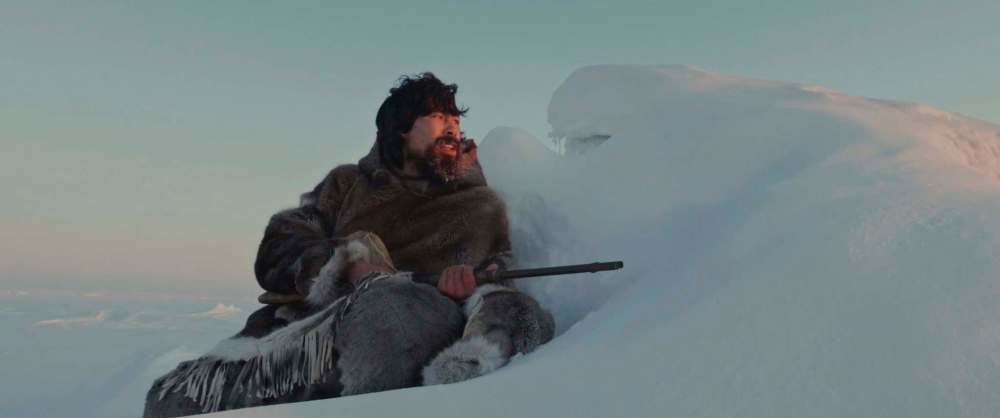
Kuanana, returning to his desecrated home, is determined to rescue his wife and daughter, tracking the abductors over the polar snow. This very simple storyline sets up a tense, drawn-out dogsled race that we suspect will end in further bloodshed.
The film can be hard going. There is grim violence, including sexual violence, though it’s handled by Kunuk with great sensitivity. There is little dialogue, minimal character exploration and the non-professional cast members deliver naturalistic performances that give very little away.
What really matters in Kunuk’s work is the setting. In Maliglutit, there has been colonial contact — we see signs in enamel mugs, two telescopes and one gun with three precious bullets — but the characters are still living mostly in the old way, which the filmmaker sets out with patient and matter-of-fact depictions of cooking, eating, sleeping, hunting, sewing and igloo building.
As often seen in the western genre, the story’s visual power comes down to depictions of the human figure against a vast landscape, here given even more heft by the overwhelming and implacable cold.
While there is nothing quite as iconic as the scene in Atanarjuat in which a naked man runs barefoot through the ice, there are moments of terrible beauty, all underlined by an evocative soundtrack from Tanya Tagaq.
And in terms of our often tortured attempts to define our national cinema, it’s worth noting that while many English-Canadian films feel like pale, polite copies of Hollywood movies, this strange and singular project could only have been imagined and created in the Canadian Arctic.
— reviewed by Alison Gillmor
Angry Inuk
The best documentaries open your eyes to a world you didn’t know existed or fill you with evangelical passion on a topic that wasn’t previously on your radar.
Angry Inuk, Alethea Arnaquq-Baril’s stirring doc about the Inuit seal hunt, does both.
The Baffin Island-born director — who narrates the film in voice-over as well as appearing in it — wants to update the notion that the hunt should be restricted to subsistence levels. A long-standing European Union ban on the sale of sealskins has tanked the market, so this vital part of the economy of the Far North has been decimated.
Using animation, interviews and coverage of a campaign to challenge the EU ban, the director argues convincingly that Inuit need to be included in the world economy; the best way for them to do that is by selling the skins of seals they’ve killed (or items made from those skins).
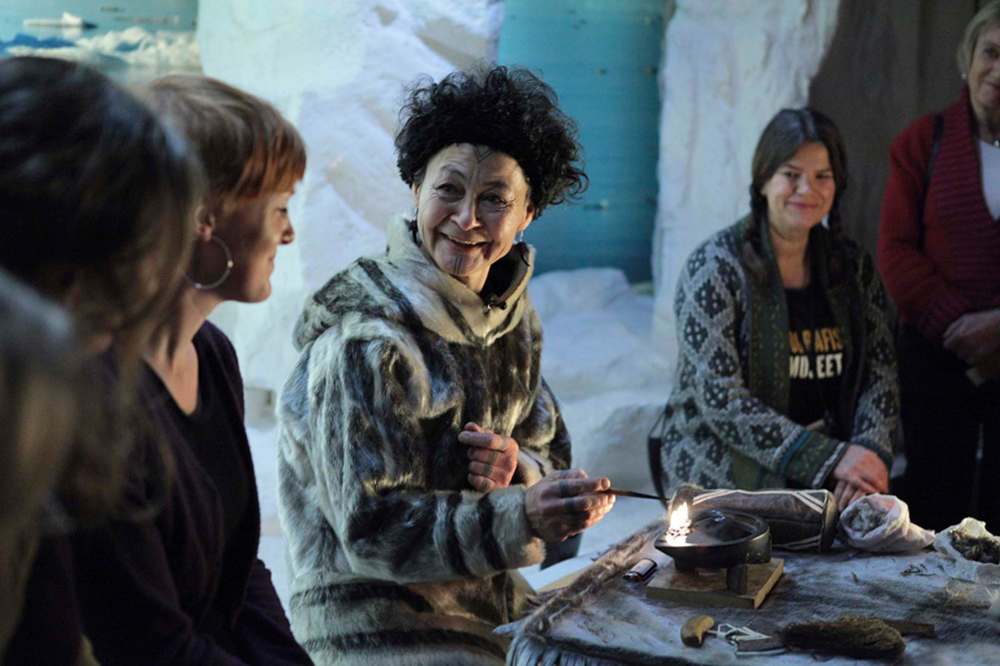
The commercial seal hunt off the coast of Newfoundland has been vilified by animal-rights organizations (invariably using the image of the adorable white pup seal it has been illegal to hunt for 30 years).
Those protests overlook the fact the majority of seal are hunted by Inuit in the North, where non-endangered seals are killed in a way that is far more humane than most factory-farmed animals consumed in North America, as well as more sustainable and environmentally friendly than mining for oil or natural gas, one of the only other options open to northern communities.
The doc’s title refers to the fact that Inuit are historically not an aggressive people (they used to settle disputes via a satirical sing-off, something the film illustrates with charming archival footage). But faced with the EU’s condescending ruling (”They’re still picturing little Eskimos in igloos with no need for money”), Arnaquq-Baril thinks it’s time to get angry, creating social-media campaigns and protests of her own.
The film rarely feels didactic, but Arnaquq-Baril’s approach actually works best when it is the least angry. Cinematographer Qajaaq Ellsworth captures the strange, stark beauty of the landscape and the film’s warm, intimate look at life in Kimmarut, Nunavut — friends and family gathered to feast on fresh raw seal, kids playing hockey in the streets, women painstakingly cleaning and stretching hides by hand — is more effective than any hashtag could be.
Arnaquq-Baril isn’t preaching to the converted — responses to her campaigns range from naive to hateful — but Angry Inuk is the rare film that might actually change popular opinion.
— reviewed by Jill Wilson
MOVIE REVIEWS
Maliglutit (Searchers)
Screens at Cinematheque March 2, 4 and 5
Subject to classification
93 minutes
Four stars out of five
Angry Inuk
March 2, 4 and 5
Subject to classification
85 minutes
Four stars out of five
Also screening:

Hello Destroyer (March 10 and 12)
Director Kevan Funk’s drama stars Flin Flon’s own Jared Abrahamson (Fear the Walking Dead) as a painfully shy but capable enforcer on a minor-league hockey team (above) who discovers the cutthroat nature of his locker-room “family.”
Those Who Make Revolution Halfway Only Dig Their Own Graves (March 17-19)
An epic three-hour documentary/drama follows students in a radical Quebec leftist cell seeking to sow mayhem in Montreal as a prelude to overthrowing the government.
It’s Only the End of the World (March 18-19)
Xavier Dolan’s latest is about a writer who returns to the home he abandoned to tell his fractured family he is terminally ill.
Mean Dreams (March 31-April 1)
Nathan Morlando (Edwin Boyd: Citizen Gangster) directs this drama about a 15-year-old boy who steals a bag of drug money to run off with his girlfriend, while her corrupt cop father (the late, great Bill Paxton) mounts a deadly pursuit.
Old Stone (April 7-9)
Johnny Ma directs this Canada-China co-production about a taxi driver driven to retribution following an accident caused by a drunken passenger.
Window Horses: The Poetic Persian Epiphany of Rosie Ming (April 13 to 15)
Ann Marie Fleming’s animated feature follows the young Canadian poet of Chinese/Persian descent who travels to Iran to participate in a poetry festival and at the same time delve into questions of her own past and paternity.
Nelly (April 13-15, April 22-23)
A biopic about controversial Quebec writer Nelly Arcan, who searingly wrote about her own experiences in the world of prostitution.
Werewolf (April 28-29)
The lives of two homeless drug addicts are examined in this debut feature from dirctor Ashley McKenzie.
Advertisement Advertise With Us
Advertisement Advertise With Us