

Winkler to have fastest Internet in country
Advertisement
Read this article for free:
or
Already have an account? Log in here »
To continue reading, please subscribe:

Digital Subscription
One year of digital access for only $205*
- Enjoy unlimited reading on winnipegfreepress.com
- Read the E-Edition, our digital replica newspaper
- Access News Break, our award-winning app
- Play interactive puzzles
*First annual payment billed as $205.00 + GST for one year. This annual subscription will automatically renew at $233.00 + GST every 52 weeks (10% off the regular annual price of $259.35). Offer available to new and qualified returning subscribers only. Cancel any time.
To continue reading, please subscribe:
Add Free Press access to your Brandon Sun subscription for only an additional
$1 for the first 4 weeks*
- Enjoy unlimited reading on winnipegfreepress.com
- Read the E-Edition, our digital replica newspaper
- Access News Break, our award-winning app
- Play interactive puzzles
*Your next Brandon Sun subscription payment will increase by $1.00 and you will be charged $17.95 plus GST for four weeks. After four weeks, your payment will increase to $24.95 plus GST every four weeks.
Read unlimited articles for free today:
or
Already have an account? Log in here »
Hey there, time traveller!
This article was published 07/03/2017 (3458 days ago), so information in it may no longer be current.
The fastest growing city in Manitoba may soon have the fastest internet service in the country.
The City of Winkler is investing in infrastructure to put itself at the head of the information superhighway: individual fibre-optic cables to every home and business in the community.
The city, which suffers from poor internet services like many rural communities, will go from an average speed of five megabits per second, to 1,000. That will be just the start. It will have the capacity to expand bandwidth exponentially from there.
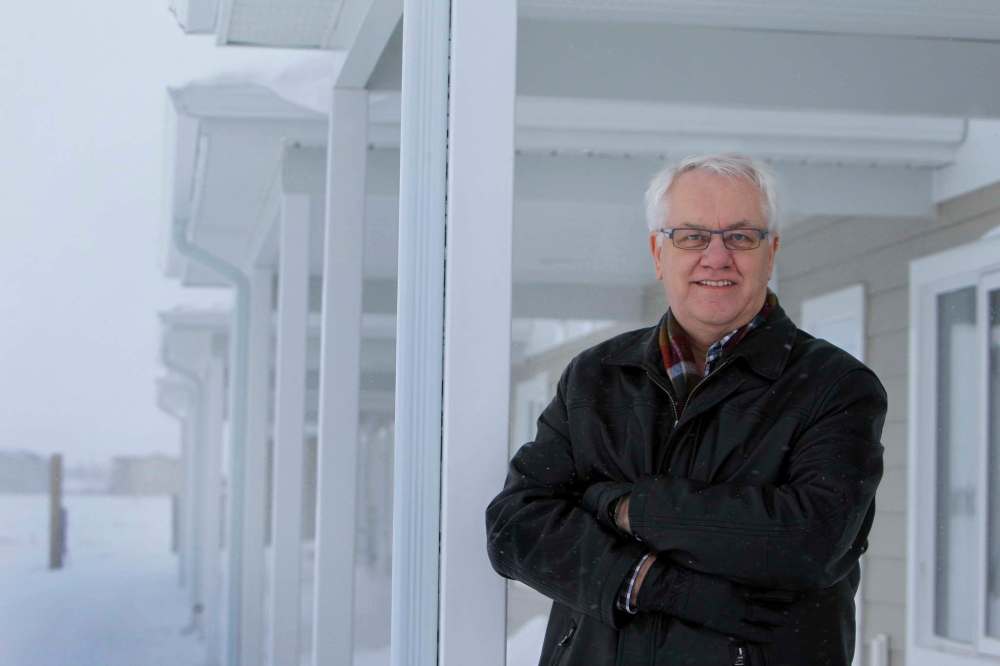
“It will be like going from working the field with a horse and wagon to working the field with a new John Deere tractor,” said Winkler Mayor Martin Harder.
The city, which grew by 18 per cent in the last census, is paying telecommunications firm Valley Fiber $500,000 to hook up every civic building and donating about 1.5 acres to build the company a headquarters and data centre. The money will come from the city’s reserve funds and will not mean a tax hike.
In return, the company will provide free installation for every house and building in Winkler not owned by the city.
Valley Fiber’s research indicates the average Winnipeg home has access to 250 megabits. However, homes in Winnipeg share their internet services with dozens of other homes. When there are many users, the individual service can turn sluggish.
Winkler homes will have their own dedicated cable not shared with anyone else. Harder compared it to the telephone system going from party lines to individual lines.
Not only will the service secure Winkler’s status as a manufacturing and retail hub, but will help attract new businesses, said Harder.
“Bigger companies have forgotten rural Manitoba” because of poor internet service, Harder said. “This will add a whole new dimension for Winkler, not only for attracting new companies, but for existing companies to place them on the world stage.”
The architect of the service is 31-year-old Hank Wall, CEO of Valley Fiber. Wall was running Valley Internet Service Provider (VISP) out of Winkler when he realized the technology was available to transform the small city’s internet service.
Winkler’s size, with a population of about 15,000, makes it doable, said Wall. Winnipeg would also be more difficult to transform because there is already so much infrastructure in the ground.
There are also major savings to rolling out the fibre-optic cables all at once. Doing every Winkler home and building at one time keeps costs to about a quarter of what they would be if the instalation was done piecemeal, said Wall. Valley Fiber is hoping to patent its process.
There are about 5,000 buildings in Winkler and the rollout can be completed within three years, he said. He promised the service will be cheaper than any other Internet service in the area.
It is not a fait accompli yet, however. While Valley Fiber has the technology and has lined up investment partners, the project hinges on approval from the province’s small business venture capital tax-credit program, where investments can earn a 45 per cent tax credit.
“The province has been very kind to say it wants to work with us. Everyone wants to see this happen first in Manitoba instead of Ontario or British Columbia,” Wall said.
Valley Fiber needs about $15 million, but can proceed this year with $10 million. Local investors are being given the first opportunity, Wall said.
Leslie Bester of LES.NET, a telecommunications company in Winnipeg, was impressed by the development in Winkler and the city’s financial commitment to the project.
There are some pockets of higher capacity bandwidth in Winnipeg. For example, Bester has installed cables with 1,000 megabit capacity in about 40 condos and apartment buildings in Winnipeg, but he is not aware of an entire high-speed community.

“With higher speeds, you’re going to increase your business productivity,” said Bester.
However, 1,000 megabits is just the beginning in Winkler. The cables have capacity to carry up to 100,000 megabits to individual homes and buildings, Wall said. That means Winkler will have the internet service for today and the future.
“It will completely change the landscape of this region. It will become an economic hub for digital development, the Silicon Valley of Manitoba,” Wall enthused.
Valley Fiber plans to eventually extend the service to the entire Pembina Valley including Altona, Morden and Carman.
bill.redekop@freepress.mb.ca